

Key facts
- Winner: Aitana Bonmatí, the FC Barcelona and Spain midfielder.
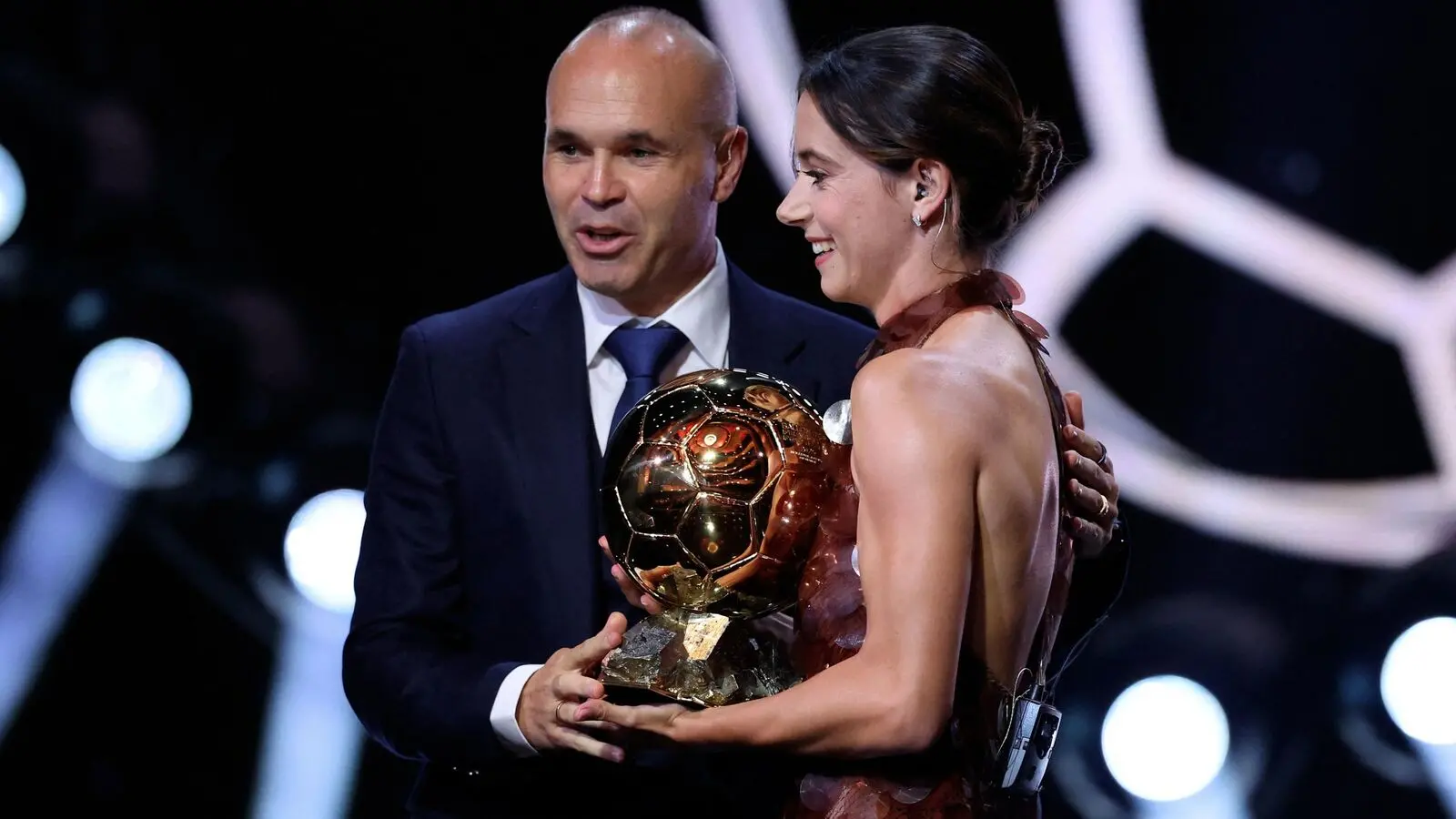
- Award: 2025 Ballon d'Or Féminin, presented at the 69th Ballon d'Or ceremony.
- Venue and date: Théâtre du Châtelet in Paris, Monday, September 22, 2025.
- Presenter: Andrés Iniesta, the former Barcelona and Spain great.
- Historic feat: Third Ballon d'Or Féminin after 2023 and 2024, moving ahead of Alexia Putellas.
- International record: 81 caps for Spain at the time of the award.
- Season context: Lost the Champions League final with Barcelona to Arsenal and the European Championship final with Spain to England on penalties, but was named best player in both competitions.
A landmark night in Paris
Aitana Bonmatí has reached the summit of women's football again. The Barcelona midfielder was named the 2025 Ballon d'Or Féminin winner at the 69th Ballon d'Or ceremony, held at the Théâtre du Châtelet in Paris on Monday, September 22, 2025. The trophy was handed to her by Andrés Iniesta, one of the most celebrated figures in Spanish football and a symbol of the Barcelona style that Bonmatí has come to embody.
The setting gave the evening a sense of continuity as well as celebration. Iniesta, a World Cup winner and multiple Champions League champion with Barcelona, represents the club's modern golden age. Bonmatí, a product of the same academy and now the heartbeat of both Barcelona and Spain, represents its present and future. The image of one Barcelona legend presenting the game's highest individual honor to another captured how deeply the Catalan club has shaped the women's game over the past decade.
For Bonmatí, the award is the third of her career. She won in 2023 and 2024, and her 2025 success makes her the most decorated Barcelona player in the history of the women's Ballon d'Or, moving ahead of teammate Alexia Putellas. Putellas, who won the award in 2021 and 2022, had set the benchmark for the club's modern era. Bonmatí has now surpassed it, and she has done so while still only 27.
A season of near misses and individual brilliance
Bonmatí's 2025 candidacy was not built on a perfect trophy haul. Barcelona lost the Champions League final to Arsenal, and Spain fell to England in the European Championship final after a penalty shootout. In a sport that often measures greatness by team silverware, those defeats could have complicated her case. Instead, they underlined the scale of her individual impact.
She was named the best player of both competitions. In the Champions League, her control of midfield, her ability to break lines with passes and carries, and her capacity to set the tempo in the biggest matches made her the standout performer of the tournament. At the European Championship, she was again central to Spain's run to the final, dictating play, pressing intelligently, and creating chances in tight spaces. Even in defeat, her performances were among the most complete in the competition.
That combination of team disappointment and personal recognition is revealing. The Ballon d'Or is an individual award, but it is rarely given to a player whose influence is merely statistical. Bonmatí's value lies in the way she connects everything around her. She is a midfielder who can receive the ball under pressure, turn away from opponents, and turn defense into attack in a single movement. She can play the final pass, arrive late in the box, and lead a press. For Barcelona and Spain, she is not simply a contributor; she is the organizer.
Her season with Barcelona also included the usual demands of a club that competes on every front. Barcelona's style is built on possession, positional play, and relentless technical precision, and Bonmatí is one of its most faithful interpreters. Her first touch, body orientation, and decision-making allow her to keep the team moving forward even when opponents try to close space. She has become the player her teammates look for when the game needs to be calmed, accelerated, or changed.
For Spain, the 81-cap milestone she reached by the time of the ceremony reflects how quickly she has become a senior figure. Despite being only 27, she has already been part of the country's rise to the top of the women's game. She was central to Spain's 2023 World Cup triumph and was named the tournament's best player. She also helped Spain win the UEFA Women's Nations League in 2024. Those achievements have made her a standard-bearer for a generation that has transformed the national team from a promising side into a global power.
The making of a three-time winner
Bonmatí's journey is rooted in Barcelona's academy, where technical quality and tactical understanding are taught from an early age. She joined the club as a youth player and developed through its ranks before establishing herself in the first team. Her rise was not instantaneous. She had to compete for minutes in a squad filled with international stars, and she had to adapt to the physical and mental demands of senior football. That process shaped the player she is now: composed, competitive, and unusually mature in her reading of the game.
Her breakthrough came as Barcelona began to dominate Spanish and European football. The club won the Champions League in 2021, 2023, and 2024, and Bonmatí grew from a promising squad member into a decisive starter. Alongside Putellas, she helped establish a midfield that could control games against the best teams in Europe. When Putellas suffered a serious injury, Bonmatí took on greater responsibility. She did not merely fill a gap; she became the team's creative and emotional engine.
At international level, her influence followed a similar arc. Spain had long been recognized for its technical quality, but the team needed to convert that potential into trophies. The 2023 World Cup was the breakthrough. Bonmatí's performances in midfield earned her the Golden Ball, and her ability to combine with Spain's forward line gave the team a dimension it had often lacked. The Nations League title in 2024 confirmed that the World Cup was not an isolated success. By 2025, Spain were no longer outsiders; they were a team to be measured against, and Bonmatí was at the center of that transformation.
Her individual honors reflect that trajectory. The 2023 Ballon d'Or Féminin recognized her rise to global prominence. The 2024 award confirmed her consistency. The 2025 prize, however, carries a different weight. It places her in a select group of players who have won the award three times, and it makes her the most successful Barcelona player in the history of the women's prize. At 27, she has time to add more.
What the third award means
Bonmatí's victory also highlights a broader shift in women's football. The Ballon d'Or Féminin has become one of the most visible platforms for the sport, and the players who win it are increasingly recognized as global athletes rather than niche figures. Bonmatí's success sits alongside the growth of Barcelona as a powerhouse, the rise of Spain as a major international force, and the expanding audience for women's club and international football.
It also raises familiar questions about how individual awards should weigh team success. Bonmatí lost two major finals in 2025, yet she was named the best player in both competitions. That outcome will be debated, as every Ballon d'Or result is. Some will point to the trophies won by others; others will argue that her performances were the most consistently excellent in the women's game. The answer depends on what the award is meant to reward. If it is meant to recognize the player who most influences the biggest matches, Bonmatí's case is strong. If it is meant to reward the player with the most team silverware, the argument becomes more complicated.
What is less debatable is her stature. Bonmatí has become a reference point for young midfielders: a player who wins possession, keeps the ball, creates chances, and leads without relying on spectacle. Her game is built on intelligence and repetition, on the small decisions that shape a match. That style has made her invaluable to Barcelona and Spain, and it has made her one of the most respected players of her generation.
Her third Ballon d'Or Féminin also strengthens the Barcelona legacy in the award. Putellas, Bonmatí, and the club's broader dominance have made Barcelona the defining team of the women's Ballon d'Or era. The club's academy, investment, and commitment to possession football have produced players who can dominate the ball and the biggest stages. Bonmatí is the clearest expression of that project: a homegrown midfielder who became the best player in the world.
She now stands alone among Barcelona players in Ballon d'Or Féminin wins, with three to Putellas's two. The trophy is a recognition of her past season, but it is also a marker of how far she has come. From academy prospect to midfield organizer to three-time winner, Bonmatí has built a career on control, consistency, and the ability to decide the rhythm of a game. The 2025 award adds another chapter to that record, and it places her at the center of the sport's present and future.
Source: leparisien.fr News