

When Phantom Blade Zero launches on PC and PlayStation 5 on Thursday, October 29, 2026, it will arrive with the weight of two very different cinematic legacies behind it. The game, developed by Chinese studio S-Game, is already being described as one of the year’s most anticipated action titles. It combines Chinese martial arts with steampunk machinery and body modification—a genre the developers call “kung fu punk.” But its most striking feature may be the way it channels the spirit of Wuxia cinema, the traditional Chinese genre that blends martial arts, fantasy, and action. To achieve that, the project has drawn on the expertise of Donnie Yen and the enduring influence of Jackie Chan’s stunt team.
For French players, the launch will be a late night: the game becomes available at 3 a.m. local time. The wait is expected to be worth it. Phantom Blade Zero is part of the Phantom Blade franchise and places players in the role of Soul, a swordsman with a wounded heart and only 66 days left to live. Wrongly accused of murdering his master, Soul is hunted across the Wulin, a fictional society populated by heroes of Chinese martial arts. As he fights for survival, he must also unravel a conspiracy that threatens the entire martial world.
A “Kung Fu Punk” World Rooted in Chinese Tradition
The game’s official page describes its universe as one where “traditional Chinese martial arts blend with steampunk machines and body modifications.” That mixture is not merely aesthetic. It reflects a broader trend in contemporary Chinese pop culture, where ancient martial arts traditions are reimagined through futuristic and industrial lenses. Phantom Blade Zero leans into that tension, setting its brutal combat and intricate choreography against a backdrop of brass gears, mechanical limbs, and decaying temples.
Soul’s journey is structured around a ticking clock. Sixty-six days is not a long time, and the game’s narrative is expected to use that deadline to create urgency. The Wulin itself is a familiar concept in Wuxia stories: a hidden or parallel society of martial artists, clans, and masters, often governed by codes of honor and revenge. By placing Soul inside that world as a fugitive, Phantom Blade Zero sets up a classic Wuxia premise—the wrongly accused hero who must clear his name—while adding the supernatural and mechanical flourishes of its “kung fu punk” identity.
A Love Letter to Wuxia Cinema
More than a game, Phantom Blade Zero is an homage to Wuxia, a genre with roots in Chinese literature and a long history in cinema. Wuxia films typically feature skilled warriors, gravity-defying combat, and stories of justice, loyalty, and sacrifice. The genre reached new heights in the West at the beginning of the 2000s with Ang Lee’s Crouching Tiger, Hidden Dragon in 2000 and Zhang Yimou’s House of Flying Daggers in 2004. Those films introduced international audiences to a style of action that was at once elegant and explosive, grounded in martial arts technique but liberated by fantasy.
Donnie Yen, who serves as a creative consultant on Phantom Blade Zero, has spoken about the cultural weight of Wuxia. “You know, Wuxia is the Chinese Marvel, but with a much richer history and culture,” he said in 2023. “It goes back thousands of years.” That comparison is revealing. Wuxia is not just a genre of action cinema; it is a mythology with its own heroes, villains, and moral universe. Phantom Blade Zero aims to translate that mythology into interactive form, allowing players to step into a world where martial arts are both a physical discipline and a spiritual inheritance.
Donnie Yen’s Creative Role
Donnie Yen is one of the most recognizable martial arts stars in the world. Born in 1963, he rose to fame in the Hong Kong film industry and later crossed over to Hollywood, appearing in films such as Rogue One: A Star Wars Story and John Wick: Chapter 4. He is also known for his portrayal of Ip Man, the legendary wing chun master, in a series of biographical films that earned him widespread acclaim. His involvement in Phantom Blade Zero adds a layer of authenticity that few games can claim.
Yen’s role goes beyond a name on the poster. He is a creative consultant on the project and performed motion capture for one of the game’s characters. Motion capture is a crucial tool in modern action games, allowing developers to translate real human movement into digital animation. With Yen’s background in martial arts choreography—he has served as action director on numerous films—his contribution likely extends to the feel and rhythm of combat. Players can expect fights that are not only visually spectacular but also grounded in the principles of Chinese martial arts: balance, timing, and the efficient use of force.
Jackie Chan’s Stunt Team and the Flying Goat Studio
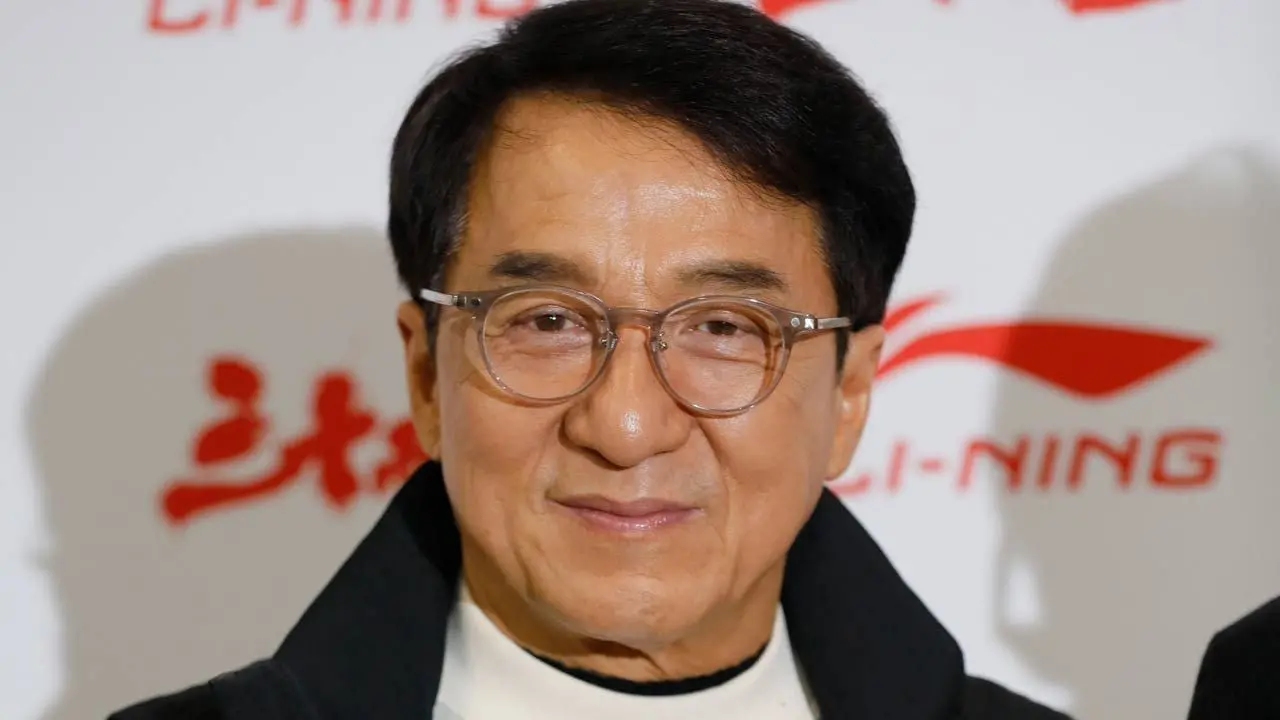
The connection to Jackie Chan comes through the game’s action production. To capture authentic fight choreography, the development team filmed action scenes at the Flying Goat studio in Shanghai. The studio is certified by Jackie Chan himself, and it is regularly used for training by his martial arts school, the Jackie Chan Stunt Team. Founded in 1976, the Stunt Team has become one of the most respected stunt organizations in the world. It is composed of experienced stunt performers from around the globe and has worked on major American blockbusters, including Spider-Man: Brand New Day.
Jackie Chan’s influence on action cinema is difficult to overstate. Over a career spanning more than four decades, he has become synonymous with practical stunts, physical comedy, and a willingness to risk life and limb for the sake of a shot. The Jackie Chan Stunt Team was created to support that approach, training performers in martial arts, acrobatics, and safety. By filming Phantom Blade Zero’s action scenes at a studio used by that team, the developers are knowingly linking their game to one of the most important lineages in action filmmaking.
The fight scenes were overseen by Master Yang Liu, the game’s fight director. His role would have involved designing and coordinating the choreography, ensuring that each movement read clearly on screen and felt true to the martial arts tradition. The Flying Goat studio, with its connection to Jackie Chan’s training regimen, provided an ideal environment for that work. It is a place where the spirit of Hong Kong action cinema—particularly the golden age of the 1970s and 1980s—can be revived through a combination of traditional martial arts and technical precision.
The Legacy of Hong Kong Action Cinema
Hong Kong action cinema of the 1970s and 1980s was defined by its energy, inventiveness, and physicality. Stars like Jackie Chan, Sammo Hung, and Yuen Biao built their reputations on films that combined kung fu with slapstick comedy and death-defying stunts. Those films were often made on tight schedules and small budgets, which forced filmmakers to rely on practical effects and sheer athleticism. The result was a style of action that felt immediate and dangerous, and it influenced filmmakers around the world.
Phantom Blade Zero’s use of motion capture and fight choreography is a digital extension of that tradition. The game’s action scenes are not simply animated; they are performed, captured, and then refined. That process mirrors the way Hong Kong filmmakers would rehearse and shoot fights, often in long takes that showcased the performers’ skill. By working with a studio certified by Jackie Chan and a fight director like Master Yang Liu, the developers are signaling that they want the combat to feel like a tribute rather than a pastiche.
The involvement of Donnie Yen and the Jackie Chan Stunt Team also highlights a growing trend in the game industry: the collaboration between video game developers and film industry professionals. As games become more cinematic, studios are increasingly looking to action directors, stunt coordinators, and martial artists to help create combat systems that feel grounded and responsive. Phantom Blade Zero is positioning itself at the forefront of that trend, using the expertise of two legends to bridge the gap between interactive entertainment and action cinema.
What Phantom Blade Zero Means for Action Games
The game’s blend of Wuxia, steampunk, and body modification is unusual, even in a market saturated with action titles. “Kung fu punk” suggests a world where ancient techniques coexist with mechanical augmentation, where a swordsman might have a clockwork arm or a temple might be powered by steam. That aesthetic could set Phantom Blade Zero apart from more traditional martial arts games, offering players a visually distinct world that feels both familiar and alien.
The narrative framework—a dying hero, a false accusation, a conspiracy—is classic Wuxia material. It gives the player a clear motivation and a rich cast of potential allies and enemies. The Wulin, as a setting, allows for a wide variety of environments and characters, from misty mountain temples to crowded urban markets. And the sixty-six-day deadline adds a sense of urgency that could shape both the story and the gameplay, perhaps influencing how players choose to spend their time and which alliances they forge.
With a release date of October 29, 2026, Phantom Blade Zero is still months away, but the pieces are already in place. S-Game has assembled a team of consultants and performers who understand both the martial arts tradition and the demands of modern action entertainment. The game’s connection to Jackie Chan’s stunt team and Donnie Yen’s creative guidance gives it a credibility that few action games can match. Whether it lives up to the hype will depend on how well those elements come together in the final product.
For now, the game stands as a testament to the enduring influence of Wuxia cinema and the artists who shaped it. Jackie Chan’s stunt team, founded in 1976, continues to train performers and contribute to major productions. Donnie Yen, at 63, remains one of the most respected martial artists in the world. Their involvement in Phantom Blade Zero is not just a marketing coup; it is a bridge between generations of action cinema and a new medium that is still learning how to capture the art of the fight.
Phantom Blade Zero will be available on PC and PlayStation 5 on October 29, 2026. For players in France, the launch is set for 3 a.m. local time. The game is developed by S-Game and is part of the Phantom Blade franchise. Its official page describes a world where traditional Chinese martial arts meet steampunk machines and body modification—a “kung fu punk” vision that aims to honor the past while pushing action games into new territory.
Source: AlloCiné News