

Key Facts
- Executives from Micron and Samsung said the memory shortage will continue for at least the next couple of years.
- Micron CEO Sanjay Mehrotra expects demand for the company’s memory to exceed available supply over that period.
- Micron no longer sells consumer RAM, and its comments concern high-bandwidth memory for AI and DRAM for servers, but the shortage still affects consumer devices because manufacturing capacity is being prioritized for AI and server memory.
- Mehrotra said the overall supply-demand environment is only getting tighter.
- Micron plans new clean rooms for memory manufacturing in 2028, but production ramps up gradually and supply is expected to remain limited.
- Seventy-five percent of Micron’s memory output for 2027 is already accounted for, and most current memory sales discussions are about 2028.
- Demand for high-bandwidth memory is surpassing demand for Micron’s DRAM, and a large part of HBM volume for 2027 is already sold out at prices much higher than 2026 levels.
- Samsung EVP Kim Taewoo said HBM will account for almost 30 percent of DRAM manufacturers’ wafer capacity in 2027, up from 20 percent this year.
- Micron’s Crucial brand stopped selling RAM to consumers after announcing the change in December 2025, citing AI-driven data center demand and a focus on larger strategic customers.
- Consumers have already faced higher prebuilt PC costs, lower RAM configurations at higher prices, and rising prices for smartphones, streaming sticks, and gaming consoles.
A supply crunch that reaches beyond the data center
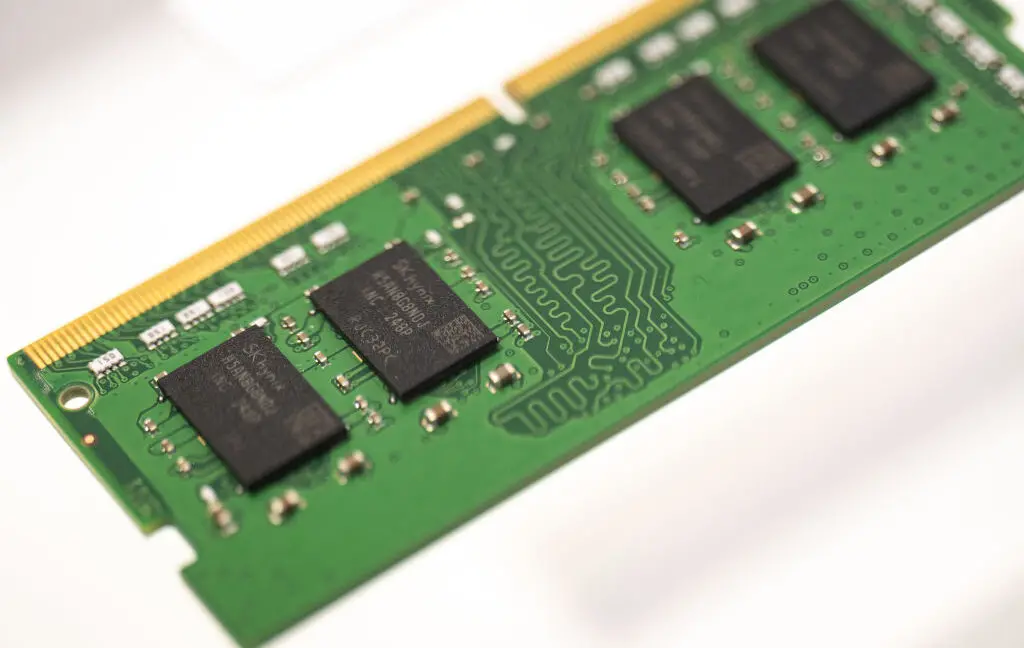
Memory executives are warning that the global RAM shortage is not close to ending. This week, leaders at Micron and Samsung said the tight supply conditions will continue for at least the next couple of years, a timeline that stretches well beyond the usual ebb and flow of the memory market.
Micron CEO Sanjay Mehrotra told investors that demand for the company’s memory will exceed its available supply over that period. His comments were focused on Micron’s business-to-business sales of high-bandwidth memory for AI and DRAM for servers, not on consumer RAM. Micron no longer sells consumer memory, so its direct exposure to the retail market is limited.
Even so, the implications for consumers are significant. Memory manufacturing capacity is being prioritized for AI and server products, which limits the supply of memory manufactured for consumer devices. When the most advanced and most profitable memory output is directed toward data centers, the remaining capacity has to serve PCs, phones, tablets, streaming devices, gaming consoles, and other everyday products.
Mehrotra described a market in which demand keeps rising faster than supply can be added. 'Overall, supply-demand environment is only getting tighter,' he said. That assessment aligns with what device makers and buyers have already been experiencing: higher prices, constrained availability, and configurations that offer less memory for more money.
AI demand is reshaping memory allocation
The memory shortage is being driven in large part by the rapid buildout of AI infrastructure. High-bandwidth memory is a critical component in AI accelerators, where it feeds data to powerful processors that train and run large models. Server DRAM is also essential for cloud platforms, enterprise systems, and the data centers that support AI workloads.
As demand for those products grows, memory manufacturers face a difficult allocation problem. HBM is more complex to produce than conventional DRAM, and it consumes a substantial amount of wafer capacity. A shift toward HBM therefore reduces the amount of standard DRAM that can be produced from the same manufacturing footprint. The industry refers to this relationship as a trade ratio, and it becomes more significant as HBM accounts for a larger share of output.
Mehrotra said demand for HBM is surpassing demand for Micron’s DRAM. That is a striking statement in a market where DRAM has long been a foundational product for computers, servers, and consumer electronics. It also helps explain why the shortage is spreading: the same manufacturing capacity that might once have supplied commodity memory is now being directed toward higher-value AI components.
2027 output is already spoken for
One of the clearest signs of how tight the market has become is how far ahead buyers are planning. Mehrotra said 75 percent of Micron’s memory output for 2027 is already accounted for, and most of the company’s current memory sales discussions are about 2028.
The HBM market is even more constrained. Mehrotra said a large part of the HBM volume for 2027 is already sold out, and prices are much higher than 2026 prices. That suggests buyers are willing to lock in supply well in advance, even at elevated costs, because memory has become a strategic input for AI and data center roadmaps.
The company does not know when supply will catch up with demand. Mehrotra pointed to several forces that continue to drive memory requirements: larger models, growing context windows, more concurrency, and greater use of agents across enterprise and consumer applications. Each of those trends increases the need for memory capacity, memory content per system, and higher-performance memory.
New clean rooms will not bring immediate relief
Micron plans to open new clean rooms for memory manufacturing in 2028, but the CEO cautioned that new facilities will not instantly solve the shortage. Even after the clean rooms are built and the first wafers are produced, production ramps up only gradually. Bringing new capacity online is a slow process that involves equipment installation, process qualification, yield improvement, and a long path to volume output.
Mehrotra also pointed to the transition from HBM 3E to a greater mix of HBM 4 and 4E. Those transitions involve trade ratios that create headwinds for supply growth. In addition, future node transitions are expected to deliver less productivity gain per wafer. That means advancing to newer manufacturing technology may not increase usable output as much as it once did, making the supply picture more difficult to improve quickly.
The combination of gradual clean-room ramps, more complex HBM products, and diminishing productivity gains helps explain why the shortage may persist even after significant investment. New capacity is necessary, but it is not a fast fix.
Samsung adds to the warning
Mehrotra’s comments were supported by remarks from Samsung EVP Kim Taewoo. He said HBM will account for almost 30 percent of DRAM manufacturers’ wafer capacity in 2027, compared with 20 percent this year. That shift would limit the amount of DRAM made for consumer devices.
The forecast is important because it shows that the industry’s move toward HBM is not a small adjustment. A jump from 20 percent to nearly 30 percent of wafer capacity in a single year represents a major reallocation of manufacturing resources. As HBM takes a larger share, conventional DRAM supply for PCs, phones, and other consumer products becomes tighter.
Consumers are already feeling the squeeze
The shortage has already reached the consumer market. Prebuilt PCs have become more expensive, and OEMs have responded by offering lower RAM configurations at higher prices. Those changes are often less visible than a headline price increase, but they can have a lasting effect on the value of a device.
Prices for other types of gadgets are also up. Smartphones, streaming sticks, and gaming consoles all rely on memory, and all have been affected by the broader shortage. Device makers must decide whether to absorb higher memory costs, reduce memory capacity, raise prices, or combine all three. In a competitive consumer market, those decisions can shape product lineups for months or years.
Micron’s Crucial brand stopped selling RAM to consumers after announcing the change in December 2025. EVP and chief business officer Sumit Sadana pointed to AI driving demand for data center memory and the company’s interest in improving supply and support for larger, strategic customers in faster-growing segments. The exit underscores how memory suppliers are choosing to focus on markets where demand is strongest and where long-term agreements are more valuable.
What the shortage means for the memory market
The current shortage is not simply a repeat of past memory cycles. AI workloads are creating a new category of demand that competes directly with the capacity used to make conventional DRAM. High-bandwidth memory is essential for AI accelerators, and server DRAM is essential for the cloud infrastructure that supports those accelerators. As a result, memory has become a bottleneck in the AI supply chain, not just a component in consumer electronics.
For memory manufacturers, the environment favors long-term contracts and high-value products. Micron’s disclosure that most current sales discussions focus on 2028 shows how far customers are looking ahead. It also suggests that buyers are concerned about securing supply rather than waiting for prices to fall.
For device makers, the challenge is planning in an environment where memory costs are uncertain and availability is constrained. Consumer products often have thin margins and long development cycles. A memory shortage that lasts for years can force changes to product specifications, pricing strategies, and launch plans.
For consumers, the practical effect is likely to be continued pressure on device prices and configurations. Prebuilt PCs may offer less memory than buyers expect at a given price. Phones and other gadgets may see higher prices or memory-related compromises. Streaming devices and gaming consoles could also face cost increases if memory remains scarce.
The industry is investing in new capacity, but the timeline is long. Micron’s planned clean rooms in 2028 will add supply, yet the company expects supply to remain limited even after those facilities begin first wafer output. Production ramps are gradual, HBM consumes more capacity, and future node transitions deliver smaller productivity gains per wafer.
Mehrotra’s outlook leaves little room for optimism about a quick return to balance. Demand trends around larger models, growing context, more concurrency, and greater use of agents across enterprise and consumer applications are all moving in the same direction. They increase the need for memory capacity, memory content per system, and higher-performance memory.
With 2027 output largely committed and 2028 capacity still years away from volume production, the pricing pressure that has already reached prebuilt PCs, phones, streaming sticks, and consoles is likely to persist well beyond the next product cycle. The memory market is being rebuilt around AI and server workloads, while consumer devices compete for whatever capacity remains.
Source: Ars Technica News