

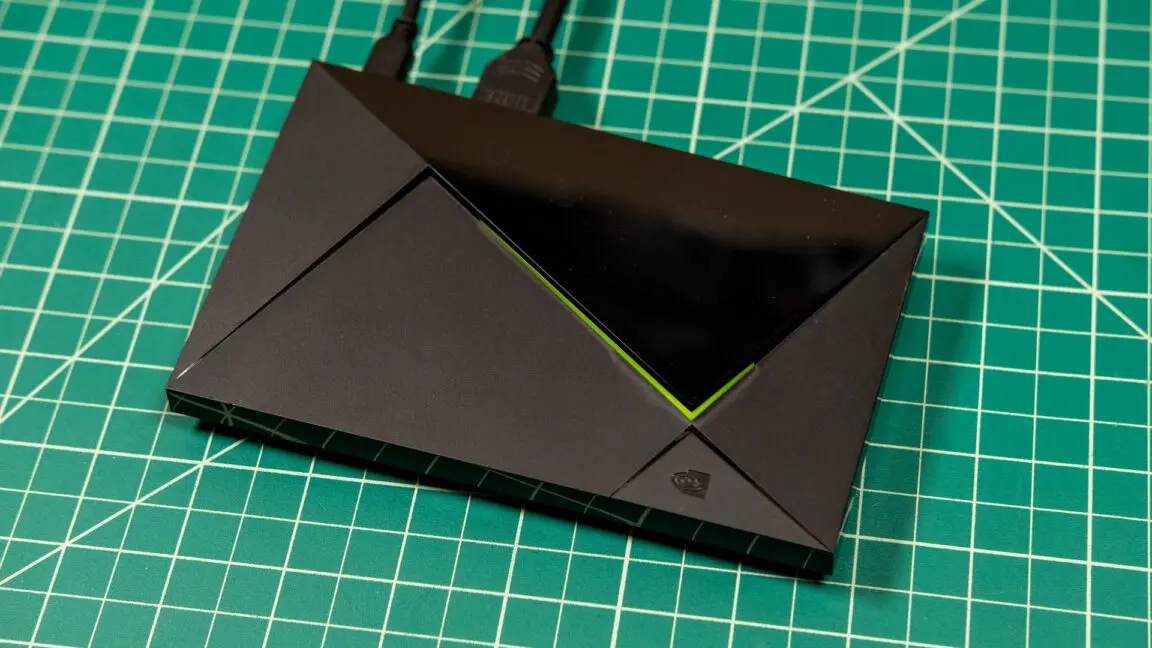
The generative AI boom has created a new rule for consumer technology: if a device contains memory or storage, it is probably getting more expensive. That pressure has now reached a seven-year-old streaming box. Nvidia has raised the price of the Shield TV Pro by $100, taking the Android TV device from $199.99 to $299.99. The change is effective immediately, and Nvidia says the cause is a broad increase in component costs, especially memory.
The Shield TV Pro is not a new product. It debuted in 2019, arrived with an aging Tegra X1+ processor, and has survived in Nvidia's lineup long after the cheaper non-Pro Shield was discontinued. Yet the device still sells for enough to justify continued manufacturing, and its price is now being reshaped by the same AI-driven supply chain forces affecting smartphones, computers, and game consoles. For buyers, the increase makes an already niche set-top box even harder to recommend to anyone who simply wants to stream Netflix.
Key Facts
- Nvidia has raised the Shield TV Pro price from $199.99 to $299.99, a $100 increase.
- The new price is effective immediately, with Nvidia saying the Shield TV Pro will be priced at $299 starting October 2.
- Nvidia cites substantial increases in component and memory costs across the industry.
- The Shield TV Pro launched in 2019 with Android TV, AI upscaling, broad codec support, and a Tegra X1+ processor.
- The non-Pro Shield TV, originally priced at $149.99, has been discontinued.
- Stock of the Shield TV Pro has been slim, and the device is out of stock on Nvidia's store while Best Buy lists it at the new price.
- The increase fits a wider pattern of AI-driven hardware inflation, including console price hikes such as the PS5 Pro moving from $699.99 to $899.99.
A seven-year-old streamer with a new price
When the Shield TV Pro arrived in 2019, it was not trying to be the cheapest way to watch streaming services. It was built for people who wanted more from a TV box: hardware decoding for a wide range of media formats, AI upscaling for older content, and enough performance to serve as a Plex server or handle demanding local libraries. The Tegra X1+ chip was already based on older technology at launch, but it remained fast enough for media playback, and that longevity helps explain why the product is still around.
The original pricing told a similar story. The Shield TV Pro launched at $199.99, while the standard Shield TV started at $149.99. Over time, the cheaper model disappeared, leaving the Pro as the only survivor. Nvidia has continued to manufacture the device and has said it sells every unit it makes. That detail matters in 2026 because there is no large stockpile of pre-AI hardware left to insulate the Shield from current supply chain conditions. Every new unit is exposed to today's memory and component prices.
Why AI is raising the price of older hardware
Generative AI systems require enormous amounts of memory and storage. Data centers building and running AI models consume high-bandwidth memory, standard DRAM, and NAND flash in volumes that put pressure on global supply. When demand for those components rises faster than production, prices climb across the industry. The effect is not limited to new AI servers. Any device that uses memory or storage, including an older streaming box, can become more expensive to build.
Nvidia is an unusual player in this story. It is one of the main suppliers of the GPUs and accelerators that power AI hyperscaling, and its market position has made it one of the most valuable companies in the world. The company benefits from the AI buildout, but its consumer hardware division still has to buy components at market rates. Nvidia has confirmed that the Shield TV Pro price increase is tied to those costs. The result is a strange loop: AI demand helps drive Nvidia's growth, while the same demand raises the cost of making a small Android TV box.
The broader industry has seen this pattern before, but not at this scale. New products are launching at higher prices than their predecessors, and many existing products are receiving mid-life price increases. Memory and storage are often the first components to show pressure because they are required in nearly every modern device. A streaming box may not need the same memory as a smartphone or a laptop, but it still needs enough to run Android TV, buffer video, and handle local media libraries. When those parts get more expensive, even mature hardware is affected.
What the Shield TV Pro still offers
The Shield TV Pro remains appealing to a specific kind of user. It supports hardware decoding for many video and audio formats, a feature that matters to people with large personal media collections. Its AI upscaling can improve the look of lower-resolution content on high-resolution televisions. It can also function as a Plex server, making it useful for households that want to manage and stream local files without a separate computer. Those capabilities are more advanced than what most casual viewers need, but they are why the Shield has maintained a loyal audience.
For mainstream buyers, the value proposition is much weaker. A $299.99 streaming box is competing against cheaper devices that handle Netflix, YouTube, Disney+, and other major services without difficulty. The Shield's advantages are real, but they are niche advantages. Someone who just wants to watch streaming apps will likely be better served by a less expensive player. The new price does not make the Shield worse at its job, but it does make the job harder to justify for anyone who does not need its specialized features.
A wider pattern of rising hardware prices
The Shield TV Pro is not the only consumer device affected by AI-related component costs. Game consoles have been particularly visible. Nintendo, Microsoft, and Sony have all raised prices on current-generation hardware. The PS5 Pro, for example, launched at $699.99 in 2024 and now sells for $899.99. Smartphones and computers have also seen higher prices, with memory and storage upgrades becoming more expensive. The common thread is that AI demand is competing for the same manufacturing capacity and component supply that consumer devices rely on.
This does not mean every product will see immediate price increases. Companies with long-term supply contracts, older inventory, or stronger bargaining power may delay the impact. But the direction is clear. Hardware that was designed years ago can still become more expensive to produce today. The Shield TV Pro is a useful example because its specs have not changed, yet its price has. The product did not become more capable overnight. The cost of building it did.
Who should buy the Shield TV Pro at $299.99?
At the new price, the Shield TV Pro makes sense mainly for users who need its codec support, AI upscaling, or Plex server capability. Those buyers are already choosing a specialist device, and the extra $100 may be acceptable if it replaces another computer or media server. For everyone else, the market offers cheaper ways to stream. The device's already niche appeal becomes narrower when a mainstream alternative can be bought for far less.
Availability adds another wrinkle. Stock of the Shield TV Pro has been slim for months, likely because rising component prices made manufacturing new batches less attractive. At $299.99, Nvidia has more room to produce additional units. The device remains out of stock on Nvidia's own store, while Best Buy lists it at the new price. That split between availability and pricing is a practical reminder of how supply chain pressure is shaping even products that have been on the market for years.
Source: Ars Technica News