
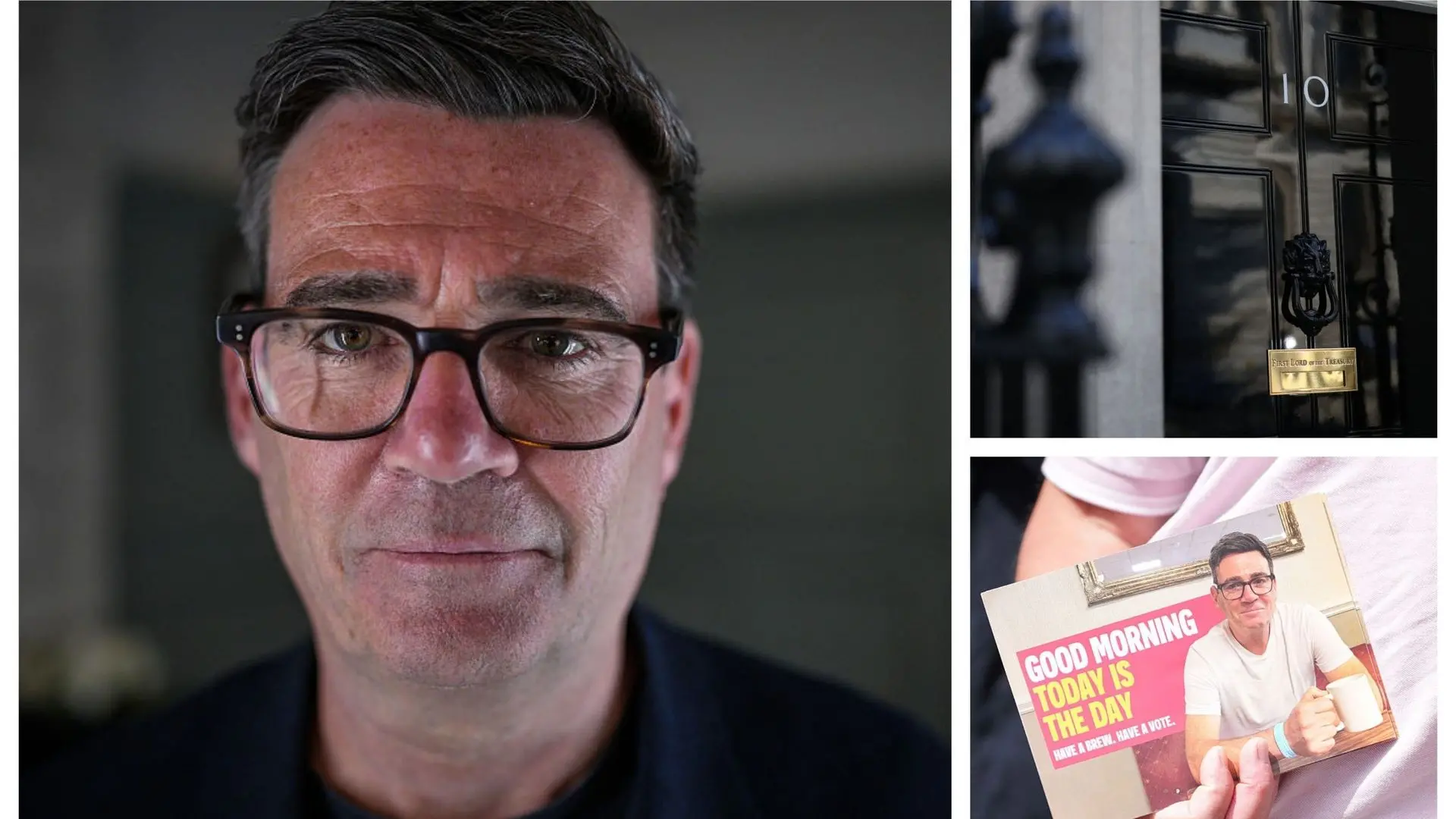
Andy Burnham, the man who turned Greater Manchester into a laboratory for left-wing governance and earned the nickname 'King of the North', is about to become the Prime Minister of the United Kingdom. After Keir Starmer's resignation following disastrous local election results and plunging personal ratings, Burnham won the Labour leadership with a stunning 95% support from the parliamentary party and all 11 affiliated trade unions. His coronation on 29 June 2026 marks the return of a more traditional, socially democratic Labour Party – one that rejects the centrist triangulation of Starmer and the far-right surge of Reform UK.
From the North West to Westminster
Andrew Burnham was born in 1970 in the industrial north-west of England, the son of an engineer and a receptionist. He grew up between Liverpool and Manchester, two cities that shaped his accent and his politics. A Labour supporter since the age of 14, he studied at Cambridge University before entering politics. His early career saw him serve as a Treasury Secretary under Gordon Brown in 2007, then as Culture Secretary and later Health Secretary. When Labour lost the 2010 general election, Burnham entered the 'shadow cabinet' – the official opposition's parallel government – and twice ran for the party leadership, losing to Ed Miliband in 2010 and Jeremy Corbyn in 2015.
Frustrated by the party's lackluster campaign to remain in the European Union during the 2016 Brexit referendum, Burnham made a radical decision. He left Westminster after 15 years as an MP, describing Parliament as a 'madhouse', and ran for the newly created role of Mayor of Greater Manchester. It was a gamble that paid off spectacularly.
The Manchester model: 'King of the North'
As mayor, Burnham quickly became the most powerful elected official outside London. He took control of health, transport, housing, and skills budgets. His response to the 2017 Manchester Arena bombing – an attack that killed 22 people at an Ariana Grande concert – was widely praised for its empathy and effectiveness. He personally attended funerals, visited survivors, and commissioned a memorial. The bee, Manchester's symbol, became a tattoo on his biceps.
During the COVID-19 pandemic, Burnham clashed with the Conservative government, arguing for a softer regional lockdown that balanced public health with economic survival. He launched a 'Bee Network' to integrate transport, returning buses to public ownership and capping fares. He also promised to end street homelessness in Manchester – and reduced it by half. His popularity soared. Breweries named a beer after him. Murals of his face appeared on city walls. He was no longer just a politician; he was a folk hero.
Burnham's approach is often described as 'emotional intelligence'. He connects with ordinary people in a way that feels authentic. He plays five-a-side football, loves rugby, is a devout Catholic, and has been married to Dutch marketing executive Marie-France van Heel for 26 years. They have three children: Jimmy, Rosie, and Annie.
The path to Downing Street
When Keir Starmer's Labour government – elected in 2024 after 14 years of Conservative rule – began to unravel, Burnham was the obvious successor. Starmer had become deeply unpopular due to policy U-turns, austerity budgets, and a hard line on immigration. Local elections in May 2026 saw Labour lose its historic Welsh stronghold while Reform UK surged in the polls. Starmer resigned, and Burnham was left as the only candidate to replace him.
In his first speech as Labour leader, delivered at a trade union headquarters in London, Burnham promised 'a new way, different from the one we have followed for forty years' – an economy and country that works for everyone, everywhere. He explicitly rejected the idea of trying to out-green the Greens or out-Reform Reform UK. Instead, he will export the 'Bee Network' model nationwide: bringing water, energy, housing, and transport under greater public control.
Decentralisation and the 2029 election
The new Prime Minister faces huge challenges. Economic growth is sluggish. Public debt is high. And Reform UK, led by the Brexit architect Nigel Farage (currently mired in a undeclared donations scandal), is ahead in opinion polls. The next general election must be held by 2029, and Labour must regain the trust of voters who have drifted to the far right.
Burnham's answer is a radical devolution of power. 'We will take power back from Westminster and Whitehall and give it to where you live,' he has said. He wants to reindustrialise Britain, reversing what he calls 'the wrong decisions of the 1980s' that centralised political power and privatised economic wealth. His first government is expected to be announced on Monday, with Home Secretary Shabana Mahmood tipped to become Chancellor.
Political analyst Tony Travers of the London School of Economics cautions that Burnham must quickly present concrete policies. 'The main challenge is to give Britons the feeling that he has a project – an optimistic project that can generate growth and deliver change.' So far, the new leader has remained 'fairly vague' on specifics. But those who know him say he is a hard worker who learns fast. The boy from the north-west who tattooed a bee on his arm is about to walk through the door of 10 Downing Street – and into history.
Source: RTBF News