

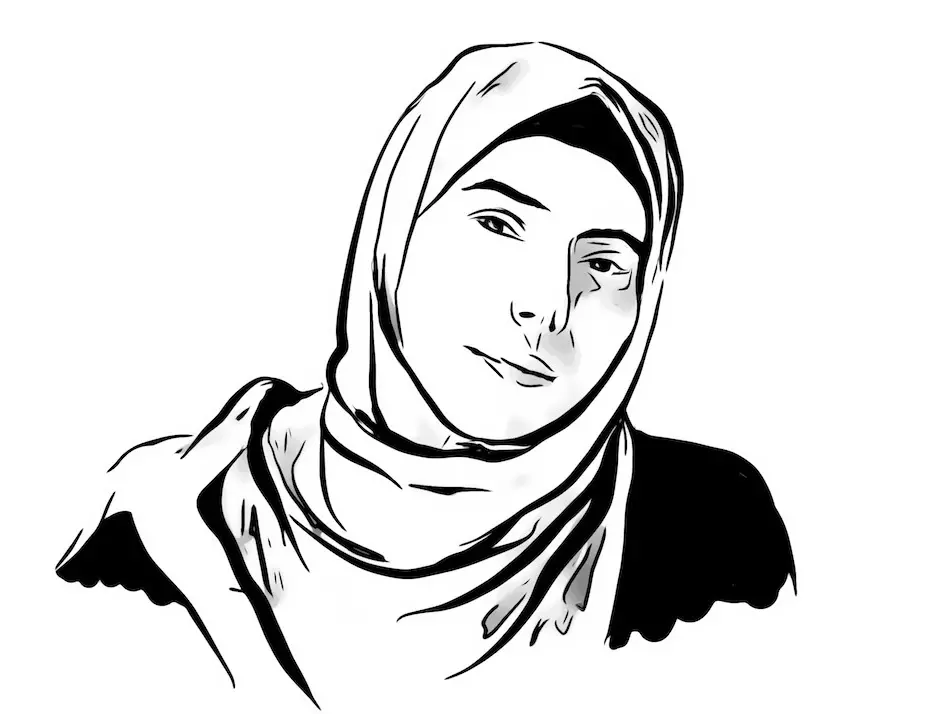
On October 20, 2023, the literary world lost a rising Palestinian voice when Hiba Abu Nada, a 32-year-old poet and novelist, was killed by an Israeli airstrike on her home in southern Gaza. Her death was confirmed by local sources and came just days after the start of the latest escalation in the Israeli-Palestinian conflict, following the Hamas attack on October 7 that killed 1,400 Israelis and resulted in 199 hostages. Since then, Israeli retaliatory airstrikes have killed over 5,000 Palestinians in Gaza, according to Hamas-run health authorities.
Hiba Abu Nada was born in Mecca, Saudi Arabia, but moved to her family's homeland, Palestine, at a young age. She studied biochemistry at the Islamic University of Gaza and later earned a degree in clinical nutrition from Al-Azhar University in Gaza. Despite her scientific background, her passion lay in literature and poetry. She gained recognition when her debut novel, Oxygen Is Not for the Dead (Arabic title: الأكسجين ليس للموتى), won the second prize in the Sharjah Arab Creativity Award in 2016. The novel, which explores themes of loss, identity, and resistance, has not been translated into French or English but remains popular in the Arab world.
Beyond fiction, Abu Nada was an active poet and a contributor to the collaborative encyclopedia Wikipedia, where she wrote articles on Palestinian culture and history. On October 8, just days before her death, she posted on X (formerly Twitter): "The night of the city is dark except for the glow of missiles, silent except for the noise of bombings, frightening except for the comfort of supplication, black except for the light of the martyrs. Good night, Gaza." This poetic testimony has since been widely shared as a haunting epitaph for her own life.
Her death is part of a tragic pattern. Other Palestinian writers have also lost their lives or families in the conflict. Talal Abu Shawish, another author, was killed along with his family in an Israeli strike on the Nusayrat camp. Atef Abu Saif, a well-known novelist and essayist, lost several family members in the same bombings. The toll on Gaza's intellectual community has been severe, with many artists, journalists, and academics killed or displaced.
Background of the Conflict
The current escalation began on October 7, 2023, when Hamas launched a surprise attack on southern Israel, killing civilians and taking hostages. Israel responded with a massive air and artillery campaign on the densely populated Gaza Strip, home to 2.3 million people. The United Nations has warned of a humanitarian catastrophe, with shortages of water, food, electricity, and medical supplies. On October 21, the first humanitarian aid convoy entered Gaza through the Rafah crossing from Egypt, but it was described as a drop in the ocean.
International calls for a ceasefire have grown louder. UN Secretary-General António Guterres has called for an "immediate humanitarian ceasefire." The European Union has urged a "humanitarian pause," while the United States has opposed a ceasefire, arguing it would benefit Hamas. Former President Barack Obama, in a blog post on October 23, warned that some Israeli actions—such as cutting off food and water to Gaza—could "harden Palestinian attitudes for generations" and undermine Israel's long-term security.
The Literary Response
In the face of escalating violence, writers and artists have mobilized for peace. On October 18, an open letter signed by over 600 authors and artists from the Western world was published in the London Review of Books. Signatories include prominent figures like Salman Rushdie, Margaretta D'Arcy, Louis Deslis, Kathy Engel, Anne Enright, Naomi Klein, and Sally Rooney. The letter calls for "an end to all violence, all oppression, and all denial of human rights, and for a just and lasting peace for all." It demands that Western governments "insist on an immediate ceasefire and allow free access of humanitarian aid to Gaza."
The letter also urges an end to arms transfers and military support that exacerbates the conflict. This intervention echoes a long tradition of writer-activists speaking out during times of war, from the Vietnam War protests to the Iraq War. The current conflict has deeply polarized opinion, with accusations of anti-Semitism and Islamophobia flying on both sides. Yet the literary community's call for a ceasefire represents a desire to preserve human life above all else.
Hiba Abu Nada's Legacy
Though her life was cut short, Hiba Abu Nada leaves behind a body of work that reflects the Palestinian experience under occupation and war. Her novel Oxygen Is Not for the Dead delves into the psychological trauma of living in a conflict zone, where the simple act of breathing can become a political statement. Her poetry, often published on social media and in Arab literary magazines, captures the intimate horror of being bombed while clinging to faith and resilience.
In one of her final poems, she wrote: "We are not afraid of death / but we are afraid of being forgotten." The international literary community is now ensuring that she will not be forgotten. Tributes have poured in from countries including France, the United Kingdom, and the United States, with translations of her work circulating online. Bookstores and cultural organizations have held readings in her memory.
The Palestinian cause has a long history of literary expression, from Mahmoud Darwish to Ghassan Kanafani. Hiba Abu Nada's name now joins that lineage. Her death, like that of many civilians, underscores the human cost of the conflict. As the world watches the ongoing bombardment, the loss of a poet who gave voice to the voiceless is a stark reminder of what is at stake.
In the days following her death, Israeli airstrikes continued across Gaza, hitting residential areas, hospitals, and schools. The death toll has risen to over 5,700 Palestinians, including more than 2,000 children. Negotiations for a ceasefire remain stalled, with Israel insisting on the release of all hostages and Hamas demanding an end to the blockade and a halt to attacks. The United Nations Relief and Works Agency (UNRWA) reports that over 1.4 million people have been displaced within Gaza, many sheltering in overcrowded UN facilities.
The European Parliament passed a resolution on October 19 calling for a "humanitarian pause" to allow aid delivery, but it stopped short of demanding a full ceasefire. The United States vetoed a UN Security Council resolution that would have called for a ceasefire, arguing it was unbalanced. Meanwhile, the International Committee of the Red Cross has described the situation as "catastrophic." The World Health Organization warns that disease outbreaks are imminent due to lack of clean water and sanitation.
In memory of Hiba Abu Nada, several online platforms have begun archiving her works. A group of volunteers is translating her poetry into English, French, and Spanish. The Sharjah Book Authority, which awarded her the creativity prize, has announced a special fund to support the families of Palestinian writers affected by the war. The Palestine Writers Association has also called for the protection of cultural figures in conflict zones.
Her death is not an isolated incident. According to the Committee to Protect Journalists, at least 24 journalists have been killed in the conflict—most of them Palestinian. The targeting of cultural and media infrastructure raises concerns about the deliberate destruction of Palestinian identity. UNESCO has urged all parties to respect international humanitarian law and protect cultural heritage.
As the world grapples with the cycle of violence, the story of Hiba Abu Nada serves as both a tragedy and a testament to the power of words. In her last post, she bid Gaza goodnight. The world now bids her goodbye, hoping that her light, like that of the martyrs she wrote about, will not be extinguished.
Source: ActuaLitté.com News