

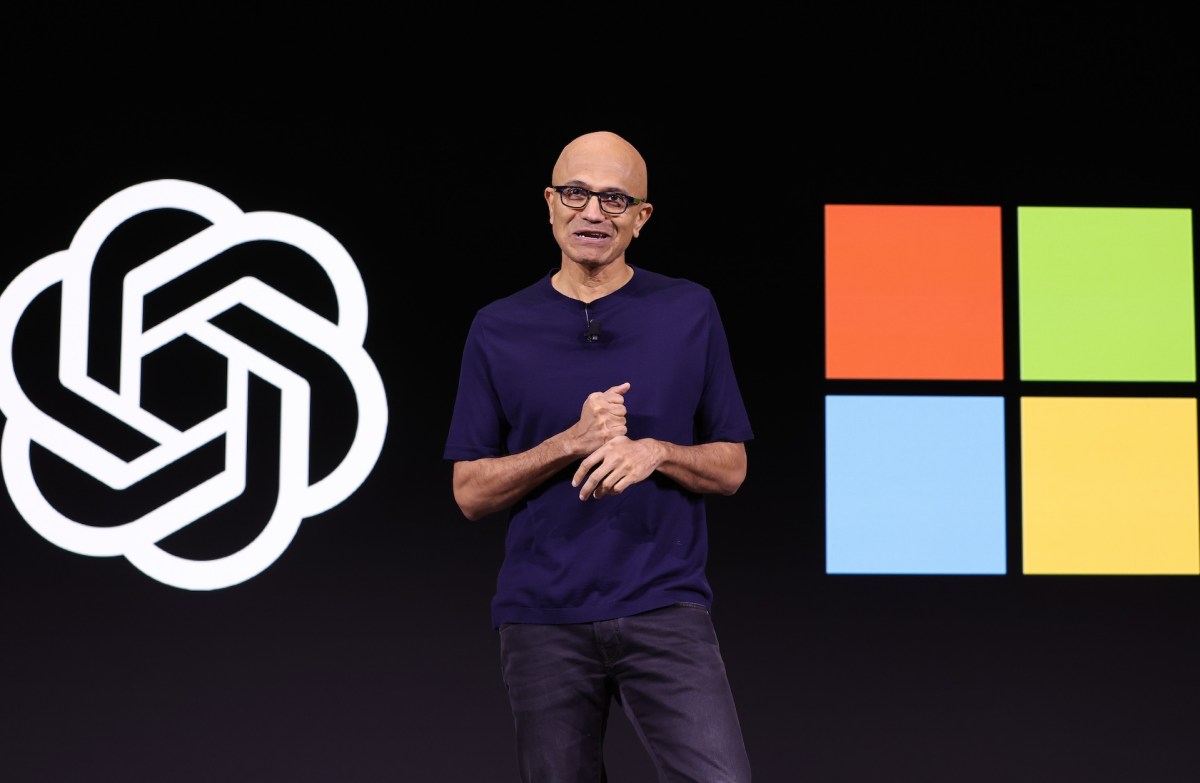
Microsoft CEO Satya Nadella has issued a stark warning to enterprises adopting artificial intelligence: the convenience of proprietary AI models may come at a hidden cost that could jeopardize their competitive advantage. In a blog post published on Sunday, Nadella argued that companies using AI services from labs like OpenAI and Anthropic are effectively paying twice for intelligence—once in cash for token usage, and again by surrendering their most valuable proprietary data.
This warning is not entirely new. Venture capitalists such as Jason Calacanis and Palantir CEO Alex Karp have previously voiced concerns that AI model makers could act as Trojan horses, gaining deep access to their customers' business secrets and eventually using that knowledge to compete against them. However, Nadella's direct involvement is significant because Microsoft is a major investor in both OpenAI and Anthropic, making his call to action a notable shift in tone.
The 'Pay Twice' Problem
Nadella's central thesis is that enterprises unknowingly trade their proprietary knowledge when they use advanced AI models. 'You essentially pay for intelligence twice, once with money, and again with something even more valuable: the proprietary knowledge you must reveal to make that intelligence useful,' he wrote. This knowledge includes the prompts businesses write, the tools their AI agents use, and most critically, the corrections made when the model produces incorrect outputs. Every correction, according to Nadella, is distilled into institutional know-how that a competitor could never buy.
The concern is particularly acute in industries where unique data sets and specialized domain expertise are the primary sources of competitive advantage. For example, a pharmaceutical company training an AI model on drug discovery pipelines would inadvertently teach the model maker about its most promising compounds. Similarly, a financial institution fine-tuning a model for fraud detection would reveal its proprietary risk assessment strategies. Over time, the model provider could aggregate such knowledge across many customers and either improve its models in ways that benefit rivals or even launch its own competing services.
The 'Trojan Horse' Analogy
The analogy of a Trojan horse has been used by critics for months. Startups and enterprises are invited to use powerful, easy-to-integrate AI models, but they may not realize that the terms of service often grant the model provider broad rights to learn from customer usage data. Nadella explicitly highlighted this: 'While the great innovation that comes from model providers having fair use rights to train models on public data is needed, I find it ironic that the status quo is to then turn around and impose restrictive terms on distillation.'
Distillation is a technique where one model is used to train a smaller, cheaper model by mimicking its outputs. In February, Anthropic accused Chinese open-source models of sending millions of prompts to Claude as a way to improve their own models, calling for government export controls. Nadella pointed out the hypocrisy: model makers have no qualms about scraping the entire internet to train their models, yet they restrict others from doing the same to their outputs. His blog post argued that enterprises should have the same freedom to distill proprietary models as the model makers have to train on public data.
Nadella's Proposed Solutions
Unsurprisingly, Nadella's recommended solutions play to Microsoft's strengths. He urged companies to 'retain ownership' of their data—including prompts, feedback, and interaction logs—and to build 'proprietary learning environments' on the cloud. This essentially means conducting AI training and fine-tuning in a private cloud environment where the data never leaves the customer's control. Microsoft's Azure cloud is naturally positioned to benefit from such a move, as it offers the infrastructure for these private AI environments.
Nadella also advocated for what he called 'orchestration layers' that allow businesses to switch between different AI models from various providers without being locked into a single vendor. Tools like AI gateways have already become popular for this purpose, enabling enterprises to route requests to the best model for each task while maintaining oversight of data flows. This approach reduces dependency on any one model maker and gives companies more leverage in negotiations.
The Shift to Open-Source On-Premises Models
While Nadella never explicitly used the term 'open source,' the subtext was clear. The most direct way for enterprises to retain ownership of their data and avoid giving away secrets is to run open-source models on their own premises. This trend is already accelerating, according to industry observers. Idit Levine, founder and CEO of Solo.io, which provides networking and security software for managing AI systems, says her customers are increasingly moving in this direction. 'After experimenting with proprietary model makers, they start asking themselves: Can I take an open source model and run it on-prem? It will do almost 90% of what the big one's doing. It will cost way less,' she told TechCrunch. 'They understand that, and they can control it.'
Solo.io's technology was selected last year to power the Linux Foundation's Agentgateway project. The company counts large enterprises like T-Mobile, ADP, and SAP as customers. Levine sees the migration to on-premise open-source models as the next big wave in enterprise AI adoption. 'Companies want the flexibility to customize models without giving away their crown jewels,' she added. 'Open-source models give them that ability.'
Other companies are reporting similar trends. Vercel, best known as a platform for building and hosting websites, has recently added AI model-switching tools. Its data shows that open-source models accounted for 29% of all traffic routed through its gateway last month. OpenRouter, a service that helps developers route requests across different AI models, is also seeing a surge in traffic to open-source alternatives. The momentum suggests that enterprises are voting with their wallets, moving away from black-box proprietary models toward more transparent, controllable options.
Broader Implications for the AI Industry
Nadella's warning arrives at a time of intense debate about the concentration of AI power among a handful of companies. The top proprietary model makers—OpenAI, Google, Anthropic, and Meta—have invested billions in training cutting-edge models. Their business models rely on selling API access while potentially learning from customer data. If enterprise customers begin to pull back, it could reshape the economics of the AI industry. Open-source models like Meta's Llama, Mistral, and various fine-tuned variants are already competitive with proprietary ones in many tasks, and they allow businesses to run them locally with full data control.
This shift could also affect the pace of AI innovation. Proprietary labs may find it harder to improve their models if they lose access to the rich, real-world data that enterprises provide. Conversely, open-source models could benefit from a collective feedback loop as more organizations contribute improvements and fine-tune them for specific domains. Nadella's blog post essentially legitimizes these concerns, giving cover to CTOs and CIOs who have been hesitant to commit fully to proprietary platforms.
In his concluding remarks, Nadella emphasized that the act of consuming intelligence is also an act of creating intelligence. 'In consuming intelligence, you are creating intelligence. And what you create should belong to you,' he wrote. This philosophy aligns with the broader open-source ethos, even if Nadella stopped short of explicitly endorsing it. For now, the ball is in the enterprise's court: the choice between convenience and control will define the next phase of AI adoption.
Source: TechCrunch News