

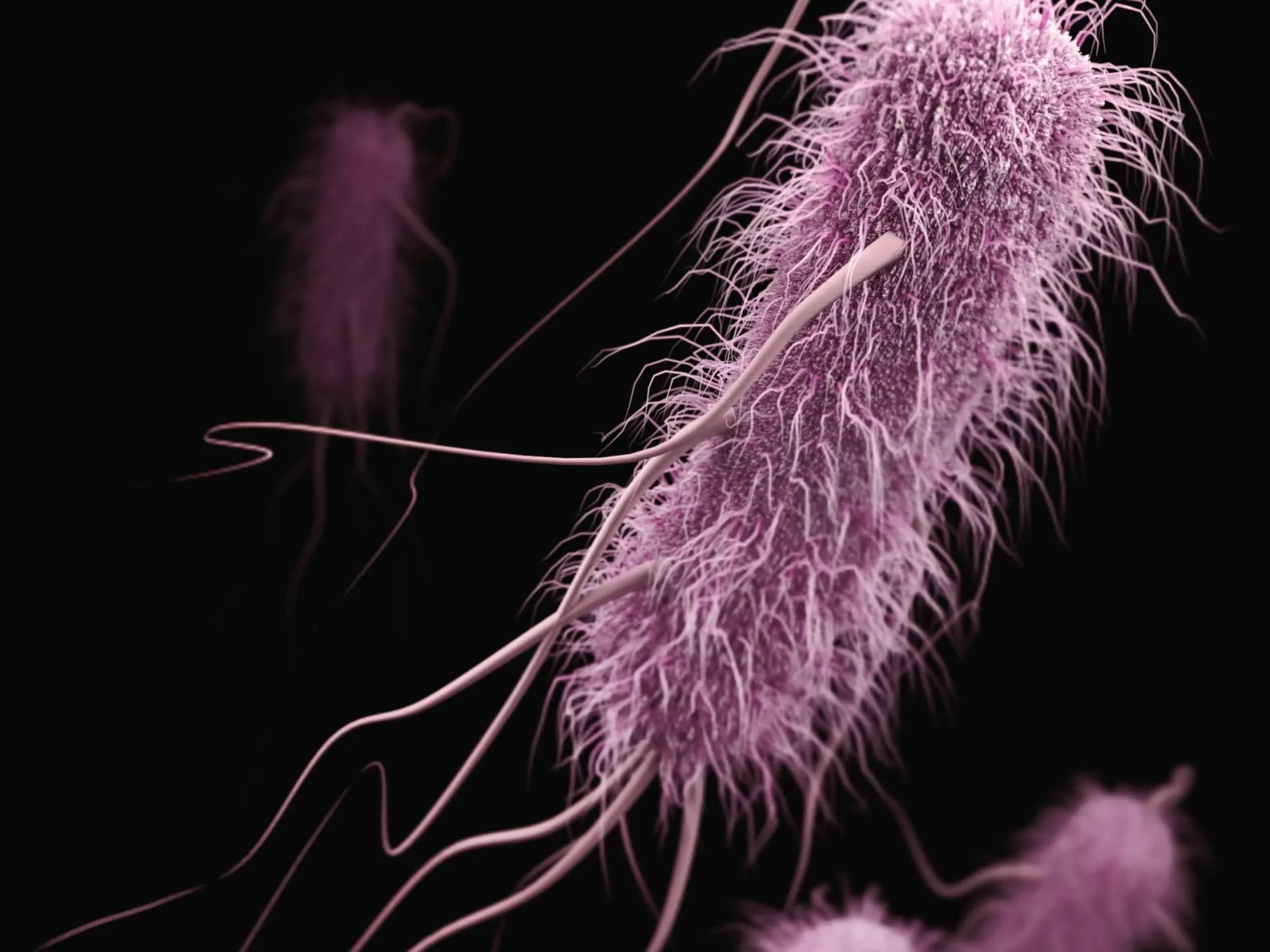
In a landmark achievement at the intersection of artificial intelligence and synthetic biology, researchers at Stanford University have successfully used the AI model Evo 2 to generate novel bacteriophages that specifically target and kill Escherichia coli (E. coli). The work, revealed in a recent study, showcases how large language models trained on vast genomic datasets can move beyond prediction and into active biological design, opening new frontiers for precision medicine and antimicrobial defense.
Evo 2 is a large-scale AI model developed by the Arc Institute, Stanford University, and NVIDIA, among others. It is one of the most powerful genomic foundation models ever created, trained on more than 9.3 trillion nucleotides from over 128,000 genomes spanning bacteria, archaea, and eukaryotes. The model learns the grammar and syntax of DNA, much like GPT models learn human language, enabling it to generate and predict biological sequences that are not only plausible but functional.
From sequence to functional phage
The Stanford team, led by computational biologists and geneticists, tasked Evo 2 with designing bacteriophage sequences — viruses that infect bacteria. Bacteriophages, or phages, are the most abundant biological entities on Earth and have long been considered a potential alternative to antibiotics, especially in an era of rising antimicrobial resistance. However, naturally occurring phages often require extensive isolation and engineering before they can be used therapeutically. Evo 2 aims to compress this timeline by designing phages entirely in silico.
Using the model, the researchers generated a library of phage-like DNA sequences, then selected candidates that were predicted to be structurally viable and capable of infecting E. coli. These sequences were synthesized in the lab and tested against cultures of E. coli, including antibiotic-resistant strains. The results showed that several of the AI-designed phages successfully infected and lysed the bacteria, effectively killing them. This is a significant proof-of-concept: the AI did not merely tweak existing phages but designed entirely new ones with no direct template from nature.
How Evo 2 works
Evo 2 operates as a masked language model, similar to BERT in natural language processing, but trained on DNA sequences. It uses a striped hyena architecture (a blend of convolutional and recurrent layers) to handle extremely long context windows — up to 1 million base pairs. This allows the model to capture long-range dependencies in genomes, such as regulatory elements, gene organization, and even structural features of chromosomes. When the model generates a sequence, it adheres to the statistical patterns it learned during training, but it can also be conditioned to produce sequences with desired properties, such as the ability to bind to a specific bacterial receptor.
For the phage design, the researchers conditioned Evo 2 with known phage features, including tail fiber proteins that mediate attachment to E. coli, and lysis mechanisms that break open the bacterial cell. The model produced sequences that encoded proteins with these functions, and the synthesized phages were confirmed to have the expected protein folds and activities.
Implications for antimicrobial resistance
The success of Evo 2 in generating functional phages comes at a critical time. Antimicrobial resistance (AMR) is one of the most pressing global health threats, with an estimated 1.27 million deaths directly attributable to drug-resistant infections each year. Phages offer a promising avenue because they are highly specific and can be lytic without harming human cells. However, the classical approach to phage therapy — isolating phages from environmental samples — is laborious and slow. AI-driven design could drastically accelerate the discovery and optimization of phages for clinical use.
Beyond phages, Evo 2 has already shown ability to design other biological systems, including CRISPR-Cas9 proteins with altered specificities. In earlier experiments, the model generated Cas9 variants that were experimentally validated to cut DNA at target sites. This demonstrates that Evo 2 is not limited to a single biological function but can serve as a general-purpose toolkit for protein and genome engineering.
Ethical and safety considerations
As with any dual-use technology, AI-generated biological sequences raise concerns about biosafety and biosecurity. The ability to design functional viruses and other pathogenic agents from scratch could theoretically be misused. However, the Stanford researchers emphasize that the phages they created are specific to E. coli and do not pose a threat to humans. They also note that the model is not yet perfect; many generated sequences are nonfunctional, and screening is required to identify active candidates. Nevertheless, the scientific community is actively discussing governance frameworks for AI-driven biosecurity, and institutions like the Arc Institute have committed to safe and responsible release of models and data.
The U.S. government and international bodies have already begun to address these risks. In 2023, the White House issued an executive order on AI, which included provisions for screening DNA synthesis orders and regulating high-risk models. Evo 2 was released under a limited license that prohibits harmful applications, and the training data and code are open for research purposes with safeguards.
Technical milestones and benchmarks
Evo 2 represents a significant technical leap over earlier genomic AI models. Its predecessor, Evo 1, was trained on prokaryotic genomes and could generate small sequences, but Evo 2 extends to eukaryotic genomes and supports multi-megabase generation. In terms of performance, Evo 2 achieves state-of-the-art results on a range of genomic benchmark tasks, including prediction of mutation effects, identification of non-coding regulatory elements, and detection of disease-associated variants. The model's attention mechanisms allow it to reason about 3D genome structure, which is crucial for gene expression regulation.
To validate Evo 2's design capabilities, the Stanford team conducted a series of control experiments. They generated random sequences with similar GC content but without evolutionary constraints, and these failed to produce functional phages. They also compared Evo 2's designs with natural phages and showed that while the AI-generated phages were novel, their protein structures were plausible and their genomic organization followed expected phage architecture, including terminal repeats and structural gene clusters.
The phage designs also underwent rigorous quality checks. The team used AlphaFold, another AI system, to predict the 3D structures of the phage proteins. Hundreds of these predicted structures matched known viral protein folds with high confidence. This cross-validation between two independent AI systems adds to the credibility of the approach.
Phage therapy: a renewed hope
Phage therapy is not a new concept. It dates back to the early 20th century, when scientists like Félix d'Hérelle used phages to treat bacterial infections. However, the discovery of antibiotics in the 1940s overshadowed phages, and research waned, particularly in Western countries. In Georgia and Poland, phage therapy continued and has been used clinically for decades. Now, with the rise of multidrug-resistant bacteria, interest has revived. The U.S. FDA has approved several clinical trials for phage therapy, and there have been compassionate-use cases where patients with severe infections were successfully treated with phages.
The challenge has always been finding the right phage for a specific bacterial strain. E. coli alone has many serotypes, each with distinct surface receptors. A phage that kills one strain may not affect another. The Stanford team's AI approach could address this by rapidly designing phages tailored to specific targets. They could, in principle, take a bacterial strain from a patient, sequence its genome, and use Evo 2 to design a custom phage in a matter of days.
In the current study, the researchers used a laboratory strain of E. coli (K12), but they note that the same methodology could be applied to pathogenic strains such as E. coli O157:H7, which causes foodborne illness, or extraintestinal pathogenic E. coli (ExPEC), which causes urinary tract infections and sepsis. The model's training data includes a wide variety of E. coli genomes, so it has the knowledge to design phages for different surface markers.
Future directions and improvements
While this proof-of-concept is exciting, the AI-generated phages are not yet ready for clinical use. Their killing efficiency was moderate compared to natural phages, and the team observed that some phages required higher multiplicities of infection (MOI) to achieve complete lysis. The researchers are now working on optimizing the design process by incorporating feedback from laboratory experiments into the model.
One strategy is to use active learning, where the model iteratively proposes sequences and selects for those that pass functional assays. Another is to combine Evo 2 with protein engineering tools and directed evolution. For instance, after the AI generates a candidate phage, the researcher could use error-prone PCR or CRISPR-based editing to introduce mutations and then screen for improved activity. This hybrid approach of AI generation and experimental evolution could yield phages that match or surpass natural ones.
Also, the team plans to expand Evo 2 to design not just phages but also other antimicrobial agents, such as antimicrobial peptides, and even engineered bacterial strains for therapeutic purposes. The model could also be used to design phages that carry genes to disrupt biofilms, which are highly resistant to antibiotics.
Broader impact on medicine and biotech
Beyond phages, Evo 2's success demonstrates the immense potential of generative AI in biology. The same framework that created phages against E. coli could be used to design enzymes for industrial processes, novel drug candidates, or even gene editing tools for gene therapy. The ability to generate functional sequences from scratch is a paradigm shift. Previously, scientists were constrained to evolve existing proteins or rely on nature's designs. Now, AI can explore the vast space of possible biological molecules and propose solutions that have never existed in nature.
The study also highlights the importance of cross-disciplinary collaboration. The project brought together computer scientists, molecular biologists, clinicians, and bioethicists. The open-source nature of Evo 2, with code and model weights available on platforms like Hugging Face, ensures that researchers worldwide can build upon this work. The Stanford team has also released the phage sequences and experimental protocols, so other labs can reproduce and extend the findings.
In conclusion, the generation of functional phages against E. coli by Evo 2 is a milestone that showcases the maturity of AI-driven biology. As models like Evo 2 continue to improve, the line between digital and biological worlds blurs. The future may soon see AI-designed therapies administered to patients, not as a science fiction dream, but as a medical reality. The path from algorithm to organism is now shorter than ever, and the implications for healthcare, biotechnology, and our understanding of life itself are profound.
Source: AI News News