

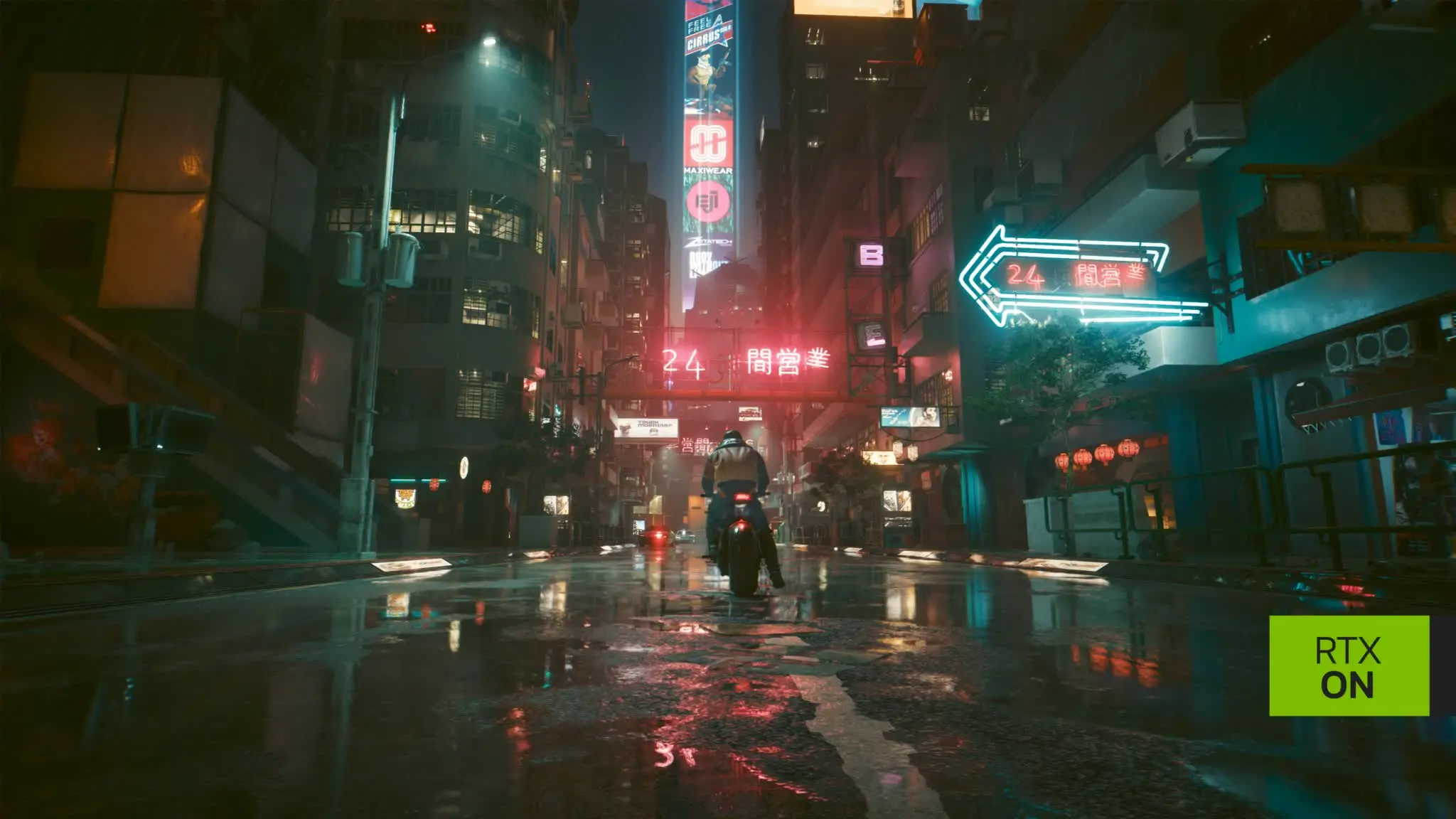
In 2018, Nvidia stood at a crossroads. The company was still primarily known for graphics cards, and CEO Jensen Huang took the stage to introduce the GeForce RTX 20 series with a bold promise: hardware-accelerated ray tracing would change gaming forever. Developers would no longer need to spend months creating fake lighting through shadow maps and reflection probes. By applying the laws of physics, lighting would just work. The RTX 20 series was described as the biggest generational leap in computer graphics history, with pricing starting at $499 for the RTX 2070. The message was clear: these were must-buy GPUs, and once you experienced ray tracing, you would not want to play without it.
Nearly eight years later, it is fair to ask whether that promise was ever real. Ray tracing has not transformed gaming in the way Nvidia described. Most games released since 2018 do not support ray tracing, and the vast majority of those that do treat it as an optional feature rather than a core part of the experience. For many players, the visual upgrade is not noticeable enough to justify the performance cost, and for competitive gamers, ray tracing can actually be a disadvantage.
The RTX Promise vs. Reality
The first RTX hardware was simply not powerful enough to deliver real-time ray tracing in a compelling way. One year after launch, only two games made enabling ray tracing feel worthwhile: Metro Exodus and Control. A few other games had RT support, but many implementations were unimpressive. Battlefield V, for example, offered RT reflections that were noisy and largely pointless in actual gameplay.
Even in the best-case titles, performance was disappointing. The RTX 2080, priced at $500 at the time, could not deliver a consistent 60 fps at 1440p with ray tracing enabled. The RTX 2060 Super, generally considered a 1440p card, was never in the conversation for 1440p ray tracing. At 1080p with medium RT settings in Control, performance still fell well short of 60 fps. Nvidia responded by suggesting gamers lower other settings or enable DLSS, but DLSS 1.0 was not the technology it later became. It was often poor at 1080p, and upscaling did not fundamentally close the performance gap. The suggestion also undermined the pitch: ray tracing was supposed to be an extra layer on top of maxed-out settings, not a reason to compromise elsewhere.
When Nvidia cited Steam survey data showing that most gamers still used 1080p displays, many reviewers found that response unacceptable. The RTX 2060 Super was a 1440p GPU for traditional rendering. Requiring players to drop to 1080p and lower quality presets just to enable ray tracing was a clear sign that the hardware had been oversold.
Ray Tracing Never Made Sense for Competitive Gaming
By 2019, it had become clear that heavily weighting ray tracing support in GPU reviews was a mistake. Many of the most popular games did not benefit meaningfully from the feature. Call of Duty: Modern Warfare shipped with ray-traced shadows, which could enhance the single-player campaign but mattered little in multiplayer. Fortnite could look spectacular with ray tracing enabled, but competitive players overwhelmingly use Performance Mode, a stripped-down visual preset designed to maximize frame rates and visibility.
Competitive shooters demand high frame rates, and most players are not willing to sacrifice them for better lighting. A poll from two years ago found that the largest group of gamers targeted more than 140 fps in shooters, and 88% wanted at least 100 fps. These numbers are extremely difficult to reach with ray tracing enabled on mid-range hardware. In many multiplayer games, ray tracing also makes enemies harder to spot, adding extra reflections and lighting details that can obscure player models. Enabling RT in a competitive title means handicapping yourself twice: once on performance and once on visibility.
Almost no one trying to win matches in Fortnite enables ray tracing. The same is true for most other popular online shooters. If the feature cannot survive contact with the competitive scene, it cannot be considered a universal upgrade.
Ray Tracing Is Still a Niche Feature
For single-player games, ray tracing has produced some striking visuals, but the list of truly transformative titles remains short. Cyberpunk 2077's path tracing mode is frequently cited as a technical achievement, but it requires top-tier hardware such as the RTX 4090 or RTX 5090 to run properly. A mid-range card like the RTX 5060 Ti will not provide a practical path tracing experience. That alone places the feature far outside the mainstream.
The RTX 2060's inability to handle modern ray tracing is a growing problem. A recent aging test showed that even at 1080p in a game like Ratchet & Clank: Rift Apart, with the lowest possible quality preset and DLSS Quality enabled, the RTX 2060 fell below 60 fps when ray tracing was switched on. Early RT hardware was already limited at launch, and newer games have only widened the gap.
Two years ago, a large poll asked gamers whether they used ray tracing when available. Out of more than 50,000 votes, only 15% said yes with maximum settings. Another 7% said yes with medium or low settings, and 26% said they used it sometimes depending on the game. The largest group, 52%, said they did not use ray tracing at all. A more recent version of the poll produced nearly identical results. Even after all these years, around 80% of gamers either only occasionally use ray tracing or never use it at all.
Gamers Wanted Better Performance, Not More Ray Tracing
The industry has changed since 2018, but not in the way Nvidia predicted. GPUs have become far more expensive, and many gamers simply want their existing hardware to run new titles well. There is also a growing sentiment that game visuals have somewhat peaked. Many people cannot see a meaningful difference between ray tracing enabled and disabled, and some argue that the best rasterized games from eight years ago look just as good as modern RT-heavy titles.
The promise that ray tracing would make game development easier has also not materialized. Development costs continue to spiral, and studios are spending more time optimizing for a wide range of hardware than enjoying the benefits of automatic lighting. Instead of simplifying the pipeline, ray tracing has added another layer of complexity, particularly for developers who need to support non-RT and low-end GPUs.
For early RTX 20 series buyers, the situation is especially frustrating. If they bought the hardware specifically for ray tracing, they were sold a fantasy. The games available during those GPUs' usable lifespan were mostly underwhelming, and the hardware is now too slow for modern path tracing. If they bought the GPU for multiplayer gaming, ray tracing was irrelevant from day one. The RTX 20 and RTX 30 series cards spent most of their existence rendering traditional rasterized graphics, with ray tracing as an occasional experimental feature.
To be clear, ray tracing is not a scam in the literal sense; the technology is real and it can deliver stunning visuals. But the marketing around the first RTX generation was heavily exaggerated, and gamers who paid a premium for ray tracing got far less than what was promised.
Ray tracing may still become the default in the future, but that future keeps getting pushed further away. Eight years after the RTX 20 series launch, the feature remains an optional add-on for high-end GPU owners. The promise of a must-have technology that would change the way people play games has not been fulfilled. For now, ray tracing is best understood as a preview of what might be possible one day, rather than a defining feature of today's gaming experience.
Source: TechSpot News