

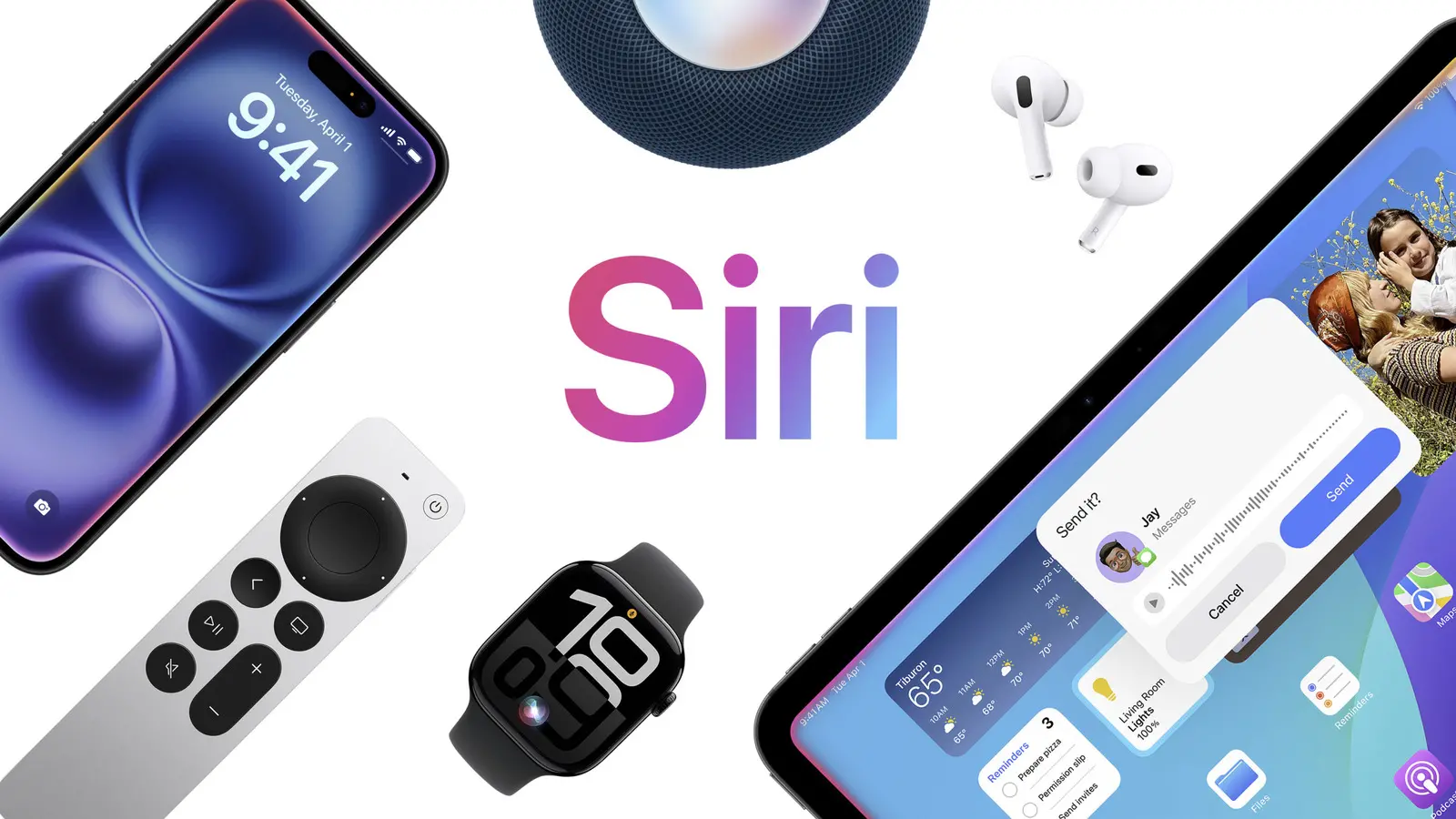
Apple has agreed to pay $250 million to settle a class action lawsuit that claims the company misled iPhone buyers in the US about the availability of an updated, AI-powered version of Siri. The lawsuit, filed in late 2025, argued that Apple's advertising and marketing materials for its Apple Intelligence platform promised a more personalized and context-aware Siri by the end of 2024, but the feature never materialized. According to The Financial Times, the settlement covers US purchasers of the iPhone 16 lineup and iPhone 15 Pro models, offering financial relief to those who bought the devices expecting the new assistant to be a core part of the experience.
The controversy dates back to June 2024, when Apple hosted its Worldwide Developers Conference (WWDC) and unveiled Apple Intelligence, a suite of AI features spanning text editing, image generation, ChatGPT integration, and a revamped Siri. The new Siri was demonstrated as being able to understand the context of what a user has on their screen—such as an email or a message—and take actions within apps, like adding an address to a contacts list or sending a file. This capability was heavily emphasized in Apple's marketing, including television commercials and in-store demonstrations, leading many consumers to view it as a key reason to upgrade to the iPhone 16 series, which launched in September 2024.
However, as months passed, it became clear that Apple was struggling to deliver on that promise. While certain components of Apple Intelligence—such as improved text rewriting, notification summaries, and integration with ChatGPT—rolled out gradually through iOS 18 updates in late 2024 and early 2025, the advanced Siri functionality never arrived. Apple did not publicly acknowledge the delay until March 2025, more than five months after the iPhone 16 hit store shelves. In that announcement, the company stated that the new Siri would require more development time and would not ship until a later major software update. The admission came after internal reports indicated that the feature's performance was inconsistent and did not meet Apple's quality standards, particularly regarding privacy and on-device processing.
The class action lawsuit was filed on behalf of US customers who purchased an iPhone 16, iPhone 16 Plus, iPhone 16 Pro, iPhone 16 Pro Max, or iPhone 15 Pro, all of which were advertised as being capable of running full Apple Intelligence. The plaintiffs argued that Apple had defrauded them by promoting a product that did not exist at launch and by not being transparent about the delays until after the holiday shopping season. The suit sought damages for the reduced value of the phones, as the promised AI features were central to the devices' appeal. Apple countered that its advertising was aspirational and that software feature timelines are always subject to change, but the company ultimately chose to settle to avoid costly litigation and potential reputational harm.
Under the terms of the proposed settlement, which requires approval by a federal judge, Apple will establish a $250 million fund to compensate class members. Each eligible customer is expected to receive between $50 and $200, depending on the number of claims filed. Notably, the settlement does not require Apple to admit any wrongdoing or liability, a standard provision in many class action settlements. The company also agreed to pay the plaintiffs' legal fees, which could amount to tens of millions of dollars, separate from the $250 million fund. Legal analysts have noted that the settlement amount is relatively modest for a company with over $100 billion in annual profit, but it signals Apple's desire to put the issue behind it as it focuses on delivering the long-delayed Siri update.
Background: The Rise and Fall of Siri’s Promises
To understand the significance of this settlement, it is important to trace the history of Siri and its evolving role in Apple’s ecosystem. Siri launched in 2011 as a pioneering voice assistant, but over the years, it fell behind competitors like Amazon Alexa and Google Assistant in terms of capabilities and accuracy. Apple attempted to revitalize Siri with machine learning improvements, but major upgrades remained elusive. The introduction of Apple Intelligence at WWDC 2024 was seen as a turning point, with Apple promising that Siri would finally leverage large language models to become genuinely useful. The company demonstrated scenarios where Siri could answer questions based on a user’s calendar, emails, and messages, and even perform multi-step tasks like ordering a ride or booking a reservation through third-party apps. These demonstrations generated widespread excitement and were a cornerstone of Apple’s argument that the iPhone 16’s new A18 and M4 chips were necessary for advanced AI processing.
Yet, behind the scenes, Apple faced significant technical hurdles. The new Siri required a balance between on-device processing for privacy and cloud-based computing for complex tasks. Apple emphasized that user data would remain on the device, but building a context-aware assistant that could securely access personal information while maintaining accuracy proved far more difficult than anticipated. Internal testing revealed that Siri often misinterpreted requests, accessed the wrong data, or failed to complete actions. Additionally, the feature relied on a new architecture that integrated with Apple’s App Intents framework, which required third-party developers to update their apps—a process that was slower than expected. By early 2025, it was clear that the Siri overhaul was not going to be ready for iOS 18 or even iOS 19, and Apple quietly shifted its internal deadlines to 2026.
Impact on iPhone Sales and Customer Trust
The delay of the AI-powered Siri had tangible consequences for Apple’s business. Several analysts noted that iPhone 16 sales, while still strong, underperformed expectations in the final quarter of 2024 and into early 2025. Surveys indicated that a significant percentage of iPhone upgraders cited Apple Intelligence as a primary reason for their purchase, and many expressed disappointment when the promised features did not appear. This sentiment was especially pronounced among early adopters who paid premium prices for the Pro models. The lack of a differentiating AI feature also gave an opening to competitors like Samsung and Google, who launched their own AI assistants—Galaxy AI and Gemini Nano respectively—that were operational from day one on their flagship devices.
The class action lawsuit became a focal point for customer frustration, and the settlement is expected to partially alleviate that anger. However, the challenge for Apple is not just financial—it is about restoring trust. The company has been working frantically to get the new Siri out the door, and recent reports indicate that it has made significant progress, in part thanks to a partnership with Google. According to sources familiar with the matter, Apple has licensed Google’s Gemini models to power some of the advanced language understanding features of the new Siri, a move that marks a departure from Apple’s usual emphasis on proprietary technology. The new Siri, along with other delayed Apple Intelligence features, is now expected to debut in iOS 27, which is likely to be announced at WWDC 2026 and released later that year alongside the iPhone 18. Apple has not commented on these reports, but the partnership with Google underscores the immense technical challenge of creating a truly competitive AI assistant.
Legal and Regulatory Implications
The settlement also has broader implications for how tech companies advertise future features. US consumer protection laws allow companies to make forward-looking statements about products, but those statements must not be materially misleading. The Federal Trade Commission has in the past taken action against companies that failed to deliver on such promises, and this case could serve as a precedent. Apple’s decision to settle rather than fight the lawsuit may encourage other class action firms to pursue similar claims against companies that pre-announce features that are not ready. At the same time, the settlement structure—whereby Apple does not admit fault—allows the company to avoid legal admissions that could be used in future cases.
For consumers, the settlement provides a modest remedy, but many class members may feel that monetary compensation is insufficient compared to the inconvenience and disappointment of buying a device that did not fully deliver. The terms require that customers file claims online, and the fund will be distributed on a first-come, first-served basis until exhausted. Legal experts warn that with potentially millions of eligible customers, the per-person payout could be lower than expected if claims flood in. Despite these limitations, the settlement closes one chapter for Apple as it works to regain its AI footing.
In the meantime, Apple continues to add other AI features to its devices. iOS 18.4, released in March 2026, introduced new writing tools and a redesigned Photos app that uses machine learning to organize images. But the core promise of an assistant that truly understands you remains unfulfilled. The company has signaled that it is committed to shipping the new Siri this year, and the partnership with Google may finally provide the missing piece. Whether that will be enough to win back customers who felt deceived remains to be seen. The road to AI-powered Siri has been long and costly—$250 million, to be exact—and the true test will be whether the final product lives up to the vision that was shown on stage two years ago.
Source: Engadget News