

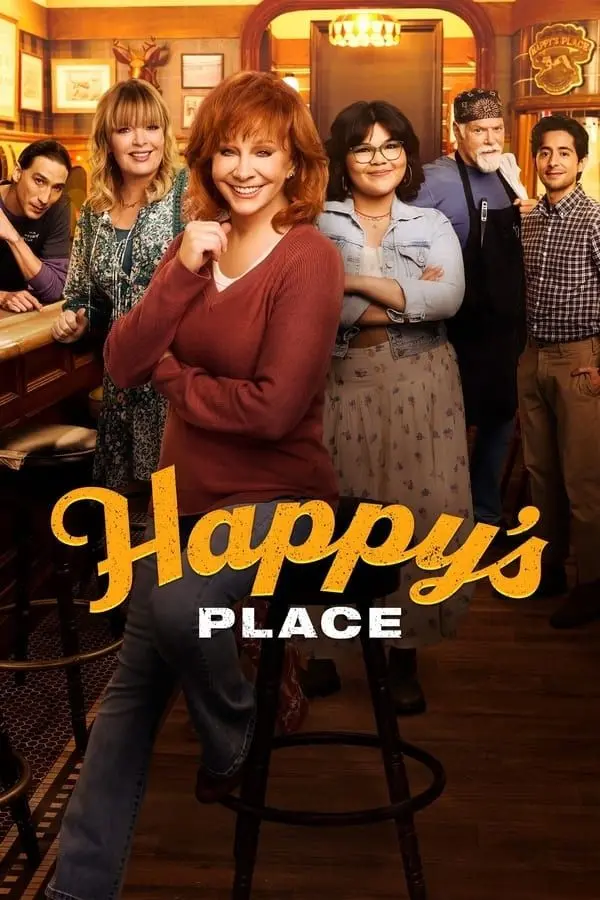
The new NBC sitcom Happy's Place has arrived with a familiar face and a fresh twist. The series, which centers on a woman who inherits her father's restaurant, immediately captures attention with its blend of comedy, family drama, and surprise revelations. At the heart of the story is Bobbie, a character brought to life with warmth and wit by Reba McEntire, who returns to the sitcom genre after her iconic run in Reba. But this time, the familiar formula of a single woman navigating life is layered with a more complex family dynamic — one that includes a half-sister she never knew existed.
The show's premise is deceptively simple. Bobbie has spent years away from her hometown, building a life and career elsewhere. When her father passes away, she inherits his most prized possession: a lively neighborhood restaurant and bar called Happy's Place. For Bobbie, this is not just a business; it is a connection to her roots and to the father she loved. She arrives with plans to honor his memory by running the establishment her way, perhaps with a few modern touches and a lot of heart. However, those plans are immediately complicated when she discovers that her father had a second daughter — and that this new half-sister also owns a share of the restaurant.
The revelation sets the stage for a classic sitcom premise: two very different women forced to work together in a shared space. Bobbie is grounded, practical, and deeply attached to tradition. Her half-sister, on the other hand, is younger, more spontaneous, and brings a completely different energy to the workplace. Their clashes are not just about business decisions; they are about identity, belonging, and what it means to be family. The show uses this conflict to generate both laughs and moments of genuine emotion, as the two women slowly learn to understand each other.
A Return to Form for Reba McEntire
For Reba McEntire, Happy's Place represents a significant return to the medium that made her a household name. Her previous sitcom, Reba, ran for six seasons from 2001 to 2007 and remains a beloved staple in syndication. In that show, she played a divorced mother of three, dealing with the chaos of family life in a suburban Texas setting. The show was praised for its sharp writing and McEntire's impeccable comic timing. Now, nearly two decades after that show ended, she steps back into the sitcom spotlight with a role that feels both nostalgic and new.
McEntire has often spoken about her love for comedy and her admiration for the sitcom format. In interviews, she has described Happy's Place as a project that came to her at the right time. The script, she said, had a warmth and a sense of humor that reminded her of why she originally wanted to be in television. Moreover, the opportunity to play a character who is both strong and vulnerable, who has to confront the unexpected, appealed to her as an actress. Bobbie is not simply a variation of her previous roles; she is a woman at a crossroads, dealing with grief, new responsibilities, and a radical shift in her understanding of her own family history.
The Half-Sister Dynamic
The casting of the half-sister, Isabella, is crucial to the show's success. The role is played by an actress who brings a contrasting energy to McEntire's grounded performance. Isabella is portrayed as someone who has always known about her connection to the family, but was never fully acknowledged. Her childhood was different from Bobbie's, and she grew up with a longing for the paternal approval and love that was never fully given. When she arrives at Happy's Place, she is not just an opportunist looking for a piece of the inheritance; she is searching for a connection to her father's memory and a place where she finally belongs.
The writers have wisely avoided making Isabella a one-dimensional antagonist. Instead, she is a comic foil with a heart. Her ideas for the restaurant may be outlandish — from themed nights to social media marketing — but they come from a genuine desire to see the place thrive. Bobbie, on the other hand, represents the old school approach: personal relationships with regulars, consistent recipes, and a no-nonsense attitude. The friction between these two approaches is the engine of the show, but it is also the source of its most poignant moments. As the episodes progress, the two women begin to discover that they share more than just a father. They share a resilience and a deep-seated need for family.
Supporting Cast and Setting
No sitcom is complete without a strong supporting cast, and Happy's Place has assembled a memorable ensemble. The regulars at the restaurant provide plenty of color and comic relief. There is the long-time bartender who knows everyone in town and isn't afraid to share his opinion, often at the worst possible moment. The young waitress who dreams of something bigger and often seeks Bobbie's guidance. And the gruff but loveable cook who has a secret soft spot for both sisters. These characters are not just background filler; they are the heartbeat of Happy's Place, representing the community that Bobbie's father built over decades.
The restaurant itself is almost a character in its own right. The set design evokes a warm, lived-in space, with dark wood, neon beer signs, and a jukebox that plays a mix of country classics and pop hits. The production team has gone to great lengths to make the setting feel authentic, from the worn barstools to the framed photographs on the wall. This attention to detail helps ground the show in a reality that viewers can recognize. It also makes the restaurant feel like a place worth fighting for, which raises the stakes for Bobbie and Isabella as they try to keep it afloat.
Themes of Legacy and Family
At its core, Happy's Place is a show about legacy. Bobbie's father left her more than just a business; he left her a world of relationships and memories. The people who frequent the restaurant knew him as a friend, a mentor, and a source of wisdom. Bobbie now has to step into those shoes, and she quickly realizes that being the owner of Happy's Place is about more than just managing finances. It is about being the heart of a community. This responsibility is heavy, but it also gives her a sense of purpose that she may not have expected.
The introduction of Isabella complicates that legacy. If Bobbie thought she was the sole custodian of her father's memory, she now has to share it with a virtual stranger. But that stranger is also her sister, and as the show delves into their relationship, it raises questions about what family really means. Is it defined by blood alone, or is it built through shared experience and mutual respect? The sisters answer this question not through grand speeches, but through the small moments of connection that unfold between them — a shared laugh over a silly mistake, a moment of comfort after a tough day, or a decision to compromise for the sake of the restaurant.
Production and Critical Reception
Behind the scenes, Happy's Place has assembled a team of writers and producers with deep experience in comedy. The show is produced by NBC and has been developed as a vehicle for McEntire, who also serves as an executive producer. This level of involvement from the star suggests a personal passion for the material, and it shows in the final product. The pilot episode, in particular, was praised by critics for its brisk pacing and its ability to balance laugh-out-loud moments with a genuinely touching story about grief and discovery.
Initial reviews have been largely positive. Critics have noted that the show avoids some of the traps of the multi-camera sitcom format, such as rushed punchlines and one-dimensional characters. Instead, it allows the humor to emerge from the situations and the chemistry between the actors. McEntire's performance has been singled out as a highlight; she brings a warmth and authority to Bobbie that makes the character instantly likable. The actress who plays Isabella has also been praised for her comedic timing and her ability to hold her own against McEntire.
Connections to Other Shows
For fans of sitcoms, Happy's Place calls to mind other series about inheriting a business or unexpected family ties. Shows like The Golden Girls, in which a group of women share a home and form a chosen family, or Cheers, which centered on the patrons and staff of a beloved bar, are clear touchstones. More recent comparisons can be drawn to Bob Hearts Abishola or American Housewife, both of which blend family dynamics with workplace comedy. The show also fits into a broader trend of reboots and revivals that feature beloved stars returning to their roots, though Happy's Place is not a reboot; it is an original story that benefits from McEntire's star power.
The recommendation engine that often accompanies streaming platforms suggests that those who enjoyed Happy's Place might also enjoy a range of other shows. This is a testament to the series' broad appeal. It has the warmth and familiarity of traditional multi-camera sitcoms, but it also incorporates serialized elements that keep viewers coming back. The ongoing mystery of how the sisters will navigate their relationship, and whether they can keep the restaurant alive, provides a reason to tune in each week.
What Lies Ahead
As the first season unfolds, viewers can expect more stories about the restaurant's trials and triumphs. Guest appearances will likely introduce new characters who challenge the sisters or offer them unexpected opportunities. The romantic possibilities for Bobbie are also hinted at, though the show wisely focuses on the central sibling relationship. The writers have set up a long arc that will see Bobbie and Isabella gradually earning each other's trust. Whether they will ever fully see each other as sisters, or whether they will always be reluctant partners, is a question that the series will explore with care and humor.
In the end, Happy's Place is more than just a sitcom about a restaurant inheritance. It is a show about second chances, about the family members we discover later in life, and about the places that shape who we are. Bobbie's journey is one that resonates with anyone who has ever lost a loved one or felt the pull of a hometown. Her half-sister's journey speaks to anyone who has ever felt left out or uncertain of their place in a family. Together, they create a dynamic that is both funny and heartfelt, and it is a welcome addition to the current television landscape.
Source: AlloCiné News