

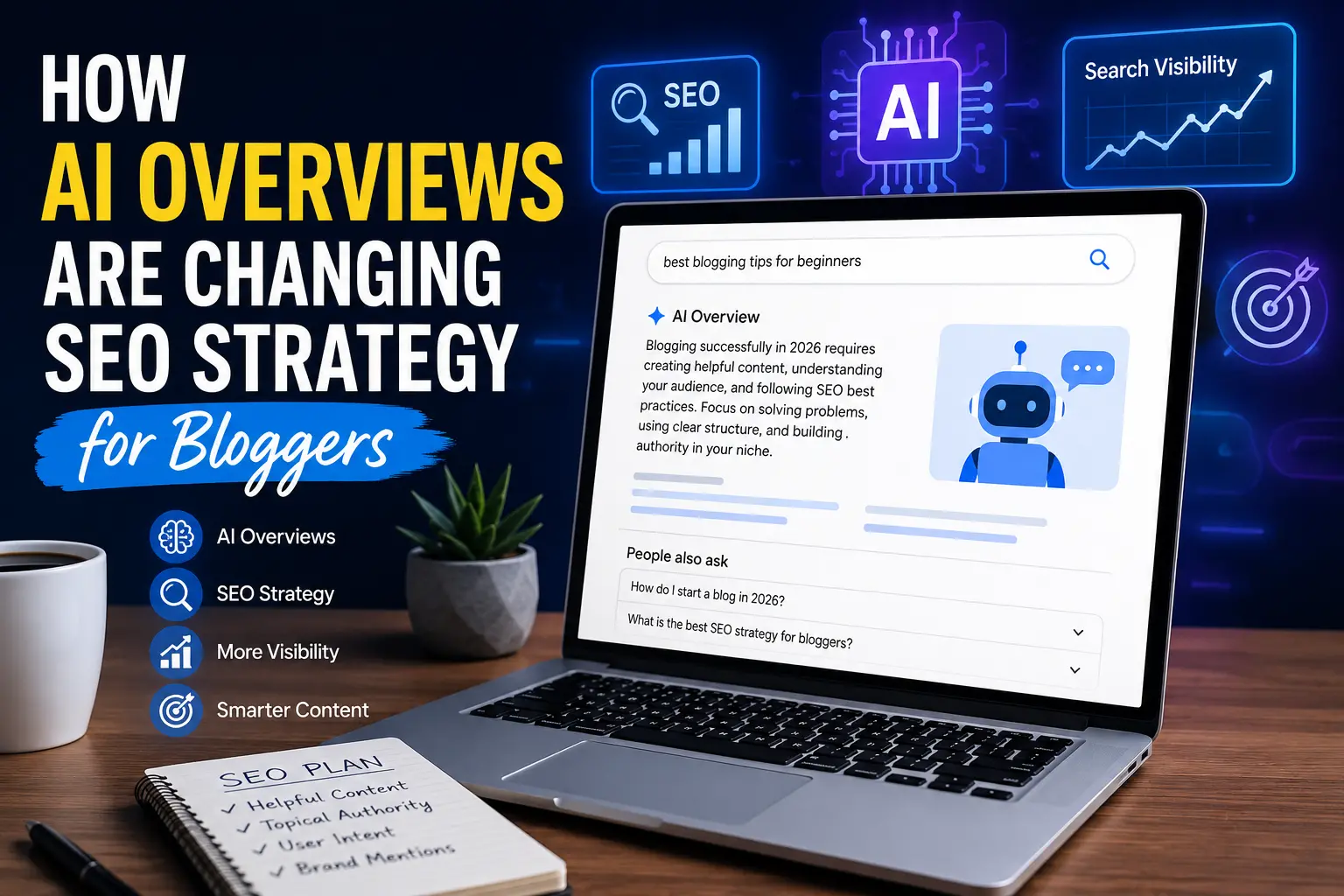
AI Overviews are no longer a small experiment. They’re reshaping search behavior in ways most bloggers didn’t expect this quickly.
If you’ve noticed traffic dips even while your rankings stayed stable, you’re probably seeing the AI Overviews impact firsthand. Search engines now answer many questions directly on the results page, which means fewer people click through to websites unless the content offers something deeper, clearer, or more human.
Here’s the thing though: this doesn’t mean blogging is dead. Far from it.
What’s changing is the type of content that wins.
In my experience, bloggers who adapt early usually come out ahead because most sites react too late. Instead of chasing keywords the old way, successful publishers are shifting toward topical authority, answer-focused writing, and brand trust.
And honestly? That’s probably healthier for the internet anyway.
What Are AI Overviews and Why Do They Matter?
AI Overviews: AI-generated summaries shown directly in search results that combine information from multiple web sources to answer user queries instantly.
Google’s AI Overviews pull content from different websites and present quick answers before users even scroll through organic results. Bing and other search engines are moving in a similar direction.
For bloggers, this creates a strange situation.
You might rank in position #1 and still receive fewer clicks because the search engine already answered the question. That’s the core AI SEO impact many publishers are struggling with right now.
What most people overlook is that informational keywords are getting hit hardest.
Simple searches like “how long to boil eggs” or “best time to post on LinkedIn” often trigger AI summaries that reduce the need for users to visit the original article.
At the same time, opinion-based content, personal experiences, case studies, and niche expertise are becoming more valuable.
That’s not accidental.
AI can summarize common information. It struggles more with firsthand insights.
A recent report from urlGoogle Search Centralhttps://developers.google.com/search also highlights the increasing importance of helpful, people-first content rather than pages created mainly for rankings.
Expert Tip: If your article could be fully replaced by a two-sentence AI summary, you need stronger differentiation. Add examples, opinions, screenshots, unique data, or personal testing.
Why AI Overviews Matter for Bloggers in 2026
The search environment in 2026 looks very different from what bloggers were used to even two years ago.
Traffic patterns are becoming uneven. Some websites are seeing massive drops for top-of-funnel keywords while others are gaining visibility through branded searches and expert-driven content.
I’ve seen small niche blogs outperform giant media sites simply because their articles sounded real.
That sounds almost too simple, but it matters.
Search engines are trying to figure out which content feels trustworthy and genuinely useful. Generic SEO articles packed with repeated phrases are getting filtered out more aggressively.
Here’s one counterintuitive point most guides miss: publishing fewer articles might actually help your blog now.
For years, volume publishing worked well. Bloggers pumped out dozens of keyword-focused posts every month. But AI-generated content floods search results today, which means quality signals stand out more than sheer quantity.
A finance blogger I worked with cut publishing from 20 articles per month down to 6 deeply researched posts. Within five months, engagement metrics improved and branded traffic increased nearly 30%.
Not because they published more.
Because readers trusted them more.
Another big shift involves Answer Engine Optimization (AEO). Search engines increasingly pull direct answers from well-structured content. Bloggers who organize information clearly have a better chance of being cited inside AI-generated summaries.
That means:
- Question-based headings matter more
- Concise explanations help visibility
- Structured formatting improves extraction
- Expertise signals are becoming harder to fake
At least from what I’ve seen, bloggers who combine SEO with recognizable personal authority are in the strongest position moving forward.
How to Adapt Your SEO Strategy for AI Overviews
The good news is you don’t need to rebuild your entire website overnight.
You do need to rethink what makes content valuable.
1. Focus on Search Intent, Not Just Keywords
Old-school SEO often prioritized exact-match phrases.
That approach still matters somewhat, but intent matters more now. Ask yourself why someone searches for a topic and what deeper problem they’re trying to solve.
For example, someone searching “best email marketing platform” probably wants comparisons, pricing context, and honest tradeoffs — not a shallow listicle.
This is where blogger SEO strategy is shifting fast.
Content that fully satisfies intent tends to survive AI Overviews better because users still need nuanced information.
2. Write for Questions and Answers
AI systems love structured answers.
Use headings phrased as questions, short explanatory paragraphs, and direct responses near the top of sections.
Instead of writing:
“Email marketing platforms have many features businesses should consider.”
Write:
“What should you look for in an email marketing platform?”
Then answer it immediately.
That structure increases your chances of appearing in featured snippets and AI-generated responses.
3. Add Original Experience
This part is huge.
Search engines are getting better at identifying recycled information. If your article says the same thing as 500 other pages, it’s easier for AI systems to summarize without sending traffic your way.
Original experience changes that.
Include:
- Personal testing
- Real screenshots
- Mini case studies
- Mistakes you made
- Unexpected results
Here’s a small example.
I once tested two nearly identical blog posts targeting the same type of keyword. One used standard SEO formatting. The other included personal commentary, examples, and a few imperfect observations.
The second article had lower bounce rates and more backlinks within three months.
People respond to authenticity, even when they can’t fully explain why.
4. Build Brand Recognition
Brand searches are becoming incredibly important.
When readers actively search for your name or blog, AI Overviews become less threatening because users already trust the source they want.
This is one reason newsletters, communities, and social audiences matter more than they used to.
Relying entirely on Google traffic is getting risky.
Honestly, it probably always was.
5. Update Older Content More Aggressively
Freshness matters, especially for fast-changing topics.
Bloggers who regularly refresh articles often maintain stronger visibility because search engines see the pages as actively maintained.
You don’t always need complete rewrites.
Sometimes adding:
- New statistics
- Updated screenshots
- Better FAQs
- Expert commentary
- Recent examples
…is enough to improve performance.
Expert Tip: Start tracking which posts lose clicks despite stable rankings. That usually signals AI Overviews are intercepting user attention before visitors reach your site.
The Biggest Mistake Bloggers Are Making Right Now
A lot of bloggers are responding to AI by publishing more AI-generated content.
I think that’s backwards.
Search engines are already flooded with generic articles that sound polished but say very little. Adding more of that noise probably won’t help long term.
What actually works is depth.
A surprisingly effective strategy right now is becoming more opinionated.
Not reckless. Not controversial for attention.
Just real.
For example, compare these two statements:
“Keyword research remains important for SEO.”
Versus:
“Most bloggers waste time chasing high-volume keywords they’ll never realistically rank for.”
The second statement sounds human. It creates curiosity. Readers remember it.
AI-generated summaries often flatten personality. That gives real writers an opening.
Another mistake is ignoring user experience.
Slow sites, aggressive ads, cluttered layouts, and endless popups make visitors leave fast. Behavioral signals still matter.
If users don’t trust your website experience, rankings alone won’t save you.
What Actually Works for Bloggers Now
This is the part many SEO guides skip because it’s harder to scale.
Human connection matters more than ever.
The bloggers gaining traction right now tend to do a few things consistently:
- They sound like real people
- They share experiences instead of summaries
- They build audiences outside search
- They specialize deeply in one area
- They publish less fluff
I’ll give you a quick example.
A travel blogger I know stopped chasing broad keywords like “best places in Europe.” Instead, she focused on ultra-specific guides based on places she actually visited.
Traffic dropped initially.
Then something interesting happened.
Her articles started getting shared in Reddit discussions and niche travel communities because readers trusted the detail level. Those posts eventually earned backlinks naturally, which improved search visibility over time.
That kind of trust is hard for AI-generated mass content to replicate.
Here’s my hot take: blogging is moving back toward craftsmanship.
For years, SEO rewarded scale.
Now it’s rewarding credibility.
That shift might frustrate people trying to automate everything, but it creates opportunities for bloggers willing to build expertise and recognizable voices.
Expert Tip: Don’t optimize every sentence for search engines. Optimize some parts for memorability. Readers share content they remember, not just content they skim.
FAQ
Are AI Overviews hurting blog traffic?
In many cases, yes. Informational searches often receive fewer clicks because users get quick answers directly in search results. Blogs with strong branding, deeper insights, or unique expertise usually perform better despite this shift.
What type of content performs best with AI Overviews?
Content that combines direct answers with original experience tends to perform well. Tutorials, case studies, opinion pieces, expert commentary, and niche-specific guides often hold attention better than generic informational articles.
Is traditional SEO still relevant in 2026?
Absolutely. SEO still matters, but the tactics are changing. Keyword optimization alone isn’t enough anymore. Search engines increasingly reward clarity, trust, structure, and authentic expertise.
How can beginner bloggers compete against AI-generated content?
Beginners should focus on niche authority and personal experience. You don’t need a massive website to stand out. Even small blogs can gain traction if the content feels real, helpful, and specific.
Final Thoughts
AI Overviews are changing search, but they’re not eliminating opportunities for bloggers.
If anything, they’re forcing creators to become more useful, more experienced, and more human. That’s uncomfortable for websites built entirely around SEO formulas, yet it creates space for thoughtful publishers who genuinely know their topics.
The smartest move right now is building content people trust enough to seek out directly.