

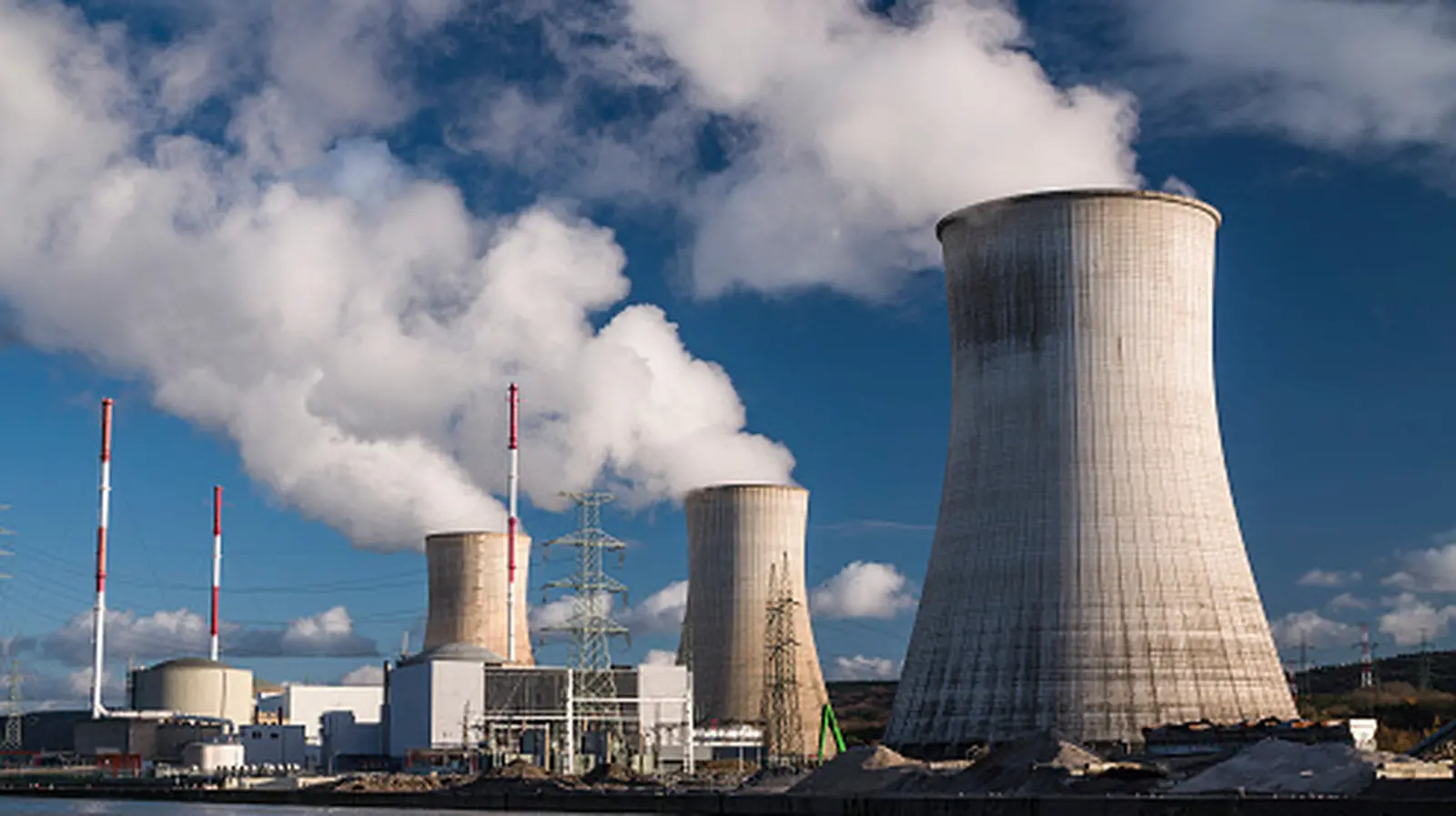
Throughout the United States, data centers are growing larger, requiring more energy to keep them going. This isn't something that's going to go away either, as data centers are used for all kinds of web cloud services, artificial intelligence, machine learning, and more. They're fundamental to the operation of the Internet, AI tools, and other complex processes, making them part of a global infrastructure. They also need a ton of power to operate. Since energy is a hot topic, it's interesting to see just how much juice data centers require.
Nuclear power has been around since 1951 when Experimental Breeder Reactor-I produced usable electricity through the process of atomic fission. Since then, nuclear power plants have become some of the most efficient providers of energy capable of powering large power-hungry cities. Anyone interested in keeping the country's data centers up and running has probably wondered how many nuclear power plants would be needed to keep them going.
There are many variables, but if you look at the total number of data centers in the U.S., determine their power requirements, and compare them against the average power output of a nuclear power plant the answer is around 31. Of course, that number will grow over time, as the U.S. data center power demand is expected to double by 2027. After that, increased power demands could exceed the nation's ability to fully power them 24/7, making data center power consumption a potential problem.
Nuclear power plants could be the way of the future in powering data centers
The average power output of a modern American nuclear power plant is 1 GW, which is enough to power some 876,000 homes. As of writing, the United States has 4,439 data centers in operation across all 50 states, but each one has different energy requirements. The annual consumption of all the U.S.' data centers was 31 GW in 2025, though that number fluctuates. Using it as a baseline, the aforementioned 31 nuclear power plants come into play, but that's a generalized number that's likely to double by 2027.
Those 31 nuclear power plants produce enough energy to power around 27.2 million U.S. homes. As of 2025, there were 94 operational reactors found in 54 nuclear power plants in the U.S., not including those found on military vessels like the U.S. Navy's nuclear-powered submarines. Nuclear power plants make up 18.2% of all U.S. energy production, and more than half of them would be required to power the nation's data centers assuming they were made only to power those facilities.
The U.S. Department of Energy concluded that there are challenges to weigh against the benefits of powering data centers with nuclear plants. Most notable is the cost, time, and difficulty in building modern nuclear power plants. Data center growth continues while plant production remains largely stagnant. As a result, while the U.S. could use 31 nuclear power plants to keep data centers going in 2025, the rapid pace of data center growth indicates it will surpass capacity long before new plants come online.
To understand the full scope of the problem, it's essential to look at the scale of modern data centers. A single hyperscale facility can consume as much as 100 megawatts (MW) or more, comparable to the electricity demand of a small city. According to the U.S. Department of Energy, total data center power consumption in the United States has surged from about 10 GW in 2015 to over 30 GW in 2025. This growth is driven by the explosion of cloud computing, streaming services, and most recently, the training and operation of large language models and other AI workloads.
AI models, in particular, are energy-intensive. Training a single large-scale model can consume thousands of megawatt-hours of electricity, and inference—the process of running the model on new data—can add substantial ongoing loads. As more companies integrate AI into their products, the demand for data center capacity continues to climb. Projections suggest that by 2027, U.S. data centers will require between 50 GW and 60 GW of power, potentially exceeding the current output of the entire U.S. nuclear fleet if half of that output were dedicated to data centers.
Nuclear power plants have a number of advantages over other baseload sources like coal or natural gas. They produce no greenhouse gas emissions during operation, have a very small land footprint relative to their output, and can operate continuously for up to 18 to 24 months between refueling outages. This makes them ideal for providing the constant, reliable power that data centers need. Unlike solar or wind, which are intermittent, nuclear can deliver power 24/7, matching the round-the-clock operation of data centers.
However, building new nuclear power plants in the United States has proven extremely difficult and expensive. The last two new reactors to come online—the Vogtle units 3 and 4 in Georgia—faced years of delays and cost overruns, with a total price tag exceeding $30 billion. The project was originally estimated at about $14 billion. Regulatory hurdles, supply chain issues, and a shortage of skilled nuclear construction workers have all contributed to the challenges. As a result, no new large-scale nuclear reactors are currently under construction in the U.S., though several small modular reactor (SMR) designs are in various stages of licensing and development.
Small modular reactors have been promoted as a potential solution for powering data centers. These SMRs are typically designed to produce between 50 MW and 300 MW of electricity, which is more in line with the needs of individual hyperscale facilities. Companies like NuScale Power and TerraPower are working on designs that could be built in factories and then assembled on site, potentially reducing construction times and costs. The U.S. Nuclear Regulatory Commission has approved one SMR design, and several utilities are exploring partnerships to deploy them. However, the first commercial deployments are not expected until the early 2030s at the earliest.
A key factor that could accelerate the use of nuclear power for data centers is the growing interest from technology companies themselves. Major cloud providers such as Amazon Web Services, Microsoft Azure, and Google Cloud have all made commitments to run their operations on carbon-free energy by 2030 or 2040. To achieve these goals, they are exploring direct power purchase agreements with nuclear plants. For example, Microsoft has a deal with Constellation Energy to buy nuclear power from a plant in Pennsylvania for its data centers in the region. Similarly, Google has expressed interest in advanced nuclear technologies to help meet its round-the-clock clean energy needs.
Another important aspect is the existing nuclear fleet. Many of the 94 reactors in the United States are aging, and some are at risk of early retirement due to economic pressure from cheap natural gas and renewables. If these existing plants close, the nation would lose a significant chunk of its baseload carbon-free power exactly when data center demand is rising. Policymakers and industry leaders are increasingly discussing ways to preserve these assets, including state subsidies and load-following capabilities that allow nuclear plants to adjust output to match fluctuating demand from renewables and data centers.
At the same time, there is growing debate about whether building more nuclear power plants is the best use of resources compared to other clean energy sources like solar, wind, and battery storage. Some argue that a combination of renewables and storage could provide the same reliability at a lower cost and with fewer regulatory risks. However, the land area required for solar farms to power a large data center is enormous—often hundreds of acres for a 100 MW facility—and battery storage at the multi-gigawatt scale is still very expensive. For now, nuclear remains a compelling option for dense, continuous power requirements.
The U.S. Department of Energy has also highlighted the potential for co-locating data centers with nuclear power plants. Several studies have examined building a data center next to an existing nuclear station, taking advantage of the direct connection to a stable power source and avoiding the need for new transmission infrastructure. This concept has been tested in project like the one at the Surry Nuclear Power Plant in Virginia, where Dominion Energy is evaluating the feasibility of hosting a data center on site. Such arrangements could reduce the time needed to connect new data centers to the grid and lower the risk of price spikes in wholesale electricity markets.
Looking ahead, the intersection of data centers and nuclear power will be a critical topic for energy planners. The timeline for building new nuclear capacity—whether large reactors or SMRs—does not align well with the rapid pace of data center expansion. Yet the long-term benefits of carbon-free, reliable power are driving both private and public investment. The U.S. Department of Energy has launched initiatives like the Nuclear Energy Tribal Working Group and the Advanced Reactor Demonstration Program to help move advanced nuclear technologies toward commercialization. Meanwhile, states such as Illinois, New York, and New Jersey have enacted policies to support existing nuclear plants, recognizing their value in achieving climate goals.
In summary, the arithmetic is straightforward: with 31 GW of data center demand and 1 GW per reactor, 31 nuclear power plants could cover today's needs. But this number will likely increase to over 60 GW by the end of the decade, meaning at least 60 reactors would be needed. Given the constraints on building new plants, the U.S. may need to explore a wide range of solutions, including extending the lives of existing reactors, deploying SMRs at data center sites, and integrating nuclear with renewables and energy storage to ensure that the digital backbone of the economy remains powered reliably and cleanly.
Source: SlashGear News