

Introduction: A Night to Remember
The Rio 2016 Olympic Games officially began on August 5, 2016, with a spectacular opening ceremony at the Maracanã Stadium. The event, directed by renowned Brazilian filmmakers Fernando Meirelles, Daniela Thomas, and Andrucha Waddington, aimed to present a vibrant, inclusive, and environmentally conscious message to the world. With a budget significantly lower than previous ceremonies, the producers relied on creativity, rhythm, and the warmth of Brazilian culture to captivate the global audience. The ceremony featured five standout moments that defined the night and set the tone for the Games: Gisele Bündchen's legendary walk, a vivid celebration of favela life, an exhilarating dance number with fireworks, a political protest against interim President Michel Temer, and the emotional torch relay led by tennis legend Gustavo Kuerten.
"The Girl from Ipanema": Gisele Bündchen's Iconic Walk
One of the most anticipated moments of the evening was the appearance of supermodel Gisele Bündchen, who walked the length of the Maracanã field to the immortal sounds of "The Girl from Ipanema" ("Garota de Ipanema"). This bossa nova classic, composed by Antônio Carlos Jobim and Vinícius de Moraes, is one of Brazil's most famous exports. Bündchen, who had just retired from the runway months earlier, made her final catwalk a poignant tribute to her country. As she glided across the stage in a stunning silver gown designed by Alexandre Herchcovitch, her silhouette gradually projected the iconic architectural works of Oscar Niemeyer onto the stadium floor. Niemeyer, the visionary architect behind Brasília and many other Brazilian landmarks, was celebrated for his curves and modernist designs. The fusion of music, fashion, and architecture was a masterful homage to Brazil's cultural heritage. Bündchen's performance lasted only a few minutes, but it left an indelible mark on the ceremony, symbolizing elegance, beauty, and national pride.
The Voice of the Favelas: A Dance Battle and Musical Fusion
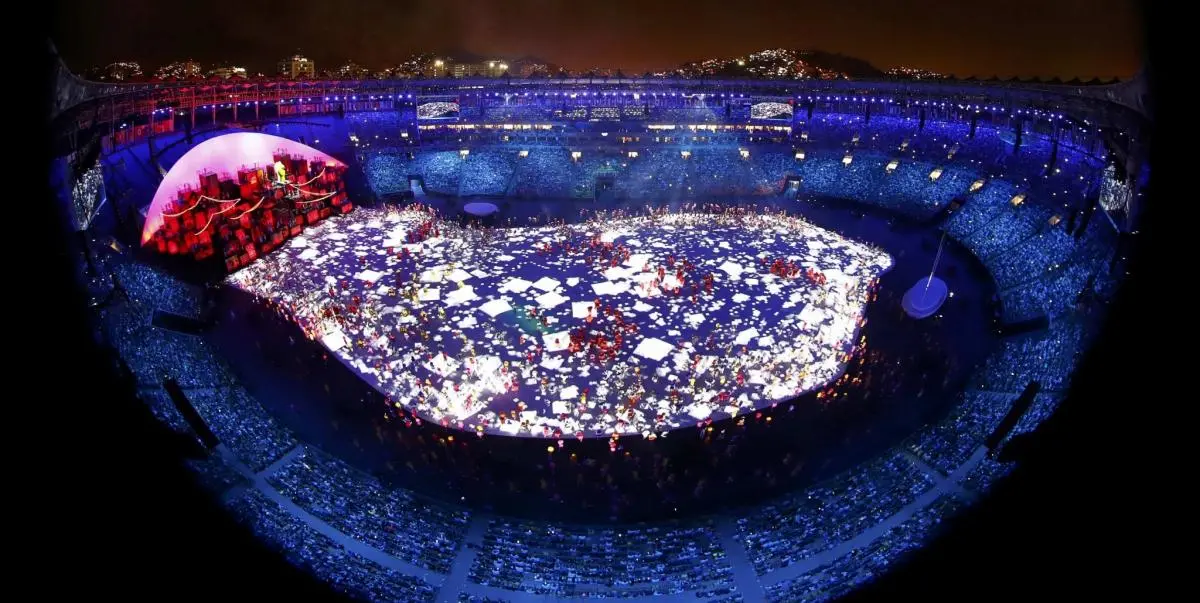
In a stark contrast to the high fashion of Bündchen's walk, the ceremony then shifted to the vibrant energy of Rio's favelas. A set of colorful buildings rose from one side of the stadium, representing the hillside communities that are home to millions of Cariocas. Dancers, many from local favela groups, energetically climbed onto these rooftops and engaged in a friendly "battle" of dance styles, mixing hip-hop, samba, and breakdance. The segment was accompanied by a powerful musical duo: Marcelo D2, a pioneering rapper known for blending hip-hop with samba, and Zeca Pagodinho, a beloved samba icon with a career spanning over three decades. Their collaboration symbolized the unity of Brazil's diverse musical traditions. The favela segment was not just entertainment; it was a political statement recognizing the creativity and resilience of communities often marginalized. The choreography and music demonstrated that favelas are not merely places of poverty but hubs of culture and innovation. This moment was one of the most authentic and stirring parts of the ceremony, earning loud cheers from the crowd.
Dancing Fireworks and "Pais Tropical"
The festive mood escalated as the dancers from the favela set descended onto the field, joining hundreds of other performers in a massive collective dance. Each group occupied a brightly lit square on the ground, creating a patchwork of colors and movement. The choreography built to a crescendo, with over 1,500 volunteers moving in sync to the upbeat song "Pais Tropical" by Jorge Ben Jor. The lyrics of this iconic tune celebrate Brazil's natural beauty and laid-back lifestyle. As the song reached its climax, the stadium erupted in a stunning display of fireworks that shot into the night sky, synchronized perfectly with the music. The crowd of 75,000 sang along, and the atmosphere was electric. "Pais Tropical" has become an unofficial anthem of Brazilian joy, and its inclusion was a deliberate choice to highlight the country's optimism despite the political and economic troubles looming over the Games. The combination of dance, fireworks, and collective singing created a moment of pure euphoria, recalling the carnival spirit that defines Rio.
Political Protest: Interim President Michel Temer Booed
Not all moments were celebratory. As per Olympic tradition, the head of state of the host country officially declares the Games open. For Rio 2016, that role fell to Michel Temer, who had assumed the presidency just months earlier after the impeachment proceedings against Dilma Rousseff. Temer's brief speech, lasting only about 30 seconds, was drowned out by loud boos and whistles from the audience. Many Brazilians were angry at the political crisis that had removed a democratically elected president under controversial circumstances. Temer himself faced corruption allegations, and his government was deeply unpopular. The booing was a stark reminder that the Olympic Games could not completely shield Brazil from its political upheaval. The ceremony had been carefully crafted to project unity and joy, but the crowd's reaction demonstrated that the wounds of the political divide were still fresh. This moment contrasted sharply with the previous festivities, proving that sport and politics are inevitably intertwined. The international media widely reported the incident, making it one of the most talked-about aspects of the opening.
Guga's Emotional Torch Relay and the Lighting of the Cauldron
The final highlight of the ceremony was the arrival of the Olympic flame. Three-time French Open champion Gustavo Kuerten, affectionately known as "Guga," carried the torch into the stadium. A hero in Brazil for his tennis achievements and his charitable work, Kuerten was visibly moved as he held the flame. He had been a favorite to light the cauldron, but the honor ultimately went to marathon runner Vanderlei Cordeiro de Lima, who famously was attacked by a spectator during the 2004 Athens Olympics but still finished third with a bronze medal. Nonetheless, Kuerten's role was deeply emotional for him and the crowd. He passed the torch to other athletes, and finally to Lima, who lit the cauldron in a simple yet profound gesture. The cauldron itself was a kinetic sculpture designed by Anthony Howe, symbolizing the sun and energy. Its spiral motion provided a mesmerizing backdrop as the flame roared to life. The choice of Lima as the final torchbearer was a powerful message of resilience and the Olympic spirit overcoming adversity. Kuerten's damp eyes and the stadium's ovation made this the most heartfelt moment of the night.
Additional Context and Legacy
The Rio 2016 opening ceremony was praised for its creativity, cultural authenticity, and environmental messaging. The segment on climate change and the need to protect the planet, featuring a computer-generated forest and videos of melting ice caps, was particularly noteworthy. However, it was the human stories—from Bündchen's farewell walk to the favela dancers' celebration—that resonated most deeply. The ceremony also set a record for the most athletes participating in a single parade of nations, thanks to the debut of the Refugee Olympic Team, which received a standing ovation. The music, from bossa nova to samba and funk, provided a soundtrack that reflected Brazil's diversity. Behind the scenes, the ceremony faced budget cuts, but the directors turned limitations into strengths, focusing on performance and emotion rather than expensive technology. The Maracanã Stadium, a historic venue that has hosted World Cup finals and countless football matches, proved the perfect stage for this vibrant spectacle. In retrospect, the opening ceremony of the Rio Olympics remains one of the most memorable in modern Olympic history, despite the controversies that surrounded the Games. It showcased the best of Brazil: its people, music, and capacity for joy in the face of challenges.
Source: L'Équipe News