

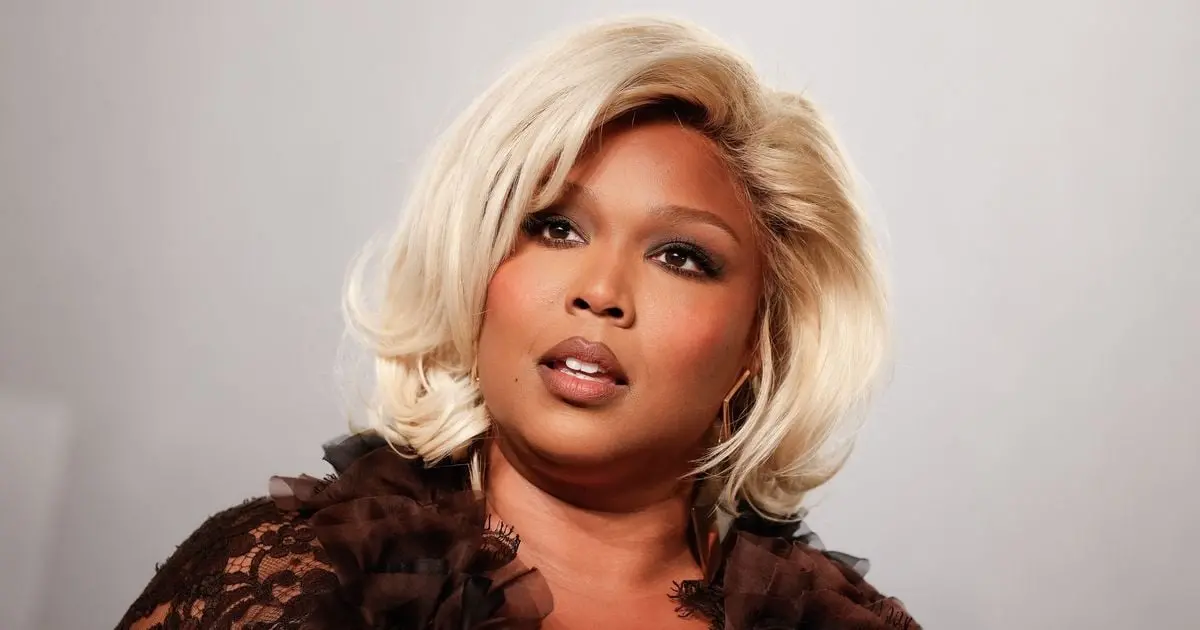
Lizzo — the chart-topping, Grammy-winning pop sensation who dominated the early 2020s with feel-good anthems and an unapologetic body-positive persona — is facing the most difficult chapter of her career. Her fifth studio album, Bitch, was released on June 5 with enormous expectations after a four-year hiatus. It was also her first project since a series of serious allegations threatened to dismantle everything she had built. But instead of a triumphant comeback, the record has become what many industry insiders are calling a spectacular failure.
The numbers are staggering for an artist of Lizzo's previous stature. According to data from the tracking company Luminate, Bitch sold a mere 2,649 copies in its first week in the United States, alongside 2.7 million on-demand streams. Those figures were nowhere near enough to secure a spot on the Billboard 200 — a stunning plummet for someone whose last album, Special, debuted at number two with 69,000 units sold in 2022. Even more crushing, the second week saw sales collapse to just 650 copies. In an industry where streaming has redefined success, such numbers are almost negligible for a pop star of her name recognition.
From Global Superstardom to Commercial Collapse
To understand the depth of this failure, one must recall just how dominant Lizzo was during the peak of her career. Born Melissa Viviane Jefferson in Detroit, Lizzo spent years grinding in the underground music scene before breaking through with her 2019 single Truth Hurts, which became a viral phenomenon and eventually accumulated over 1.1 billion streams. That song, along with Juice, Good as Hell, and About Damn Time, cemented her status as a pop powerhouse defined by self-love, exuberant performances, and an infectious positivity that seemingly transcended genres. She won Grammy Awards, headlined major festivals, and became a cultural touchstone for body positivity and LGBTQ+ advocacy.
Her previous album, Special, released in 2022, was a commercial and critical success, reaching the upper echelons of the charts worldwide. It spawned the mega-hit About Damn Time, earned multiple award nominations, and solidified her reputation as one of the most relatable yet extraordinary pop figures of her generation. Her public persona — a fun-loving, confident, and fiercely inclusive outsider — made her a beloved figure beyond just her music. She graced magazine covers, partnered with major brands, and repeatedly used her platform to champion marginalized communities.
That is why the reception of Bitch feels so jarring. The album was designed to be a reinvention, with Lizzo promising a more unapologetic, raw, and even provocative project. Yet the public seemingly lost interest before they even heard the music. Promotional campaigns were met with mockery rather than enthusiasm, and the lack of support in the first week points to a deeper disconnect that goes beyond simple album quality.
Critical Reception: Quality and a Missing Fanbase
Industry experts have been quick to dissect the reasons for the flop. One recurring explanation is that Bitch simply fails to deliver the kind of cohesive, inspired work that fans have come to expect. Critics have described the album as unfocused and lacking the infectious energy of its predecessors. In an era where streaming is dominated by loyal fan bases, a record must be exceptional to rise above the noise. The general consensus suggests that Bitch does not meet that threshold.
A music industry professional interviewed by Rolling Stone highlighted a deeper structural problem: Lizzo lacks a "hardcore fanbase." According to that insider, her career was built primarily on radio-friendly singles and mainstream crossover appeal rather than a devoted, dedicated following. "She is an artist who works mainly on songs and radio hits, but she clearly lacks a solid fanbase," the insider said. "And that is what an artist needs today to ensure a lasting career."
This point is crucial. In the modern music landscape, the most successful artists — think Taylor Swift, Beyoncé, or even niche rappers with dedicated followings — rely on a core group of superfans who guarantee first-week sales, streaming numbers, and concert ticket purchases. Lizzo's appeal always seemed more diffuse, attracting casual listeners who enjoyed her singles but did not necessarily feel compelled to support every project. When that mainstream audience stopped paying attention, the absence of a resilient fanbase became starkly apparent.
The Shadow of Cancel Culture and Allegations
However, the most significant factor in Lizzo's commercial decline appears to be the series of accusations that surfaced between 2023 and 2025. Several former backup dancers filed lawsuits and made public claims alleging sexual harassment, religious and racial discrimination, body shaming, and ableism. These accusations were particularly damaging given Lizzo's public image as a champion of inclusivity and kindness. For many fans, the contradictions were impossible to ignore: a woman whose brand was built on empowering others stood accused of diminishing and harassing the very people who worked closest to her.
Lizzo consistently denied all wrongdoing, calling the accusations "outrageous" and "sensationalized." She did win a significant legal victory when one of the lawsuits filed by a former dancer was dismissed by a judge. Yet the court of public opinion has been far less forgiving. The accusations continued to circulate, and even when legal victories occurred, they were rarely reported with the same vigor as the original controversies. The stain on her reputation persisted.
A former record label executive summarized the situation bluntly: "A large part of her image relied on being an outsider and displaying great self-confidence. When you are accused of mistreating exactly what you presented as your brand image, then fans no longer want to see you succeed, and they turn their backs."
This dynamic explains why third-party controversies have a more profound impact on Lizzo than on other celebrities. In an era of increased awareness and social media cancel culture, the public is less willing to separate the art from the artist, especially when that artist has built a platform on moral righteousness. Her engagement on issues like sexism, racism, body positivity, and LGBTQ+ rights made her a beacon of hope for many marginalized fans, but it also created a high bar for her personal conduct. When allegations surfaced, the fall from grace was swift and unforgiving.
Lizzo's Emotional Response to the Flop
Lizzo has not remained silent about the failure of Bitch. In a series of messages on X (formerly Twitter), she attempted to contextualize the album's poor performance by pointing to the changing music industry. "The industry has changed so much in the last three years," she wrote. "Streaming has replaced radio, and I was a radio darling. That's how my fans discovered my music. Not to mention the obvious public attacks that have disrupted my career."
Her comments were met with widespread criticism, with many pointing out that the streaming revolution was hardly a new phenomenon by 2024. Radio had been declining as the primary music discovery mechanism for over a decade when Lizzo achieved her first hit. For her to attribute her failure to this shift struck many as out-of-touch and dismissive of the real reason: her public controversies had fundamentally altered the way audiences perceived her.
The emotional toll was visibly evident in a TikTok video in which Lizzo appeared in tears after a fan asked why she had not done enough promotion for the album. Through sobs, she insisted that the promotional efforts were substantial and that she had been mocked relentlessly for them. She expressed confusion about what more she could have done, saying she had done a huge amount of promo and still people called her a flop. The video added a layer of vulnerability to her public image, but it also underscored her frustration with a situation she seems unable to control.
The Changing Landscape of the Music Industry
Beyond the allegations, there are systemic changes in the music business that have worked against Lizzo. During her peak, she benefited from a radio infrastructure that helped turn songs like Truth Hurts into worldwide hits. While streaming was already crucial, radio still possessed significant power to launch unfamiliar artists into the mainstream. In recent years, however, playlists and social media algorithms have taken over, and success now requires a pre-existing community that is willing to mobilize and promote. Lizzo's algorithm-friendly persona was always more of a broadcast than a community, and that flaw has been exposed.
Moreover, the public's appetite for feel-good pop anthems has shifted. The early 2020s were marked by a post-pandemic desire for escapist, uplifting music. Lizzo perfectly captured that moment. But as the industry moved toward a more edgy, confessional, and sometimes darker tone — driven by Gen Z artists who dominate TikTok — Lizzo's sound began to feel dated. Her attempt to reinvent herself with Bitch was supposed to counter that trend, but the execution did not connect with listeners who had already moved on.
Another factor is the oversaturation of pop stars who have adopted her approach. Many emerging artists, from Doja Cat to Ice Spice, have incorporated elements of Lizzo's playful rap-singing hybrid, body-positive messaging, and unrelenting confidence. Without the novelty factor she once had, Lizzo now has to compete in a crowded field where younger stars are winning the generation that once carried her to the top.
Could There Be a Silver Lining?
Despite the overwhelming negativity surrounding Bitch, Lizzo is not completely out of the picture. A small piece of consolation comes from the longevity of her earlier hits. About Damn Time is poised to become her second song to surpass one billion streams on Spotify, following the path of Truth Hurts. That milestone shows that while her new material is being ignored, her back catalog continues to resonate. It is a testament to the enduring appeal of her best work, even if the public no longer cares about her current output.
For music historians, the story of Lizzo is a cautionary tale about the fragility of celebrity in the digital age. A career built on a persona can be dramatically undone when that persona is challenged. It also highlights the difficulty that radio-centric artists face in an era that demands deep listener engagement. Whether Lizzo can engineer another comeback remains uncertain. History offers examples of artists who have survived cancellations and returned stronger, but it typically requires years of quiet rebuilding and a genuine connection with a loyal core audience. Lizzo has not yet shown she can do that.
In her tearful TikTok, she asked desperately: "What else do they want from me?" That question may not have a simple answer. The public has spoken, and the collective response to Bitch is a clear indication that her time in the spotlight may be fading. Her legacy as a hitmaker is assured, but the present reality is one of rejection, introspection, and a steep road to redemption.
Source: Purebreak News