

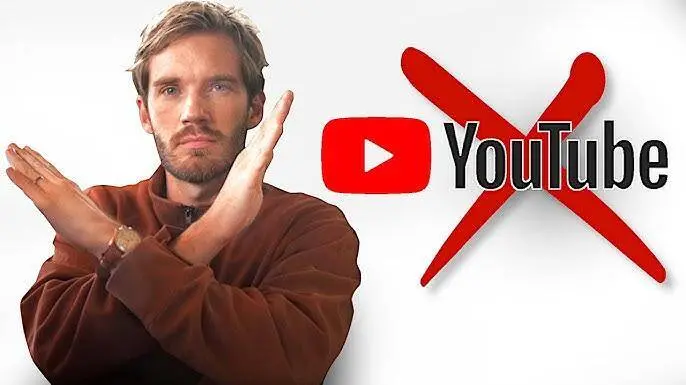
In a striking move that has generated significant buzz across the internet, Felix Kjellberg, known worldwide as PewDiePie, released a video in late June 2025 addressing his 110 million YouTube subscribers about his decision to systematically abandon Google’s free services. The video, which quickly amassed millions of views, details not only his reasons for leaving the Google ecosystem but also the actual tools and platforms he has adopted as replacements. While he acknowledges that he cannot leave YouTube itself—the platform that made him a household name—he has otherwise cut ties with Google’s other offerings, from search to email to cloud storage.
This decision is particularly ironic given that YouTube is owned by Google. PewDiePie, who was once the most-subscribed individual creator on the platform (now surpassed by MrBeast with 417 million subscribers), has built his entire career on Google’s infrastructure. Yet he now argues that the company has become too reliant on advertising revenue, too aggressive in content moderation, and too opaque in its algorithmic influence. His video, characterized by the same deadpan humor and self-deprecating wit that earned him his global following, raises a question: can a major creator truly disentangle from Google while remaining on YouTube?
The Specific Services PewDiePie Has Replaced
In his video, PewDiePie goes through a laundry list of Google products and their alternatives. For email, he moved from Gmail to ProtonMail, a Swiss-based encrypted email service that provides end-to-end protection. For cloud storage, he replaced Google Drive with a combination of Nextcloud (self-hosted) and Tresorit. For web browsing, he switched from Google Chrome to Firefox, citing privacy concerns and the ability to block trackers more effectively. For maps, he started using Organic Maps, an open-source alternative based on OpenStreetMap data. For search, he now uses DuckDuckGo, which does not track users or filter results based on browsing history. For productivity, he abandoned Google Docs in favor of LibreOffice and OnlyOffice, and for video calls, he replaced Google Meet with Jitsi Meet. He even switched from Google’s calendar to a self-hosted solution using Baikal. These are not just theoretical replacements—he provides detailed tutorials in the video on how to transition smoothly.
The Reasoning Behind the Exodus
PewDiePie’s primary argument is one of autonomy and resistance to corporate overreach. He points out that Google’s business model revolves around collecting user data to sell personalized advertising. By using Google services, users become the product. He also criticizes what he sees as arbitrary content moderation and algorithm manipulation that can make or break creators’ livelihoods. Drawing from his own experience with YouTube—where he has faced demonetization, shadowbanning, and controversial algorithm decisions—he argues that relying on a single corporation for both distribution and infrastructure is a dangerous gamble. Moreover, he notes that Google’s dominance in search, mail, and mapping creates a monopolistic chokehold that stifles competition and innovation. By moving to smaller, privacy-focused alternatives, he hopes to send a signal to his massive audience that there are viable options outside the tech giant’s umbrella.
Context: The Evolution of PewDiePie’s Career
To understand the weight of this move, one must look at PewDiePie’s trajectory. He started his channel in 2010, posting Let’s Play videos of horror games. His energetic commentary and comedic style quickly attracted a following. By 2013, he became the most-subscribed YouTuber, a title he held until 2019 when T-Series overtook him in a highly publicized rivalry. He has since been overtaken by MrBeast, whose high-production-value stunts and philanthropy have drawn an even larger audience. Throughout his career, PewDiePie has been no stranger to controversy—from anti-Semitic jokes in 2017 to his feud with the media platform Vox. Yet he has also used his influence to raise money for charity, notably through his “Marzia” charity streams and support for independent creators. His decision to abandon Google services is the latest chapter in his long-running critique of the platform that made him famous. It reflects a growing trend among creators who are increasingly uncomfortable with the power that a few tech companies hold over their content and communities.
The Broader Implications for YouTube Creators
PewDiePie’s video is not just a personal announcement; it is a commentary on the state of creator-platform relationships. Many YouTubers have complained about the lack of transparency in demonetization, the unpredictable nature of the algorithm, and the feeling that they have no control over their own channels. However, most are reluctant to speak out because they fear retaliation—demonetization, suppressed reach, or even termination. PewDiePie, with his 110 million subscribers and established wealth, is in a unique position to criticize without suffering major consequences. By doing so, he gives voice to a widespread but often unspoken frustration. Furthermore, his detailed guide to replacing Google’s services provides a practical roadmap for viewers who want to reduce their dependence on the company. While it is unlikely that a large percentage of his audience will follow suit en masse, the video has already sparked discussions in creator forums and tech communities about digital sovereignty and the ethics of platform reliance.
The Question of YouTube Itself
Of course, the elephant in the room is YouTube. PewDiePie admits he cannot leave the platform because it is where his audience lives and where his content is most effective. YouTube provides him with a massive built-in viewer base, a robust recommendation system, and a revenue model that, despite its flaws, still pays him handsomely. He acknowledges this dependence explicitly in the video, stating that he is trapped. This admission highlights the paradox of digital independence: even the most successful creators are ultimately beholden to the platforms that algorithmically promote their work. PewDiePie’s solution is to diversify his presence—he has also built a following on other platforms like Twitch, where he streams games, and he maintains a blog and a newsletter to keep in direct contact with fans. But YouTube remains the linchpin. His video serves as both a critique of Google and a confession of his own inability to fully escape its reach.
Google’s Response and the Broader Tech Landscape
As of publication, Google has not issued an official response to PewDiePie’s video. Historically, the company has been reluctant to comment on individual creators’ decisions, especially those that criticize its services. However, the video is unlikely to have any tangible impact on Google’s business. With billions of users worldwide, the loss of one creator—even a highly influential one—is a statistical blip. Still, the video’s viral nature may encourage other tech-savvy users to consider alternatives, especially if they are already concerned about privacy. The broader tech landscape is shifting: regulators in the European Union and elsewhere are pushing for more competition in digital markets, and services like DuckDuckGo, ProtonMail, and Signal have seen steady growth. PewDiePie’s endorsement of these alternatives could accelerate that trend, at least among his fan base of young, internet-literate viewers. It also raises questions about the sustainability of the “free” internet model, where users trade data for services. If enough creators and consumers start opting out, the advertising-based revenue ecosystem that powers Google could face long-term pressure.
Key Facts from PewDiePie’s Announcement
- PewDiePie announced he has stopped using Google’s free services except for YouTube, which he cannot leave.
- His replacements include: ProtonMail (email), DuckDuckGo (search), Firefox (browser), Organic Maps (maps), Nextcloud/Tresorit (cloud storage), LibreOffice/OnlyOffice (office suite), Jitsi Meet (video calls), and Baikal (calendar).
- He criticizes Google for ad-based data collection, algorithmic censorship, and lack of transparency in content moderation.
- The video was published in late June 2025 and has since garnered millions of views.
- He remains active on YouTube due to its massive audience, but encourages viewers to diversify their platform usage.
- This move is consistent with his long-standing critiques of big tech and his advocacy for creator independence.
- His channel remains the second-largest individual creator channel on YouTube, with 110 million subscribers, behind MrBeast (417 million).
The Technical and Practical Challenges of Switching
While PewDiePie’s video makes the transition seem straightforward, for many users the reality is more complex. Migrating years of emails, documents, and settings from one ecosystem to another is time-consuming. Switching from Google Maps to Organic Maps means losing real-time traffic data and business reviews. Moving from Gmail to ProtonMail may require notifying all contacts and dealing with a less integrated experience. Furthermore, some of the alternatives he recommends (like self-hosted Nextcloud) require technical know-how that the average user may not possess. PewDiePie acknowledges these hurdles and offers step-by-step guidance in his video, but he also admits that not everyone will be able or willing to make the switch. For his audience, the video is more a philosophical statement than a practical call to action. It says: “Look, I did it, and you can too if you value your privacy and autonomy.” Still, the effort required underscores why Google’s ecosystem is so sticky—its convenience is deeply embedded in daily digital life.
PewDiePie’s decision also highlights a generational shift in attitudes toward big tech. Younger users, who have grown up with smartphones and social media, are increasingly aware of privacy issues and the power of corporations. The success of alternative platforms like Discord, Signal, and Notion shows that people are willing to try new tools if they offer better values or features. PewDiePie, as a leading voice in online culture, is leveraging his influence to push his audience toward a more decentralized, privacy-respecting internet. Whether this will lead to a mass exodus from Google services remains to be seen, but it certainly adds momentum to a growing movement of digital secession.
Source: Letemps News