

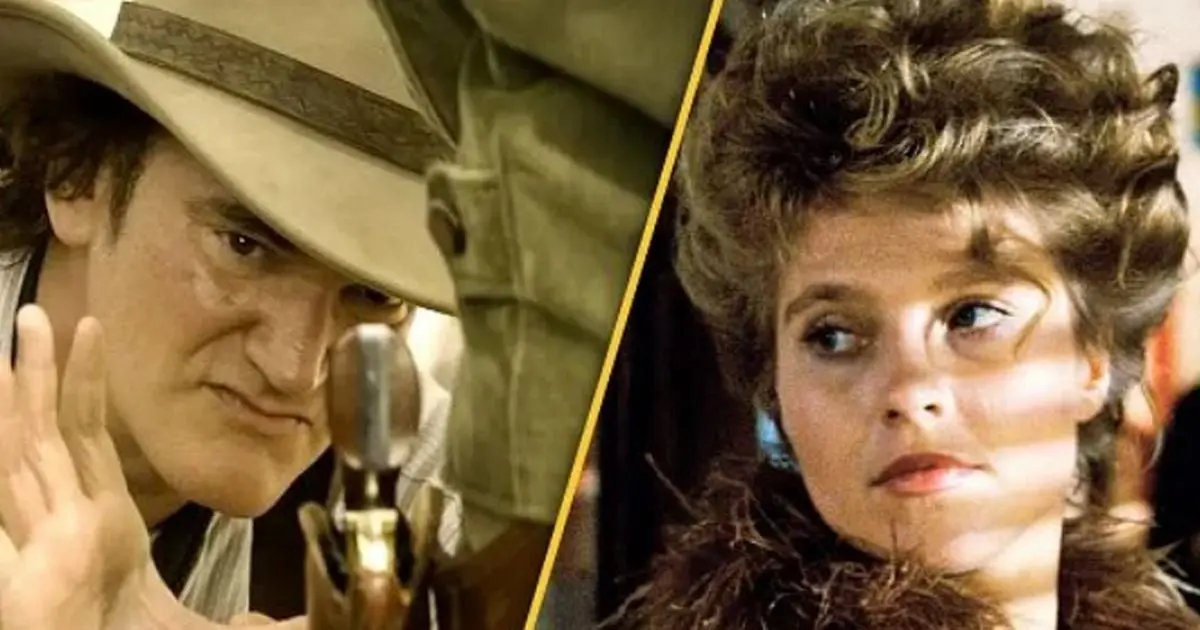
Quentin Tarantino is not your typical filmmaker. The director behind Pulp Fiction, Kill Bill, and Inglourious Basterds is just as famous for his outspoken, often contrarian opinions about cinema as he is for his revolutionary movies. He has a habit of showering praise on films that critics frequently dismiss, while simultaneously tearing down universally beloved classics. For instance, he once called The Searchers—widely regarded as one of the greatest westerns of all time—simply "banal." He also expressed little admiration for one of the most legendary directors in film history, Alfred Hitchcock.
Now, Tarantino has applied that same critical lens to another towering figure of world cinema: Rainer Werner Fassbinder. The German director, who died tragically young in 1982 at age 37, left behind an enormous body of work. Between 1969 and 1982, Fassbinder directed no fewer than 27 feature films, along with television productions and plays. Many of those films are now considered landmarks of German cinema, including Ali: Fear Eats the Soul (which Tarantino referenced indirectly), The Marriage of Maria Braun, and Lili Marleen. Fassbinder's work is known for its raw emotional intensity, its Brechtian theatricality, its deliberately cold aesthetic, and its unflinching examination of power, desire, and social oppression. Yet Tarantino has now admitted that he simply cannot connect with most of it.
Tarantino's Uneasy Relationship with Fassbinder
In a recent interview, the 63-year-old director was characteristically blunt about his feelings toward Fassbinder's oeuvre. "I love the idea of Fassbinder, but his films don't necessarily appeal to me," Tarantino explained, as reported by Far Out Magazine. "I've seen about four of them." That is a remarkably small fraction of Fassbinder's output, but Tarantino's disappointment was apparently powerful enough to shape his overall impression. He did not explicitly mention Ali: Fear Eats the Soul or Fox and His Friends, but he did single out Lili Marleen as "disappointing." However, it was another Fassbinder masterpiece that truly tested his patience.
Tarantino revealed that he had an especially difficult time with The Bitter Tears of Petra von Kant, a 1972 drama that many critics consider one of Fassbinder's greatest achievements. "I saw the film in the cinema," Tarantino said, "and I had a hard time making it to the end." His exact words were even more striking: "I barely managed to get to the end credits." That confession will likely shock cinephiles who hold Petra von Kant in near-sacred regard. The film has been praised for decades as a masterclass in staging, performance, and emotional devastation.
What Makes Petra von Kant So Controversial—and So Beloved
The Bitter Tears of Petra von Kant is an unusual film in almost every respect. It takes place entirely within the apartment of its protagonist, Petra von Kant, played with breathtaking intensity by Margit Carstensen. Petra is a successful fashion designer who becomes infatuated with Karin, a younger model portrayed by Hanna Schygulla. As the story unfolds, Petra loses control of her emotions, sliding into a spiral of obsession, jealousy, and self-destruction. The film is structured like a theatrical piece, with long takes, deliberate dialogue, and an almost suffocating sense of confinement. The walls of Petra's apartment are covered with oversized paintings, the space is cluttered with mannequins and fabric, and the camera rarely leaves the room. This intentional claustrophobia is precisely what makes the film so powerful—and, for some viewers, so difficult to endure.
Tarantino's reaction is not entirely surprising. He is a filmmaker who thrives on rapid-fire dialogue, pop culture references, and explosive violence. Fassbinder's static, emotionally brutal chamber drama offers almost none of those pleasures. Instead, it demands patience and a willingness to sit with discomfort. In its review, the German film website FILMSTARTS gave the movie a perfect five-star rating, describing its atmosphere as one "where breathing and living become increasingly difficult." That description captures the essential paradox of the film: it is both a masterpiece and an ordeal. Tarantino, it seems, experienced the ordeal without fully appreciating the mastery.
Yet Tarantino's failure to connect with Petra von Kant puts him in the minority among celebrated directors. The film counts among its admirers Olivier Assayas, Abel Ferrara, Ira Sachs, and Peter Strickland. François Ozon was so inspired by it that he created his own adaptation, Peter von Kant, released in 2022. Ozon's version reimagines the story with a male protagonist, swapping Petra for a filmmaker named Peter, but retains the same suffocating setting and emotional intensity. The fact that so many contemporary directors owe a debt to Fassbinder's film only underscores its status as one of the most influential works of the New German Cinema movement.
Tarantino's Affection for Querelle
Interestingly, Tarantino is not completely immune to Fassbinder's appeal. He admitted that he has a genuine fondness for Querelle, Fassbinder's final film, released posthumously in 1982. But even that appreciation comes with a caveat drawn from his days working at Video Archives, the video rental store in Manhattan Beach, California, where he first developed his encyclopedic knowledge of film. "I have affection for that movie," Tarantino said. "But it was so hated at Video Archives that if I recommended it to a customer, I would risk getting punched in the face." Querelle, based on Jean Genet's novel, is a provocative and stylized tale of sailors, murder, and desire, set in a surreal port town. Its overt sexuality and dreamlike narrative have always polarized audiences, so Tarantino's anecdote feels entirely believable.
Tarantino's comments about Fassbinder are part of a broader pattern. He frequently challenges the canonical status of celebrated works, whether by dismissing Hitchcock's thrillers as overrated or by championing obscure exploitation films that few critics take seriously. This contrarian streak is one of the reasons why his interviews are so widely shared. He speaks with absolute confidence, often going against the grain of critical consensus, and his opinions are always passionate even when they seem perverse. His take on Petra von Kant does not diminish the film's importance, but it does remind us that cinematic taste is deeply subjective. What one person considers a claustrophobic triumph, another may find merely claustrophobic.
Fassbinder's legacy remains secure. The German director's works are studied in film schools, preserved in archives, and celebrated in retrospectives around the world. The Bitter Tears of Petra von Kant continues to be screened in theaters, and its influence can be seen in everything from Pedro Almodóvar's melodramas to the psychologically dense films of Ingmar Bergman's later period. Tarantino's inability to finish it without struggling does not change that reality. It simply adds another entry to the long list of respected classics that Hollywood's most famous maverick has publicly disparaged or questioned.
For those who share Tarantino's tastes, his criticism might serve as a warning. But for devotees of Fassbinder, it is merely a reminder that not every genius sees eye to eye. The Bitter Tears of Petra von Kant remains, for many, a masterpiece precisely because it dares to be unpleasant, to trap its audience in the suffocating world of its protagonist, and to demand a level of emotional engagement that few films even attempt. Whether you view that as a virtue or a flaw ultimately depends on your own cinematic sensibilities. Tarantino has made his position clear—and, as always, his honesty is refreshing, even when it seems misguided.
Source: Purebreak News