

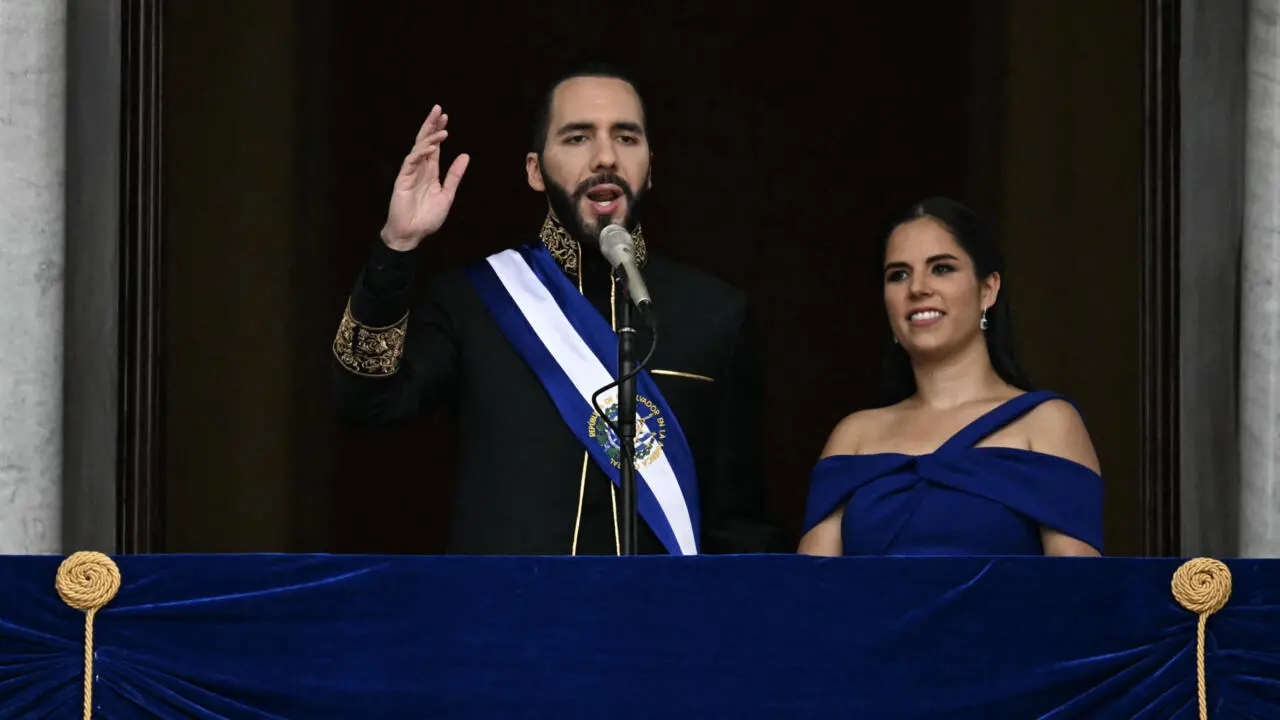
Nayib Bukele took the oath of office for his second term as President of El Salvador on June 1, 2024, amid celebrations from supporters and deep concern from international observers. Known for his youthful appearance, active social media presence, and unorthodox style, Bukele has been dubbed the "cool dictator" by critics—a moniker he seems to embrace. His first term saw a dramatic transformation of the Central American nation, but also a sharp turn toward authoritarianism. Now, with his Nuevas Ideas party holding a supermajority in Congress and his allies controlling the judiciary, Bukele enters his second term with virtually unchecked power.
The Rise of a Populist Leader
Born in San Salvador in 1981, Nayib Bukele came from a family of Palestinian descent. He entered politics as a member of the Farabundo Martí National Liberation Front (FMLN), the leftist party that emerged from the civil war. He served as mayor of Nuevo Cuscatlán and later as mayor of San Salvador, where he gained national attention for his efficient administration and use of social media. In 2019, he ran for president as a candidate for the Grand Alliance for National Unity (GANA), a right-leaning party, winning in a landslide and breaking the two-party system that had dominated since the peace accords.
Bukele's appeal lay in his anti-establishment rhetoric and promises to fight corruption. He presented himself as a pragmatic outsider willing to shake up the political elite. Early in his first term, he delivered on some campaign promises, such as improving infrastructure and digital governance. However, he soon clashed with the legislature and judiciary, accusing them of obstructing his agenda. The conflict culminated in February 2020 when he entered the Legislative Assembly with military troops to pressure lawmakers into approving a loan for his security plan. This act drew widespread condemnation from the international community and was seen as a clear violation of democratic norms.
Bitcoin Adoption: A High-Risk Experiment
One of Bukele's most controversial moves was adopting Bitcoin as legal tender in September 2021. El Salvador became the first country in the world to do so. The government launched the Chivo wallet, offering $30 in free Bitcoin to every citizen, and invested millions in the cryptocurrency. Proponents argued it would promote financial inclusion and reduce remittance costs. However, the implementation was plagued by technical glitches, lack of widespread adoption, and severe volatility. The International Monetary Fund and World Bank warned against the risks. While Bukele championed the move as a bold step into the future, many Salvadorans remain skeptical, and the Bitcoin experiment has yet to deliver significant economic benefits. In his second term, Bukele faces the challenge of stabilizing the cryptocurrency's use or pivoting away from it.
The War on Gangs
Perhaps the most defining feature of Bukele's first term was his aggressive crackdown on the country's notorious gangs—Mara Salvatrucha (MS-13) and Barrio 18. In March 2022, after a spike in homicides, Bukele declared a "state of exception" that suspended constitutional rights. The government launched mass arrests, detaining over 70,000 suspects. The results were dramatic: El Salvador's murder rate plummeted, transforming the country from one of the most dangerous in the world to a relatively safe one. Bukele's approval ratings soared above 80%. However, human rights organizations documented widespread abuses: harsh prison conditions, arbitrary detentions, and the imprisonment of innocent people, including minors. Critics argue that the crackdown, while effective, has created a culture of fear and weakened the rule of law. As Bukele begins his second term, the state of exception remains in effect, effectively giving him unlimited power to continue the dragnet.
Consolidation of Power
Bukele's first term was marked by a systematic dismantling of checks and balances. His Nuevas Ideas party won a landslide in the 2021 legislative elections, giving him control of the 84-seat Congress. The new legislature quickly removed the attorney general and five Supreme Court justices, replacing them with loyalists. Later, they passed a law allowing Bukele to run for reelection despite a constitutional prohibition, as the Supreme Court (now packed with allies) ratified it. These moves drew criticism from democratic nations, yet Bukele's domestic support remained strong. In the 2024 general election, he won with over 80% of the vote, but opposition parties had limited media access and faced intimidation. With no term limits and a supermajority in Congress, Bukele is now free to govern with minimal opposition.
Economic Challenges and International Relations
Beyond Bitcoin and security, Bukele faces significant economic hurdles. El Salvador's debt is high, and growth has been sluggish. Remittances from abroad remain a crucial lifeline. Relations with the United States have been strained, particularly over democratic backsliding, though the Biden administration has not imposed major sanctions. Bukele has also engaged with China, which has invested in infrastructure projects. Meanwhile, he has positioned himself as a regional leader, recently offering to help Haiti with its gang crisis. However, his authoritarian tendencies have made him a pariah among many Latin American democracies. In his second term, Bukele must balance his domestic popularity with the need for international legitimacy and economic stability.
Looking Ahead
Bukele's second term is likely to see continued consolidation of power. He has already proposed constitutional reforms that could entrench his party's dominance and further weaken independent institutions. The state of exception will likely remain indefinitely, as it provides the legal basis for his security policies. On the economic front, difficulties may escalate, with Bitcoin's volatility and limited adoption posing risks. Crime could resurge if the crackdown relaxes, but the current low crime levels are a major political asset. Internationally, Bukele will continue to navigate a complex landscape, seeking alliances where possible but prioritizing his domestic agenda.
What remains clear is that Nayib Bukele has reshaped El Salvador indelibly. His tenure represents a case study in modern populism: using technology, social media, and a narrative of security and efficiency to amass power while testing the boundaries of democratic governance. Whether he will use his second term to consolidate his legacy as a transformative leader or as a cautionary tale remains to be seen.
Source: France 24 News