

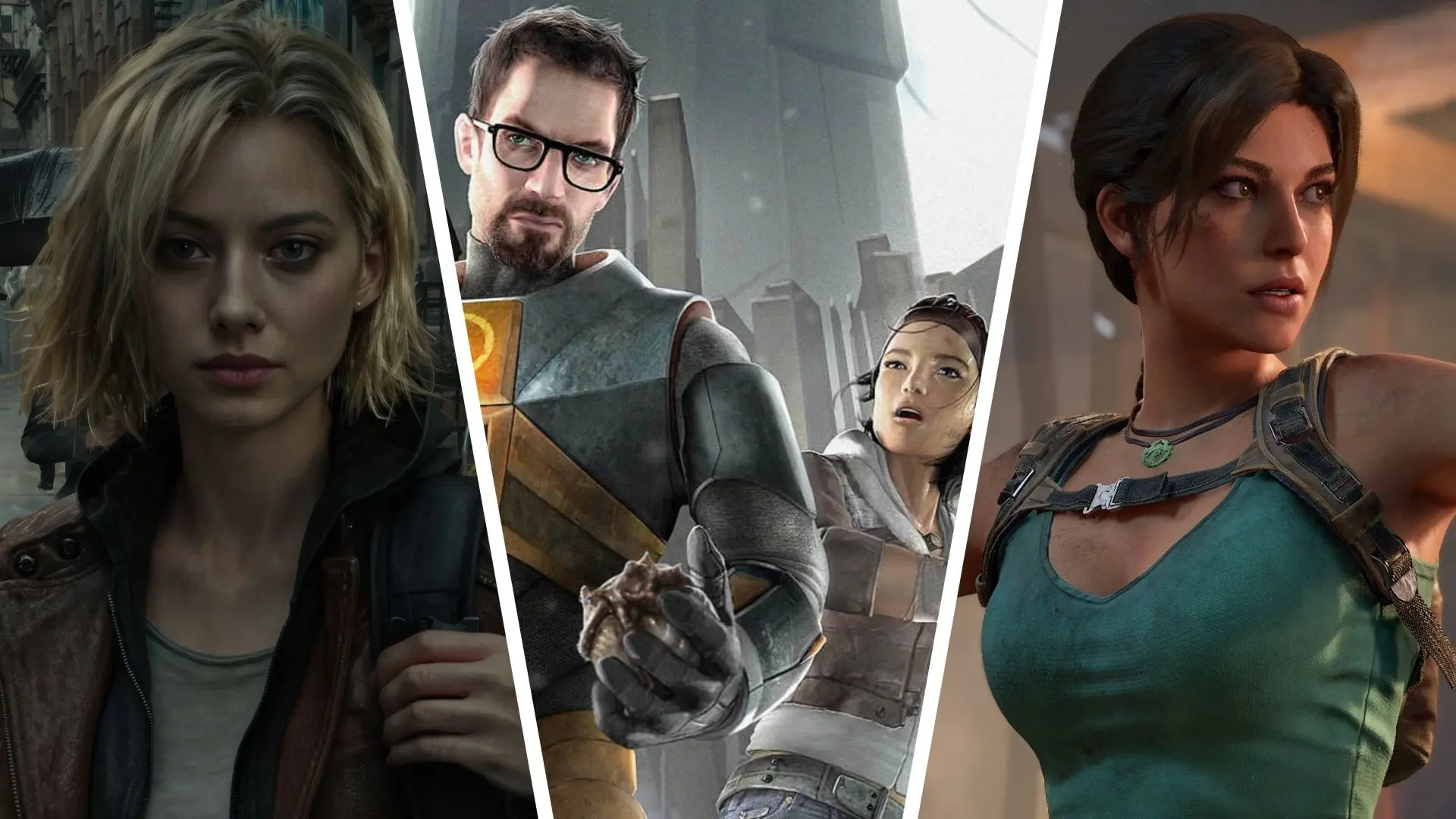
“Generative AI will have its Half-Life 2 moment.” That is the pitch from a Saber Interactive executive who believes the industry is still waiting for the one game that proves intelligent tools can create something extraordinary. It is an appealing thought. Half-Life 2 is remembered not just as a sequel, but as the moment when physics, scripting, and cinematic storytelling suddenly felt unified. The executive’s comparison suggests that generative AI, similarly, needs one landmark release to turn skeptics into believers. I am not convinced that such a moment will arrive on time—or that it will arrive in the triumphant form many people expect.
Key facts behind the story
- A senior Saber Interactive figure has argued that generative AI will eventually make possible a landmark game, described as the “Half-Life 2 of AI.”
- The Half-Life 2 analogy frames the current moment as a pre-breakthrough era, where AI tools exist but have not yet redefined how games are made or played.
- Saber Interactive is known for large commercial releases and has publicly considered AI-assisted production workflows, but the company has not yet shipped an AI-defining project.
- The debate over AI in games continues to involve player backlash, studio experimentation, copyright lawsuits, and questions about creative authorship.
- History suggests that a major technological leap does not automatically produce a great game; great games require strong design, writing, and direction.
What the Half-Life 2 comparison really means
Half-Life 2 did not create physics-based gameplay. The technology existed before Valve shipped its landmark sequel. What made Half-Life 2 essential was the way that physics became a language of tension and comedy. The Gravity Gun was not simply a tool; it was an invitation to experiment with every object in a carefully constructed world. Doors, barrels, pallets, and crowbars were no longer static decoration. They became resources for the player’s imagination.
That is the kind of shift the Saber executive seems to be predicting for AI. In that vision, a future studio will take the generative systems that currently produce rough concept art, stilted voice work, or generic code snippets and integrate them into an experience so coherent that players no longer view them as shortcuts. The technology would stop being a cost-cutting gimmick and become the engine of a new kind of creative expression.
It is a seductive story. AI systems are improving rapidly. Text-to-image, text-to-speech, and language-model tools can already create material in seconds that would have taken a human artist or writer hours. But speed is not the same as meaning. Half-Life 2 succeeded because the technology was placed in service of a strong human authorial vision. The physics engine gave designers new tools, not new answers.
The state of AI in modern game development
Many studios now use generative AI in pre-production, weather effects, asset variation, animation matching, and even narrative prototyping. Saber Interactive itself has offices around the world and has worked on enormous projects that require substantial logistics and production pipelines. From that perspective, it makes sense that an executive would look at AI as a way to lower friction. Interruptions, localization, asset creation, and code generation can all be made faster with machine assistance.
Yet this is precisely where the comparison starts to break down. Half-Life 2’s revolution belonged to the player. Most players did not care which middleware platform powered the game or whether the source code was elegant. They cared about the act of pulling a wooden plank toward them with the Gravity Gun and then launching it at a soldier. The technical achievement was hidden behind tactile joy.
Generative AI, in its current commercial form, is almost always visible. It appears in discordant character faces, misspelled signs, recycled voice performances, and the creeping sameness of written dialogue. The “tell” of AI is that it tends to reduce surprises. It produces plausible probabilities rather than deliberate authorial shocks. The best games push against expectations. An AI trained on the past is structurally more likely to repeat past patterns than to reinvent them.
The “Half-Life 2 moment” is not a technology problem
Half-Life 2 did not win over audiences because it demonstrated stronger graphics. It won over players because it gave them a new way to act. The game’s designers built systems that supported discovery while maintaining a tight narrative rhythm. Every encounter was a kind of mechanical lesson. The player was constantly learning how to see the world through physics, not merely how to shoot enemies faster.
For AI to have an equivalent moment, a studio would need to design a game that makes people feel the beauty of generative systems from the inside. That could mean a world where the player and the AI are collaborators. It could mean a role-playing game in which every citizen is truly unique in behavior and memory.
But those imagined experiences are fundamentally different from automated content pipelines. The technology of procedural generation has already existed for decades. Rogue-likes are built on randomized systems. Open-world games use procedural tools to create mountains and forests. Sandbox games let players generate structures and stories from simple rules. None of those technical capabilities mattered unless the design around them had a strong point of view.
That is why the Half-Life 2 comparison makes me uneasy. It is easy to imagine an executive seeing Half-Life 2 as proof that “technology shifts always win.” It can become an excuse to ignore labor conditions, human authorship, and the risk of a bland cultural monoculture. But Half-Life 2 was not invented by a committee that prioritized efficiency. It was made by people who had a specific idea about why physics could be joyful.
The human cost of the AI race
There is also the uncomfortable reality of how generative models are trained. Companies have scraped enormous amounts of imagery, text, code, and audio from the internet, often without permission or fair compensation. That has led to legal challenges from authors, artists, and publishers. Some game studios have faced criticism for using AI after restructuring or laying off creative teams. Players have also learned to spot the visual and narrative flatness that comes from unedited generation.
None of these ethical objections are impossible to solve. It is possible to imagine licensed training data, consenting voice actors, and transparent provenance. It is possible to imagine AI as an amplifier for human diversity instead of a homogenizer. But the current incentives in the industry are not aligned with those possibilities. The dominant motivation is cost reduction and production speed.
That economic context matters because Half-Life 2 was not made as a way to pay fewer people much less. It was a huge, expensive, ambitious project from a company that had earned, through Half-Life and Counter-Strike, the right to take enormous risks. The phrase “the Half-Life 2 of AI” should describe a monumental creative gamble, not a neatly optimized production pipeline.
The author’s case remains unresolved
The Saber executive is probably right about one thing: someday a game may appear that makes sophisticated AI feel essential. Just as physics engines became an invisible part of many genres, intelligent systems could become an ordinary part of design. A future generation of players may look back at current arguments about AI the way older players look back at arguments about 3D graphics.
But “someday” is a weak promise when studios are already using AI to cut costs. The first game that earns the Half-Life 2 comparison will need to be more than a demo. It will need to be a fully realized experience with a clear emotional point. It will need characters and consequences that matter. No model can invent a soul any more than a physics engine can invent a joke.
What worries me is not that AI will never produce great games. What worries me is that the industry will settle for a narrow definition of greatness. If the future is built by models trained on the highest-grossing games of the past, the results will be polished, competent, and perfectly forgettable. Half-Life 2 remains powerful because it did not look like a logical extension of the games that came before. It felt like a crash through a wall.
The person who makes the “Half-Life 2 of AI” will need to take that same kind of leap. They will need to trust human intuition over algorithmic probability, then let the machine fill in the spaces between their decisions. That is a much harder game to make than the one executives are currently describing. Until I see real evidence of that restraint, I will keep my skepticism close.
Source: TechRadar News