

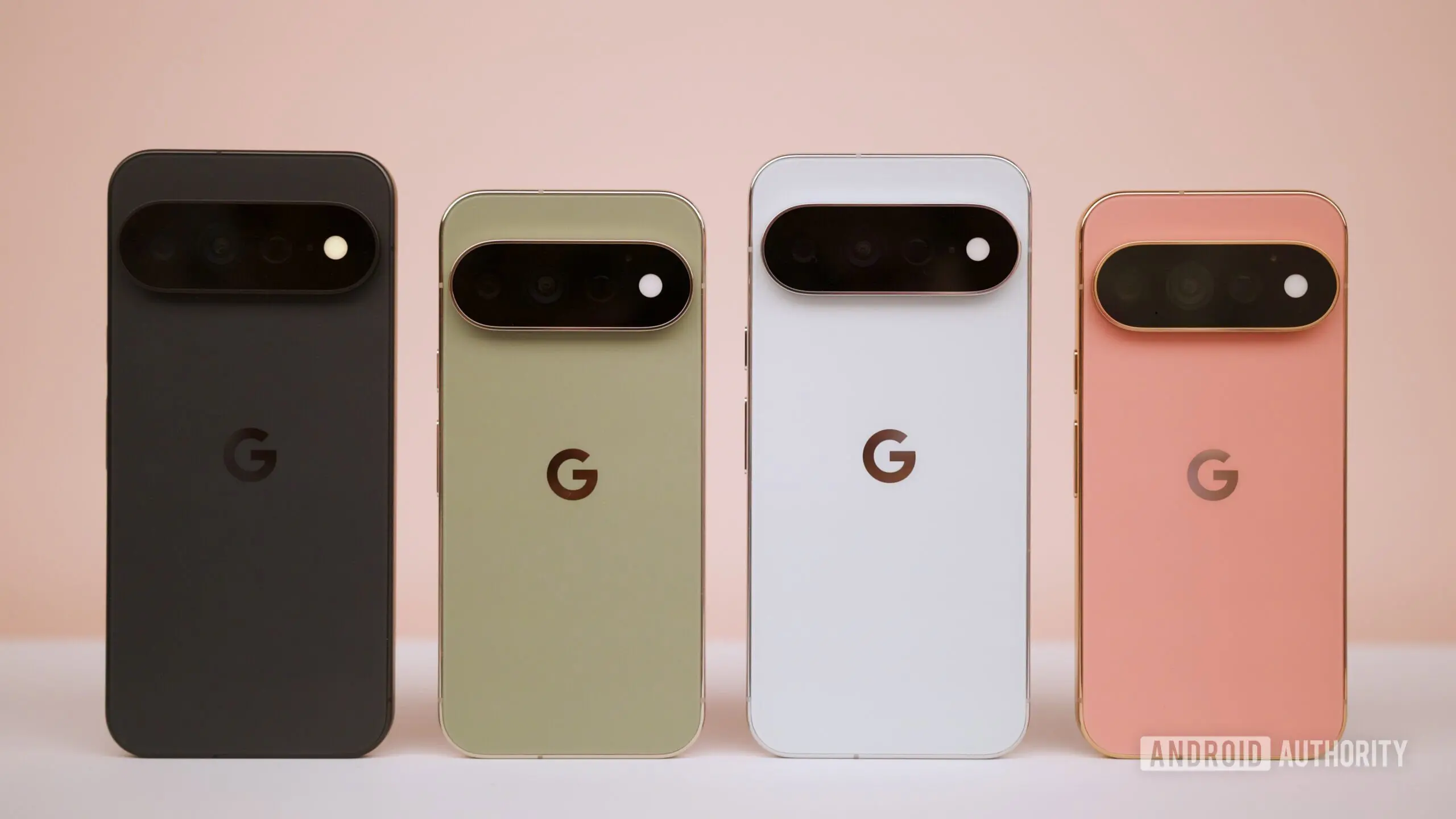
The Pixel 11 series has officially arrived, and while the launch event is still underway, European regulatory listings are already offering a deeper look at how these flagship phones hold up beyond raw specifications. The European Product Registry for Energy Labelling has published energy efficiency, durability, and repairability grades for every Pixel 11 model, giving prospective buyers a clearer picture of long-term value and everyday resilience.
According to the newly published listings, most Pixel 11 phones perform as expected across these sustainability metrics. However, the Pixel 11 Pro stands out for an unexpected reason: its durability grade is lower than its siblings. The Pro model survived fewer free-fall tests than the standard Pixel 11 and the Pixel 11 Pro XL, which raises questions about how Google is differentiating its premium devices and what trade-offs buyers might be accepting when they choose the Pro model.
Key facts from the EPREL listings
- Pixel 11 (GUJ0N): energy efficiency B, durability A (270 free falls), repairability B; 4,840mAh battery, up to 48 hours and 50 minutes.
- Pixel 11 Pro (GM45K): energy efficiency B, durability B (180 free falls), repairability B; 4,707mAh battery, up to 47 hours and 36 minutes.
- Pixel 11 Pro XL (G4HCD): energy efficiency B, durability A (270 free falls), repairability B; 5,000mAh battery, up to 50 hours and 10 minutes.
- Pixel 11 Pro Fold (GZDQ6): energy efficiency B, durability A (210 free falls closed / 45 free falls open), repairability B; 4,658mAh battery, up to 45 hours and 5 minutes.
- All Pixel 11 batteries retain at least 80 percent of their original capacity after 1,000 charge cycles.
What the EPREL database reveals
The European Product Registry for Energy Labelling, commonly known as EPREL, is a public database that hosts energy efficiency and sustainability information for products sold in the European Union. For smartphones, the registry now includes grading for durability and repairability, with categories ranging from A to E. In this system, A represents the best possible performance and E represents the weakest.
Every Pixel 11 phone receives a B rating for energy efficiency. That is consistent across the Pixel 11, Pixel 11 Pro, Pixel 11 Pro XL, and Pixel 11 Pro Fold. The energy efficiency grade is based on charging behavior, power consumption, and other factors that affect a device’s environmental footprint over its lifetime. A B grade is common among modern flagship smartphones, so this result is not surprising, but it does indicate that Google is not pushing the boundaries of energy efficiency this year.
While the energy efficiency scores are uniform, durability scores vary significantly across the lineup. The standard Pixel 11 and the Pixel 11 Pro XL both achieve an A grade for durability, thanks to their ability to withstand 270 free falls without defect. The Pixel 11 Pro Fold also earns an A grade, but its free-fall reliability depends heavily on whether it is open or closed. The Pixel 11 Pro, however, only manages a B grade, with a free-fall reliability rating of 180 falls.
Pixel 11: the all-rounder
The standard Pixel 11, carrying model number GUJ0N, delivers a strong durability result. It survives 270 repeated free falls without any defect, which is the highest reliability score in the lineup. This grade places the base model at the top of Google’s durability ranking, alongside the Pixel 11 Pro XL. For buyers who are concerned about accidental drops, the standard Pixel 11 is clearly a safe choice.
The Pixel 11’s repairability grade is B, which is similar to last year’s Pixel 10 series. For most users, this means the phone is neither exceptionally easy nor exceptionally difficult to repair, but it is in line with typical flagship smartphones. Inside, the Pixel 11 houses a 4,840mAh battery that is rated to last up to 48 hours and 50 minutes. That endurance figure is respectable, and it is actually better than the Pixel 11 Pro’s rated battery life.
Battery longevity is one of the most encouraging aspects of the entire listing. All Pixel 11 models are rated to retain at least 80 percent of their original battery capacity through 1,000 charge cycles. That means even after roughly three years of daily charging, the battery should still hold a substantial amount of its original capacity. This is unchanged from the Pixel 10 series, but it remains a valuable guarantee for buyers who plan to keep their phones for several years.
Pixel 11 Pro: durability takes a hit
The Pixel 11 Pro, model number GM45K, is the surprise of the lineup. It receives a B grade for durability, but the underlying data explains why: the phone’s free-fall reliability is rated at just 180 falls. That is 90 fewer falls than the standard Pixel 11 and the Pixel 11 Pro XL. In practical terms, the Pro model may be more susceptible to damage from accidental drops, though it still meets a baseline level of reliability.
Why would the Pixel 11 Pro be less durable than the cheaper Pixel 11? Several factors could contribute. The Pro model features a more advanced camera system, which may require a different internal layout. The larger camera module could create stress points on the frame when the phone impacts the ground. Additionally, the materials chosen for the Pro model, while likely more premium, may not absorb impact as well as the materials used in the base model.
It is also possible that Google’s durability testing uncovered a specific weakness in the Pixel 11 Pro’s design that caused it to fail earlier in the drop test. The EPREL listing does not provide details about exactly where damage occurs or how severe it is, so we can only speculate based on the free-fall reliability number. What is clear is that the Pixel 11 Pro does not match the durability standard set by its siblings, and that could matter to consumers who do not use a case.
The Pixel 11 Pro’s energy efficiency rating remains B, and its repairability also receives a B. The 4,707mAh battery in the Pro model is rated for up to 47 hours and 36 minutes of use. That is slightly lower than the standard Pixel 11, which is notable given the Pro’s higher price and more advanced camera system.
Pixel 11 Pro XL: durability matches the best
At the top end of the non-folding lineup, the Pixel 11 Pro XL earns an A for durability. It survives the same 270 free falls as the standard Pixel 11, showing that Google can build a large, feature-packed flagship without compromising structural integrity. This is good news for users who prefer big screens and long battery life but still want a phone that can handle daily wear and tear.
The Pro XL’s energy efficiency and repairability ratings are both B, consistent with the rest of the series. It carries the largest battery in the lineup at 5,000mAh, and it is rated to last up to 50 hours and 10 minutes. That is the best endurance figure among all Pixel 11 models, and it gives the Pro XL a clear advantage for heavy users who spend long days away from a charger.
Pixel 11 Pro Fold: a different durability story
Foldable smartphones have always faced durability challenges, and the Pixel 11 Pro Fold is no exception. However, its EPREL durability grade is still A, which is encouraging. The foldable survived 210 free falls without defect in its closed state, but that number drops to just 45 when the device is unfolded.
That is a significant drop, and it highlights the inherent fragility of foldable displays. When open, a foldable has a much larger surface area exposed to impact, and the flexible screen is more vulnerable to damage. Users who frequently use their phone in an unfolded state may want to be extra careful, as a drop from pocket height could lead to costly repairs.
The Pixel 11 Pro Fold’s repairability is rated B, which is surprisingly good for a device with a complex hinge mechanism. Its 4,658mAh battery is rated to last 45 hours and 5 minutes, the lowest in the lineup, but still respectable given the foldable’s internal space constraints.
Battery health across the Pixel 11 family
One of the most reassuring details from the EPREL listings is the battery health guarantee. Every Pixel 11 model is rated to retain at least 80 percent of its original capacity after 1,000 charge cycles. This is an important metric for long-term ownership, as battery degradation is one of the most common reasons people replace their phones.
A 1,000-cycle battery life means that if you charge your phone once per day, the battery should still hold 80 percent of its original capacity after nearly three years. With lighter usage, such as charging every other day, the battery could last even longer before significant degradation occurs. This gives consumers confidence that the Pixel 11 series is built to last beyond the typical two-year upgrade cycle.
This consistency across the lineup is notable because some manufacturers use different battery chemistries or charging strategies for different models. Google appears to be using a uniform approach for all Pixel 11 devices, which simplifies the message for consumers and reduces confusion when comparing models.
What the durability grades mean for buyers
Durability ratings are not just marketing labels. For buyers, a higher durability grade can translate into lower repair costs and a longer usable life. The Pixel 11 Pro’s B grade, driven by a lower free-fall reliability score, may not be a dealbreaker for most people, but it is worth considering if you are prone to dropping your phone.
On the other hand, the Pixel 11 Pro XL’s A grade means that buying a larger phone does not necessarily mean sacrificing durability. The standard Pixel 11 also offers excellent durability at a lower price, making it an attractive option for value-conscious buyers who do not need the extra camera features or the larger display.
The foldable’s performance in the durability test is more nuanced. A closed-state reliability of 210 falls is impressive for a foldable, but the 45-fall rating when unfolded is a reminder that foldable screens require a level of care that traditional phones do not. Buyers who are drawn to the Fold should factor in the cost of potential screen repairs, even though the device receives an overall A grade.
The bigger picture: how Google is positioning the Pixel 11 series
The Pixel 11 series is powered by the new Tensor G6 chip, which brings improvements in performance, efficiency, and AI capabilities. The Pro models also introduce HiLight, a feature previously known as Pixel Glow, which is expected to enhance low-light photography and image processing. These upgrades give the premium models a distinct identity, but the EPREL data adds another layer to the comparison.
Despite these hardware improvements, the gap between the standard Pixel 11 and its Pro siblings is expanding in some ways. The standard model now matches the Pro XL in durability and offers better battery life than the Pro, though it lacks some of the advanced camera features and display enhancements of the premium models. That could make the Pixel 11 a smarter choice for users who prioritize longevity and simplicity over cutting-edge camera tech.
For buyers, the choice is not just about camera quality or screen size. It also involves considering how well each device will hold up over time. The Pixel 11 Pro’s lower durability grade does not undermine the entire lineup, but it does give potential owners one more thing to think about before spending a premium price. As Google continues to refine its smartphone strategy, sustainability and repairability metrics are becoming just as important as raw processing power, and the EPREL listings now provide data that can inform a smarter, longer-term purchasing decision.
Source: Android Authority News