

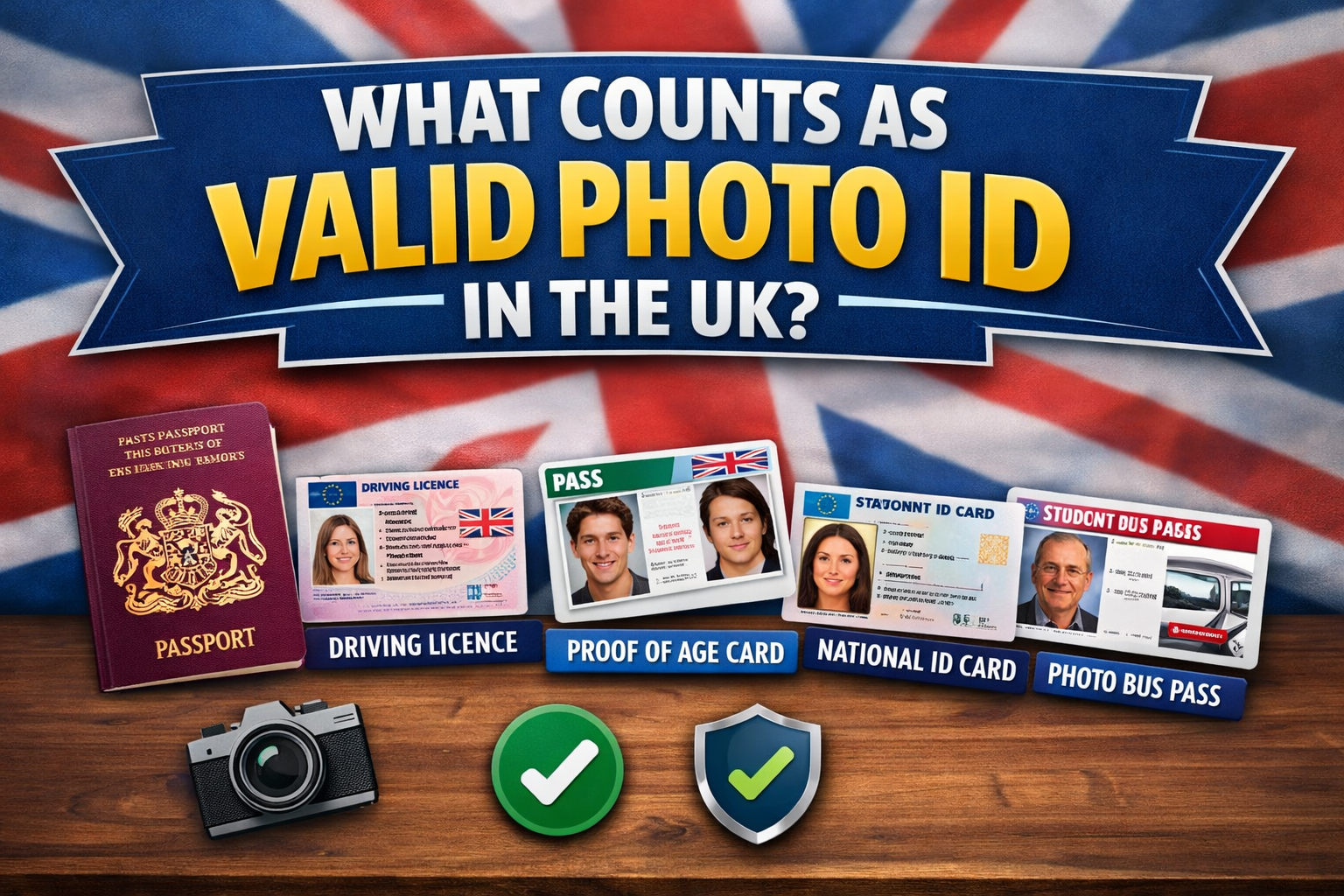
What Counts as Valid Photo ID in the UK: A Comprehensive Guide
Valid photo identification is essential for various activities in the UK, from proving your age to opening a bank account or traveling. Understanding which documents are accepted and where they can be used is crucial. This guide provides a comprehensive overview of what constitutes valid photo ID in the UK, helping you stay informed and prepared.
This guide will explore the types of identification accepted, their specific uses, and the underlying regulations governing their validity. Knowing what constitutes a valid photo ID can save you time and prevent unnecessary complications. As you navigate the various aspects of life that require identification, this guide will act as a reliable resource. You can also find related articles on the news publishing platform.
The requirements for valid ID can vary depending on the situation. For example, a passport is generally required for international travel, while a driver's license may suffice for domestic purposes or age verification. The key is to understand these nuances and ensure you have the appropriate documentation readily available. This article clarifies these differences and offers practical advice for obtaining and maintaining valid identification.
Accepted Forms of Photo ID in the UK
- Passport
- UK Driver's License (Full or Provisional)
- Proof of Age Standards Scheme (PASS) card
- Biometric Residence Permit (BRP)
- National Identity Card (for EU citizens)
Each of these documents serves as a primary form of identification, accepted widely across the UK. However, their specific applications and requirements might differ, so understanding their individual characteristics is important.
Passport
A passport is a universally recognized form of identification document, particularly useful for international travel and proving citizenship. Issued by the government, it contains your photograph, name, date of birth, and other biographical information. A valid passport is typically required for entry into most countries, and it can also be used as a primary form of ID within the UK.
The validity of a passport is usually ten years for adults and five years for children. It is crucial to check the expiration date and renew your passport well in advance of any planned travel. The application process for a UK passport involves submitting an online application, providing supporting documents, and paying a fee.
Passports are also essential for opening bank accounts, applying for a National Insurance number, and other official processes. Their high level of security and global recognition make them a reliable form of identification in various contexts.
UK Driver's License
A UK driver's license, whether full or provisional, is another widely accepted form of photo ID. It includes your photograph, name, address, and driving privileges. A full driver's license allows you to operate vehicles on UK roads, while a provisional license permits you to learn to drive under supervision.
Driver's licenses are commonly used for age verification, opening bank accounts, and proving residency. They are also accepted for domestic travel, such as boarding flights within the UK. The application process involves passing a driving test and meeting certain medical requirements.
The validity of a driver's license is typically ten years, and it must be renewed before the expiration date. It is important to keep your address updated with the DVLA (Driver and Vehicle Licensing Agency) to ensure you receive important notifications and updates.
Proof of Age Standards Scheme (PASS) Card
A PASS card is specifically designed for age verification, particularly for individuals who may not have a driver's license or passport. These cards are issued by various organizations accredited under the Proof of Age Standards Scheme, ensuring they meet strict security and verification standards.
PASS cards are widely accepted in establishments that sell age-restricted products, such as alcohol and tobacco. They are a convenient and reliable way to prove your age without having to carry more valuable documents like a passport. The application process typically involves providing proof of age and identity and paying a small fee.
The security features of PASS cards include holograms and other anti-counterfeiting measures, making them difficult to forge. This ensures that retailers and other establishments can confidently accept them as valid proof of age.
Biometric Residence Permit (BRP)
A Biometric Residence Permit (BRP) is issued to individuals who are not citizens of the UK but have been granted the right to live, work, or study in the country. It contains your photograph, name, date of birth, and immigration status. The BRP also includes biometric data, such as fingerprints, which are used to verify your identity.
BRPs are essential for proving your right to remain in the UK and are required for various activities, such as opening a bank account, applying for a National Insurance number, and accessing public services. They are also used for international travel, particularly when re-entering the UK after a trip abroad.
The application process for a BRP involves providing proof of your immigration status and attending an appointment to have your biometric data collected. It is important to keep your BRP safe and report any loss or theft to the Home Office immediately.
National Identity Card (for EU Citizens)
While the UK no longer issues national identity cards to its citizens, EU citizens residing in the UK may still use their national identity cards as a form of identification. These cards are issued by the governments of EU member states and contain your photograph, name, date of birth, and other biographical information.
National identity cards are generally accepted for age verification, opening bank accounts, and proving residency. However, their acceptance may vary depending on the establishment or organization. Since Brexit, the rules regarding the use of EU national ID cards have changed, so it's important to check the latest guidelines.
For EU citizens planning to stay in the UK long-term, it is advisable to apply for settled or pre-settled status under the EU Settlement Scheme. This will provide you with a more secure and reliable form of identification in the UK.
Where You Need Valid Photo ID
- Age Verification (purchasing alcohol, tobacco, etc.)
- Opening a Bank Account
- Traveling (domestic and international)
- Applying for a National Insurance Number
- Voting
- Entering Licensed Premises (nightclubs, pubs)
- Collecting Parcels
Valid photo ID is required in a wide range of situations in the UK. From purchasing age-restricted items to accessing essential services, having the right identification is crucial. Here's a more detailed look at some common scenarios.
Age Verification
One of the most common uses for identification document is age verification. Retailers and establishments that sell age-restricted products, such as alcohol, tobacco, and lottery tickets, are legally required to verify the age of customers who appear to be under a certain age. This is typically 18 in the UK, but it can vary depending on the product or service.
Acceptable forms of ID for age verification usually include a passport, UK driver's license, or PASS card. It is important to carry one of these documents with you if you plan to purchase age-restricted items, particularly if you look younger than your actual age. Failure to provide valid ID can result in the retailer refusing to sell you the product.
Some establishments may also accept other forms of ID, such as student cards or employee badges, but this is at their discretion. It is always best to check with the establishment beforehand to ensure that your ID will be accepted.
Opening a Bank Account
Opening a bank account in the UK typically requires providing proof of identity and address. Valid photo ID, such as a passport or driver's license, is usually required to verify your identity. Banks may also ask for additional documents, such as a utility bill or council tax statement, to confirm your address.
The requirements for opening a bank account can vary depending on the bank and the type of account you are opening. It is advisable to check with the bank beforehand to ensure that you have all the necessary documents. Some banks may also offer alternative methods of verification, such as online identity checks.
For individuals who do not have a standard form of photo ID, such as a passport or driver's license, some banks may accept alternative forms of identification, such as a Biometric Residence Permit or a letter from a government agency. However, this is at the bank's discretion.
Traveling
Valid photo ID is essential for traveling, both domestically and internationally. For international travel, a passport is typically required for entry into most countries. It is important to check the passport requirements for your destination well in advance of your trip. You can find more information on this topic at a guest post publishing site.
For domestic travel within the UK, such as boarding flights or trains, a passport or driver's license is usually accepted. Some airlines and train operators may also accept other forms of ID, such as a PASS card or a student card, but it is best to check with them beforehand.
It is important to keep your photo ID safe while traveling and to have it readily available when required. You may also want to make a copy of your ID in case it is lost or stolen.
Applying for a National Insurance Number
A National Insurance number (NI number) is a unique identifier used for tax and social security purposes in the UK. To apply for an NI number, you will typically need to provide proof of identity and your right to work in the UK. Valid photo ID, such as a passport or Biometric Residence Permit, is usually required to verify your identity.
The application process for an NI number involves attending an appointment at a Jobcentre Plus office. You will need to bring your photo ID and any other required documents with you to the appointment. The Jobcentre Plus staff will verify your identity and eligibility for an NI number.
Once you have been issued an NI number, it is important to keep it safe and to provide it to your employer and any other relevant organizations. Your NI number is essential for paying taxes and claiming social security benefits.
Voting
In the UK, you generally need to show photo ID to vote in elections. Acceptable forms of ID usually include a passport, driver's license, or certain types of government-issued ID. The specific requirements can vary depending on the region and the type of election, so it's important to check the latest guidelines from your local electoral registration office.
The introduction of photo ID requirements for voting aims to prevent voter fraud and ensure the integrity of the electoral process. However, it has also raised concerns about potential disenfranchisement, particularly among groups who are less likely to possess the required forms of ID.
If you do not have an accepted form of photo ID, you may be able to apply for a Voter Authority Certificate, which is a free form of ID specifically for voting purposes. The application process involves providing proof of your identity and address.
Lost or Stolen ID
Losing your valid ID can be stressful, but it's important to act quickly to mitigate any potential risks. Report the loss or theft to the relevant authorities and take steps to replace the documents as soon as possible. Here's a guide on what to do.
Reporting the Loss or Theft
If your passport, driver's license, or other form of photo ID is lost or stolen, it is important to report it to the relevant authorities as soon as possible. For passports, you should report the loss or theft to HM Passport Office. For driver's licenses, you should report it to the DVLA.
Reporting the loss or theft of your ID will help to prevent it from being used fraudulently. The authorities will also be able to provide you with guidance on how to replace the document.
In some cases, you may also need to report the loss or theft to the police, particularly if you suspect that it was stolen. The police will be able to investigate the matter and provide you with a crime reference number, which you may need for insurance purposes.
Replacing Lost or Stolen ID
Replacing a lost or stolen passport or driver's license involves applying for a new one through the relevant government agency. For passports, you will need to complete an online application, provide supporting documents, and pay a fee. For driver's licenses, you will need to complete an application form and provide proof of identity and address.
The process of replacing a lost or stolen ID can take several weeks or even months, so it is important to apply as soon as possible. You may also need to obtain temporary identification documents in the meantime, particularly if you need to travel or access essential services.
It is important to keep copies of your ID in a safe place in case they are lost or stolen. This will make it easier to replace them and will also help to prevent fraud.
Digital Identification
Digital identification is becoming increasingly prevalent in the UK, offering a convenient and secure way to verify your identity online. While not yet universally accepted, digital ID solutions are gaining traction and may eventually replace traditional forms of photo ID in certain contexts.
Current State of Digital ID in the UK
The UK government is currently working on developing a national digital identity framework. This framework aims to provide a secure and interoperable way for individuals to prove their identity online, without having to rely on physical documents. Several private sector companies are also developing digital ID solutions.
Digital ID solutions typically involve using a mobile app to store your identity information securely. This information can then be shared with organizations that need to verify your identity, such as banks, government agencies, and online retailers. The app may also use biometric authentication, such as facial recognition or fingerprint scanning, to ensure that only you can access your identity information.
While digital ID is still in its early stages of development in the UK, it has the potential to transform the way we prove our identity online. It could make it easier and more convenient to access services and could also help to reduce fraud and identity theft.
Future of Digital ID
The future of digital ID in the UK looks promising. As the technology matures and the government develops a national framework, it is likely that digital ID will become more widely accepted and used. This could lead to a significant reduction in the need for physical forms of identification.
Digital ID could also have a positive impact on the economy. It could make it easier for businesses to verify the identity of their customers, which could lead to increased online sales and reduced fraud. It could also make it easier for individuals to access government services online, which could save time and money.
However, there are also concerns about the privacy and security of digital ID. It is important to ensure that digital ID solutions are designed in a way that protects individuals' privacy and prevents identity theft. The government and the private sector need to work together to address these concerns and ensure that digital ID is implemented in a responsible and ethical manner.
Common Mistakes to Avoid
- Letting your ID expire
- Carrying only a photocopy of your ID
- Using someone else's ID
- Altering your ID in any way
Avoiding common mistakes when handling your personal identification is crucial to ensure you can use it effectively when needed. Here are some key pitfalls to steer clear of.
Letting Your ID Expire
One of the most common mistakes is letting your ID expire. Expired ID is generally not accepted as valid proof of identity, which can cause problems when you need to use it for age verification, opening a bank account, or traveling. It is important to check the expiration date of your ID regularly and renew it well in advance of the expiration date.
The process of renewing your ID can take several weeks or even months, so it is important to apply as soon as possible. You may also need to obtain temporary identification documents in the meantime, particularly if you need to travel or access essential services.
Setting a reminder on your phone or calendar can help you remember to renew your ID before it expires. You can also sign up for email or text message notifications from the relevant government agency.
Carrying Only a Photocopy of Your ID
Carrying only a photocopy of your ID is another common mistake. Photocopies of ID are generally not accepted as valid proof of identity, as they can be easily forged or altered. It is important to carry the original document with you when you need to use it for identification purposes.
However, it is also important to keep your original ID safe and to avoid carrying it with you unnecessarily. You may want to make a copy of your ID and keep it in a safe place in case the original is lost or stolen.
In some cases, you may be able to use a digital image of your ID on your phone or tablet, but this is at the discretion of the organization or establishment that is requesting the ID. It is always best to check with them beforehand to ensure that a digital image will be accepted.
Using Someone Else's ID
Using someone else's ID is a serious offense that can result in legal penalties. It is illegal to use someone else's ID to misrepresent your age, identity, or any other personal information. If you are caught using someone else's ID, you could face fines, imprisonment, or other legal consequences.
It is also important to protect your own ID from being used by someone else. Keep your ID in a safe place and avoid lending it to anyone. If you suspect that someone has stolen your ID or is using it without your permission, report it to the police immediately.
Using someone else's ID can also have serious consequences for the person whose ID is being used. They could be held liable for your actions or could face legal penalties themselves.
Special Considerations for Foreign Nationals
Foreign nationals in the UK may have different requirements for identification than UK citizens. Understanding these differences is important for ensuring compliance with UK laws and regulations.
Accepted Forms of ID for Foreign Nationals
Foreign nationals in the UK can use a variety of documents as proof of identity, including a passport, Biometric Residence Permit (BRP), or national identity card (for EU citizens). The specific requirements may vary depending on the situation, so it is important to check with the relevant organization or establishment.
A passport is generally accepted as valid proof of identity for foreign nationals in the UK. It is important to ensure that your passport is valid and that you have the necessary visas or permits to remain in the UK.
A Biometric Residence Permit (BRP) is issued to foreign nationals who have been granted the right to live, work, or study in the UK. The BRP contains your photograph, name, date of birth, and immigration status. It is important to keep your BRP safe and to report any loss or theft to the Home Office immediately.
Immigration Status and ID
Your immigration status in the UK can affect your identification requirements. If you are a visitor to the UK, you will typically need to carry your passport with you at all times. If you are a resident of the UK, you may be required to provide proof of your immigration status when accessing certain services or applying for certain benefits.
It is important to comply with all UK immigration laws and regulations. If you are unsure about your immigration status or your identification requirements, you should seek advice from an immigration lawyer or advisor.
The Home Office provides information and guidance on immigration matters on its website. You can also contact the Home Office directly for assistance.
Alternatives to Photo ID
In certain situations, alternatives to photo ID may be accepted. These alternatives typically involve providing other forms of documentation or undergoing alternative verification processes.
Statutory Declaration
A statutory declaration is a written statement that is made under oath or affirmation before a solicitor, notary public, or other authorized person. It can be used as an alternative to photo ID in certain situations, such as when you do not have a valid passport or driver's license.
To make a statutory declaration, you will need to provide proof of your identity and address to the person who is administering the oath or affirmation. You will also need to state the facts that you are declaring to be true. The person administering the oath or affirmation will then sign and seal the statutory declaration, making it a legally binding document.
Statutory declarations are typically accepted by government agencies, banks, and other organizations as proof of identity. However, it is important to check with the organization or establishment beforehand to ensure that a statutory declaration will be accepted.
Frequently Asked Questions
What if I don't have any photo ID?
If you don't have any photo identification, you may need to obtain one. A passport or driver's license are common options. Alternatively, a PASS card may suffice for age verification.
Can I use a foreign driver's license in the UK?
Yes, a foreign driver's license can be used in the UK for a limited period, typically up to 12 months. After that, you will need to obtain a UK driver's license.
Is a student ID card valid photo ID?
A student ID card is generally not accepted as a primary form of photo ID, but some establishments may accept it for age verification at their discretion.
What is a PASS card?
A PASS (Proof of Age Standards Scheme) card is a widely accepted form of ID specifically for age verification, particularly for purchasing age-restricted products.
How do I apply for a UK passport?
You can apply for a UK passport online through the HM Passport Office website. You will need to provide supporting documents and pay a fee.
How do I replace a lost or stolen driver's license?
You can replace a lost or stolen driver's license through the DVLA (Driver and Vehicle Licensing Agency) website. You will need to complete an application form and provide proof of identity and address.
Are digital forms of ID accepted in the UK?
Digital forms of ID are becoming increasingly prevalent in the UK, but they are not yet universally accepted. It is best to check with the organization or establishment beforehand to ensure that a digital ID will be accepted.
What should I do if my ID is refused?
If your ID is refused, ask for the reason why. If you believe the refusal is unjustified, you can ask to speak to a manager or supervisor.
Can I use a birth certificate as proof of identity?
A birth certificate is generally not accepted as a primary form of photo ID, but it may be accepted as supporting documentation in certain situations.
Where can I find more information about valid photo ID in the UK?
You can find more information about valid photo ID in the UK on the websites of the HM Passport Office, the DVLA, and the Home Office.
Disclaimer: The information provided in this guide is for general informational purposes only. Regulations and requirements may change, so always check the official websites of relevant authorities for the most up-to-date information.