

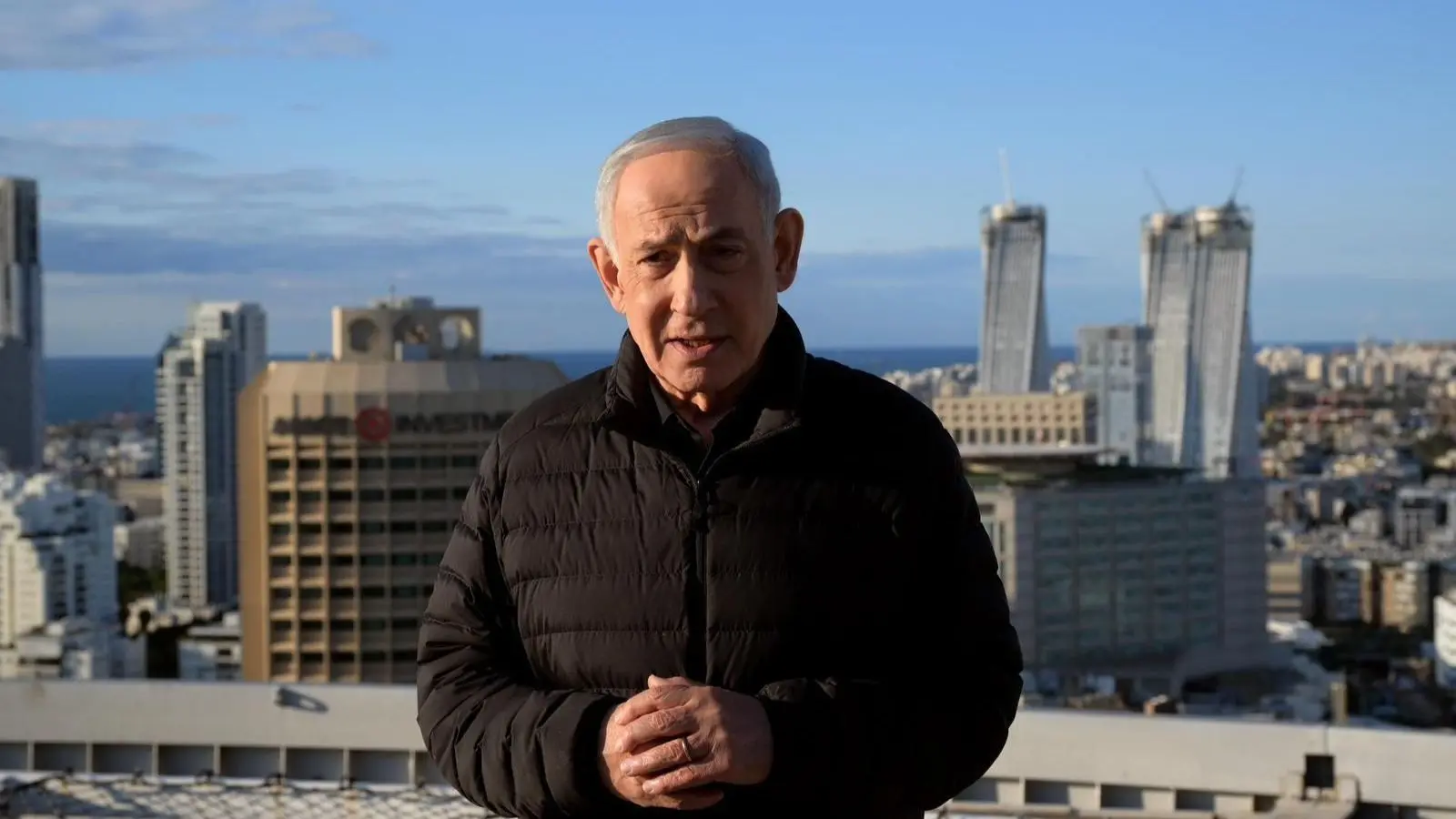
Israeli Prime Minister Benjamin Netanyahu has ignited a fierce political firestorm with a seemingly offhand joke about his physical appearance. During an interview with Channel 14, a conservative Israeli broadcaster, Netanyahu was asked what had personally changed for him since the devastating Hamas-led attack on October 7, 2023. His response: "First of all, I lost a little weight." The remark, intended perhaps as a moment of levity, quickly drew condemnation from opposition figures and bereaved families, who saw it as a trivialization of the worst single day of violence in Israeli history.
The October 7 attack, in which Hamas and other armed groups breached the Gaza border fence, killed approximately 1,200 Israelis and foreigners, and took over 240 hostages into Gaza, remains a raw national trauma. For many, Netanyahu's light-hearted comment demonstrated a profound disconnect between the leader and the suffering of ordinary citizens. Opponents argue that the prime minister, who is simultaneously fighting a war in Gaza and facing legal battles over corruption charges at home, has failed to fully acknowledge the gravity of the country's security and national unity crisis.
The Context of the Remark
Netanyahu did not stop at the weight-loss quip. He quickly pivoted to a more serious discussion about the strategic lessons of October 7. He asserted that the attack had fundamentally changed his perspective on Israeli security, particularly the need to establish buffer zones inside enemy territory — in Gaza, Lebanon, and Syria — to prevent any future penetration of Israeli borders. "The most important thing is to create buffer zones on enemy territory, not on our territory," he said. He also emphasized that the war had demonstrated the necessity of mobilizing reservists on a larger scale than pre-war planning had envisioned.
However, the damage was already done. Social media erupted with outrage, with many users posting photos of the funerals of soldiers and civilians alongside Netanyahu's smiling comment. Israeli media outlets splashed the story across their front pages, often juxtaposing the prime minister's words against the still-unfolding hostage crisis and the ongoing evacuation of families from border communities.
Opposition Fury and Calls for Accountability
Gadi Eisenkot, a former Israel Defense Forces chief of staff and now a leading member of the National Unity party, was among the first to issue a blistering response. He described Netanyahu's statement as "disconnected from reality" and labeled the prime minister "unfit and unworthy of this nation." Eisenkot renewed his demand for the establishment of a state commission of inquiry into the failures that allowed the October 7 attack to occur. Such a commission, which would have the power to subpoena witnesses and issue binding recommendations, has been repeatedly blocked by Netanyahu. The prime minister argues that investigations should wait until after the war ends, but critics say he fears the findings could bring down his coalition government.
Other opposition voices joined the chorus. Yair Lapid, leader of the Yesh Atid party, tweeted: "Instead of dealing with the tragedy of October 7, the prime minister is making jokes. This is not leadership; it is evasion." Bereaved families of victims also expressed disgust. The Hostages and Missing Families Forum issued a statement calling on Netanyahu to demonstrate "responsibility and empathy" rather than humor.
Background: A Leader Under Siege
Benjamin Netanyahu, Israel's longest-serving prime minister, has weathered many political storms. Before October 7, he was best known internationally for his opposition to the Iran nuclear deal and his staunch advocacy of Israeli settlements. Domestically, his government — the most right-wing in Israeli history — had pushed controversial judicial reforms that sparked months of massive protests in 2023. The Hamas attack occurred while Israel was deeply divided over these reforms, and many analysts have pointed to the political chaos as a factor that may have emboldened Israel's enemies.
Since the war began, Netanyahu has faced plummeting approval ratings. Polls consistently show that a majority of Israelis believe he should resign either immediately or after the war. His popularity has been eroded by widespread perception that his government was caught unprepared on October 7 and by his reluctance to accept full responsibility for the security failures. In rare press conferences, he has deflected blame onto military and intelligence chiefs, further infuriating the public and the defense establishment.
The Weight Loss Joke: A Symptom of Deeper Issues
For political analysts, the weight-loss joke is emblematic of Netanyahu's communication style, which often seeks to project confidence and normalcy even in crisis. However, critics argue that such attempts at humor land poorly when citizens are still burying their dead and hundreds of families do not know if their loved ones in Gaza are alive or dead. The juxtaposition of personal vanity remarks with the gravity of war has fed a narrative that Netanyahu is more concerned with his own legacy and public image than with the suffering of his people.
Moreover, the October 7 attack exposed profound intelligence and operational failures. The Shin Bet and Mossad had received warnings, but they were dismissed. The IDF's Gaza Division was overwhelmed. In the ensuing months, the military has reclaimed most of northern Gaza and launched ground operations in the south, but the war has exacted a heavy toll on both Palestinian civilians and Israeli soldiers. Over 30,000 Palestinians have been killed, according to Gaza health authorities, and the conflict has sparked international condemnation and strained Israel's relationship with allies like the United States.
Buffer Zones and Security Doctrine
Netanyahu's talk of buffer zones is tied to a broader security doctrine that has long been debated in Israeli strategic circles. The idea of creating a demilitarized, Israeli-controlled strip inside Gaza — often referred to as a "security zone" — was rejected by previous governments due to the high military cost and the diplomatic fallout of permanently occupying territory. However, after October 7, voices in the security establishment have revived the concept, arguing that the only way to prevent a repetition of the attack is to establish a physical barrier deep inside the Strip, beyond the current fence.
Critics warn that such a zone would amount to a permanent occupation of Gaza land, contravening international law and making a political resolution to the conflict even more elusive. The United States has also expressed reservations. Nevertheless, Netanyahu appears committed to the idea, and his remarks in the Channel 14 interview were seen as an attempt to rally the right-wing base behind a tough military stance.
The Ongoing War and National Mood
As the war enters its sixth month, the Israeli public remains deeply polarized. Many support the army's campaign to dismantle Hamas, but there is growing anger at the government's failure to bring home the remaining hostages through a negotiated deal. Some 130 hostages are still believed to be in Gaza; around a third of them are presumed dead. Families of the hostages have staged protests, blocked highways, and set up encampments outside the Knesset, demanding immediate action.
Against this backdrop, Netanyahu's weight-loss quip struck many as a tone-deaf display of self-absorption. It revived old criticisms that he is detached from the struggles of ordinary Israelis — a perception that has haunted him throughout his long career. Even within his own Likud party, murmurs of discontent have emerged, though so far no serious challenge to his leadership has materialized.
In summary, the prime minister's attempt at humor has backfired, adding fuel to an already blazing fire of public anger. The incident underscores the immense challenge Netanyahu faces in maintaining his grip on power while simultaneously navigating a devastating war and its aftermath. As the country mourns and fights, the question of whether its leader can truly understand the pain of his people remains unanswered.
Source: i24NEWS News