

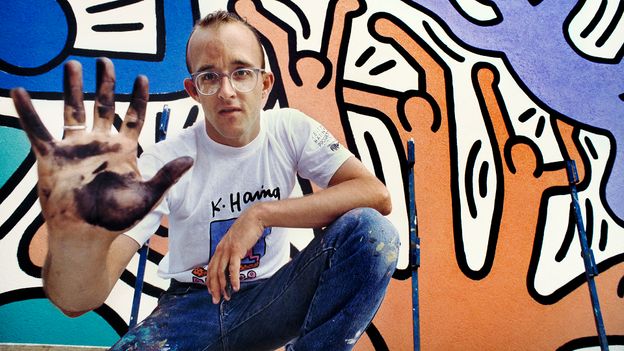
In recent years, the late Keith Haring's dynamic pop art has proliferated across fashion and merchandise, raising concerns about the true meaning of his work being overshadowed. Known for his unique humanoid figures, Haring's creations are now found on everything from T-shirts to 3D Lego sets, a testament to his enduring appeal 36 years after his death.
Haring's art, which he considered accessible to all, has generated substantial revenue for the Keith Haring Foundation, which supports organizations focused on children's welfare and HIV/AIDS education. Despite the financial benefits, critics argue that brands often overlook the deeper social messages embedded in Haring's work, particularly his activism regarding HIV/AIDS and LGBTQ+ rights.
For example, jewelry brand Pandora faced backlash in 2022 for failing to acknowledge Haring's sexuality and activism in their promotional materials for a collection inspired by his designs. The foundation's former director admitted that there have been complaints regarding the lack of focus on Haring’s fight against HIV, yet emphasized the need for brands to communicate in ways that resonate with their identity.
The Layers of His Work
Despite the critiques, Haring's status as a serious artist continues to rise, with exhibitions dedicated to his work opening in major cities. Recently, an exhibition showcasing his influential subway drawings opened at the Moco Museum in London. Haring's subway art, which he created in the early 1980s, was spontaneous and aimed at making art accessible to everyday commuters.
Kim Logchies Prins, curator of the Moco Museum, noted Haring's mission to democratize art, highlighting how he transformed mundane subway spaces into platforms for creative expression. His work's accessibility and joyful aesthetic resonate with audiences, drawing attention from both art critics and casual observers.
Haring's commitment to making art available to everyone is evident from his opening of the Pop Shop in 1986, which sold various merchandise adorned with his designs. He believed in breaking down barriers between high and low art, a principle that guided his creative approach throughout his life.
Haring was also unafraid to engage with commercial ventures, having designed promotional materials for various brands and even collaborating with pop icons like David Bowie and Madonna. His work often contained potent political messages, addressing issues like apartheid in South Africa and the AIDS crisis in America.
Notably, Haring's collaboration with the ACT UP movement resulted in powerful imagery that resonated deeply within the LGBTQ+ community. His famous poster proclaiming "ignorance = fear" and "silence = death" exemplifies his dedication to activism, which he openly discussed following his own diagnosis with HIV.
Why Haring is So in Vogue Now
Art historian Dr. Jay Hicks suggests that Haring's diverse approach to art distribution has made him a role model for contemporary artists. His ability to blend activism with commercial success has established a template for artists today, who seek to navigate similar paths in their careers. Haring's aesthetic, characterized by bold imagery, has gained nostalgic value, particularly among younger audiences.
Ian Giles, a London-based artist, emphasizes that Haring's visual style translates well into modern merchandise, appealing to a generation that cherishes the vibrancy of 1980s queer culture. The cultural cachet of Haring's work taps into a collective nostalgia for simpler times, further contributing to its popularity.
However, the commodification of Haring's art raises important questions about the preservation of his legacy. Critics argue that brands often gloss over the significant social issues Haring championed, reducing his work to mere aesthetics. Dr. Fiona Anderson warns that companies should engage with Haring's queerness and activism to truly honor his contributions to art and society.
Activist Dan Glass echoes these sentiments, stressing that Haring's art was a joyful expression of resistance against oppression, particularly for marginalized communities. He cautions that without integrating Haring's activism into brand collaborations, the artist's brilliance risks becoming diluted.
As Haring's work continues to resonate with new generations, it remains essential to acknowledge the multifaceted nature of his legacy. Haring himself believed in the viewer's role in creating meaning, leaving behind a rich tapestry of art that invites exploration and interpretation. His vision for art as an inclusive experience is as relevant today as it was during his lifetime, ensuring that his message endures even amidst the complexities of commercialisation.
Voice of the Street: Keith Haring's Subway Drawings is at Moco Museum, London from 18 March until 18 June. Keith Haring is at The Brant Foundation Art Study Center, New York, until 31 May.
Source: Bbc News