

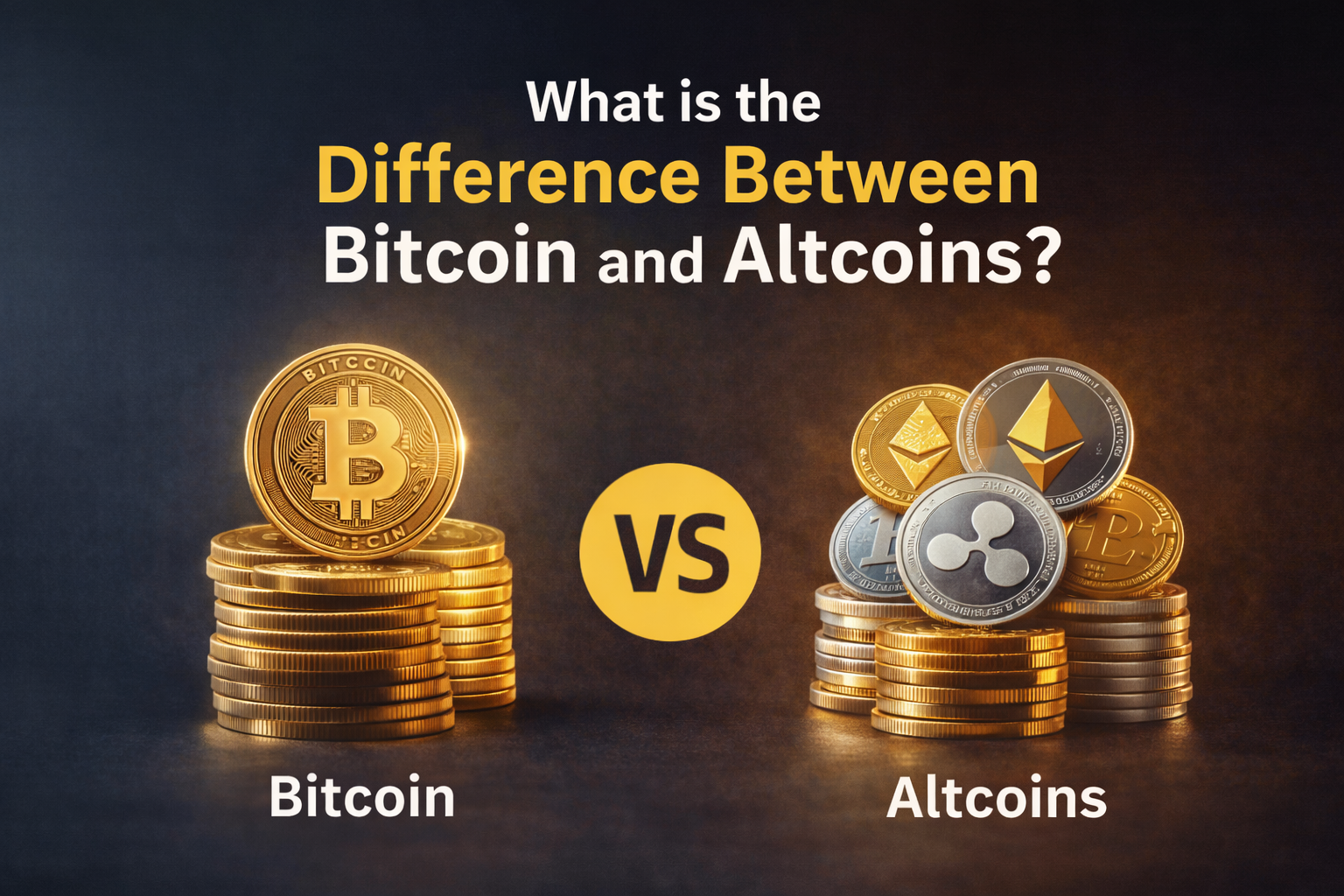
Introduction to Bitcoin and Altcoins
The world of cryptocurrency is dominated by two main categories: Bitcoin and altcoins. Bitcoin, the first decentralized digital currency, has paved the way for numerous other cryptocurrencies, collectively known as altcoins. Understanding the differences between these two categories is crucial for anyone looking to invest in or understand the cryptocurrency market.
This guide will delve into the key distinctions between Bitcoin and altcoins, covering various aspects such as their underlying technology, market capitalization, use cases, advantages, and disadvantages. Furthermore, we will explore some of the most popular altcoins and how they compare to Bitcoin.
The Origin and Purpose
Bitcoin, created by the pseudonymous Satoshi Nakamoto in 2009, was designed as a peer-to-peer electronic cash system. Its primary purpose was to enable secure and decentralized transactions without the need for intermediaries like banks. As the first and most well-known cryptocurrency, Bitcoin has established itself as a store of value and a medium of exchange.
Altcoins, short for alternative coins, emerged as variations or improvements upon Bitcoin's original concept. These cryptocurrencies often aim to address perceived shortcomings of Bitcoin, such as scalability, transaction speed, or energy consumption. Many altcoins also introduce new features or use cases, such as smart contracts or decentralized applications. You can find more information and online news platform related to the market shifts and impacts of all these coins.
Altcoins offer diverse functionalities beyond just a store of value. Some aim for faster transactions, while others focus on privacy-enhancing features. This variety reflects the evolving landscape of blockchain technology and the desire to cater to different needs within the crypto community. Moreover, the emergence of altcoins has sparked innovation and experimentation within the broader blockchain ecosystem.
Technology and Underlying Mechanisms
Bitcoin operates on a blockchain, a decentralized and distributed ledger that records all transactions. The Bitcoin blockchain uses a proof-of-work (PoW) consensus mechanism, where miners solve complex cryptographic puzzles to validate transactions and add new blocks to the chain. This process requires significant computational power and energy consumption.
Altcoins, on the other hand, employ various consensus mechanisms and technological architectures. Some altcoins, like Litecoin, also use PoW but with different hashing algorithms to reduce the dominance of specialized mining hardware. Others, like Ethereum, utilize proof-of-stake (PoS), where validators are selected based on the number of coins they hold and stake on the network. This approach is generally considered more energy-efficient than PoW. Learn more about the impact of crypto in free press release submission.
The choice of consensus mechanism can significantly impact the performance, security, and energy efficiency of a cryptocurrency. PoW offers strong security but is energy-intensive, while PoS offers better energy efficiency but may raise concerns about centralization if a few large stakeholders control a significant portion of the network.
Market Capitalization and Dominance
Bitcoin consistently holds the largest market capitalization among all cryptocurrencies. Its dominance in the market is a testament to its first-mover advantage, brand recognition, and widespread adoption. Bitcoin's market capitalization often serves as a benchmark for the overall health and stability of the cryptocurrency market.
Altcoins, while collectively representing a significant portion of the cryptocurrency market, are individually much smaller in market capitalization compared to Bitcoin. Some of the top altcoins, such as Ethereum, Ripple (XRP), and Litecoin, have established themselves as major players, but their market caps are still significantly lower than Bitcoin's.
The market capitalization of altcoins can fluctuate significantly based on factors such as technological advancements, partnerships, and regulatory developments. Some altcoins experience rapid growth due to innovative features or strong community support, while others may struggle to maintain their value due to competition or lack of adoption.
Use Cases and Applications
Bitcoin's primary use case is as a store of value and a medium of exchange. It is often referred to as "digital gold" due to its limited supply and potential to hedge against inflation. Bitcoin is also used for cross-border payments and as an investment vehicle. Bitcoin has proven to be a digital currency with a strong use case.
Altcoins, on the other hand, often target specific use cases beyond just a store of value or medium of exchange. Ethereum, for example, is a platform for building decentralized applications (dApps) and smart contracts. Ripple (XRP) focuses on facilitating faster and cheaper cross-border payments for financial institutions. Litecoin aims to be a faster and more scalable version of Bitcoin.
The diverse use cases of altcoins reflect the wide range of applications for blockchain technology. From decentralized finance (DeFi) to supply chain management to digital identity, altcoins are exploring various ways to leverage blockchain to solve real-world problems. The potential for altcoins to disrupt traditional industries is a major driving force behind their growth and adoption.
Advantages and Disadvantages
Bitcoin Advantages
- First-mover advantage and brand recognition
- Largest market capitalization and liquidity
- Strong security and decentralization
- Limited supply, potentially making it a hedge against inflation
Bitcoin Disadvantages
- Relatively slow transaction speeds
- High transaction fees, especially during periods of high network congestion
- High energy consumption due to PoW consensus mechanism
- Limited functionality compared to some altcoins
Altcoin Advantages
- Faster transaction speeds compared to Bitcoin
- Lower transaction fees compared to Bitcoin
- More energy-efficient consensus mechanisms (e.g., PoS)
- Wider range of functionalities and use cases
Altcoin Disadvantages
- Smaller market capitalization and liquidity compared to Bitcoin
- Higher risk of scams and fraud
- Greater volatility compared to Bitcoin
- Potential for centralization in some PoS-based altcoins
Examples of Popular Altcoins
Several altcoins have gained significant popularity and market share over the years. Here are some notable examples:
- Ethereum (ETH): A platform for building decentralized applications and smart contracts.
- Ripple (XRP): A cryptocurrency focused on facilitating faster and cheaper cross-border payments for financial institutions.
- Litecoin (LTC): A faster and more scalable version of Bitcoin.
- Cardano (ADA): A proof-of-stake blockchain platform with a focus on sustainability and scalability.
- Solana (SOL): A high-performance blockchain platform designed for decentralized applications.
These altcoins represent a diverse range of technologies and use cases within the cryptocurrency market. Each altcoin has its own unique features, advantages, and disadvantages, making it important for investors to conduct thorough research before investing.
Security Considerations
Security is a paramount concern in the cryptocurrency world, and both Bitcoin and altcoins are vulnerable to various security threats. These threats include hacking, theft, and fraud. While Bitcoin's blockchain is considered highly secure due to its decentralized nature and PoW consensus mechanism, it is not immune to attacks.
Altcoins, particularly those with smaller market capitalizations and less robust security measures, are often more vulnerable to security breaches. The risk of scams and fraud is also higher with altcoins, as many new projects lack the transparency and due diligence of established cryptocurrencies like Bitcoin. Always remember to practice strong cryptocurrency security habits.
Users should take precautions to protect their cryptocurrency holdings, such as using strong passwords, enabling two-factor authentication, and storing their coins in secure wallets. It is also important to be wary of phishing scams and other fraudulent schemes that aim to steal cryptocurrency.
Regulatory Landscape
The regulatory landscape surrounding Bitcoin and altcoins is constantly evolving. Governments around the world are grappling with how to regulate cryptocurrencies, and the lack of clear regulatory frameworks can create uncertainty and risk for investors.
Some countries have adopted a more favorable approach to cryptocurrencies, while others have imposed strict regulations or even outright bans. The regulatory treatment of Bitcoin and altcoins can vary significantly depending on the jurisdiction. The rise of digital assets has forced regulatory bodies to re-evaluate existing frameworks.
Investors should be aware of the regulatory environment in their respective jurisdictions and understand the potential implications for their cryptocurrency investments. It is also important to stay informed about regulatory developments and how they may impact the cryptocurrency market.
Future Outlook
The future of Bitcoin and altcoins is uncertain, but many experts believe that cryptocurrencies have the potential to play a significant role in the future of finance. Bitcoin is expected to continue to evolve, with ongoing development efforts focused on improving its scalability, privacy, and functionality. The future of cryptocurrency looks bright, but diligence is key.
Altcoins are also expected to continue to innovate and evolve, with new projects and technologies emerging to address specific needs and challenges. The growth of decentralized finance (DeFi) and other blockchain-based applications is likely to drive further adoption of altcoins. However, the success of altcoins will depend on their ability to deliver on their promises and gain widespread acceptance.
Overall, the cryptocurrency market is expected to continue to grow and mature in the coming years, with both Bitcoin and altcoins playing important roles. However, investors should be aware of the risks involved and conduct thorough research before investing in any cryptocurrency.
Investing in Bitcoin and Altcoins
Investing in Bitcoin and altcoins can be potentially rewarding but also carries significant risks. Before investing, it's important to understand the underlying technology, market dynamics, and regulatory environment. Diversification is key; don't put all your eggs in one basket. Consider spreading your investments across different cryptocurrencies to mitigate risk.
Thorough research is essential. Understand the specific use case, team, and technology behind each cryptocurrency you're considering. Look for projects with strong fundamentals and a clear roadmap. Be wary of hype and promises of quick riches. The cryptocurrency market is highly volatile, and prices can fluctuate dramatically.
Use reputable exchanges and wallets to store your cryptocurrencies. Enable two-factor authentication for added security. Stay informed about market trends and news, but avoid making impulsive decisions based on short-term price movements. Consider consulting with a financial advisor before making any investment decisions.
Frequently Asked Questions
What is the main difference between Bitcoin and altcoins?
- The main difference lies in their origin and purpose. Bitcoin was the first cryptocurrency, designed as a peer-to-peer electronic cash system. Altcoins emerged as alternatives or improvements to Bitcoin, often with specific use cases or technological enhancements.
Which is a better investment, Bitcoin or altcoins?
- There is no one-size-fits-all answer. Bitcoin is generally considered a safer investment due to its larger market capitalization and established track record. However, altcoins offer the potential for higher returns but also carry greater risk. The best investment depends on your individual risk tolerance and investment goals.
What are some of the most popular altcoins?
- Some of the most popular altcoins include Ethereum, Ripple (XRP), Litecoin, Cardano, and Solana.
Are altcoins more energy-efficient than Bitcoin?
- Many altcoins use proof-of-stake (PoS) consensus mechanisms, which are generally more energy-efficient than Bitcoin's proof-of-work (PoW).
What are the risks of investing in altcoins?
- Altcoins carry risks such as smaller market capitalization, higher volatility, greater risk of scams and fraud, and potential for centralization in some PoS-based altcoins.
How can I protect my cryptocurrency holdings?
- Use strong passwords, enable two-factor authentication, store your coins in secure wallets, and be wary of phishing scams and other fraudulent schemes.
What is the regulatory landscape for Bitcoin and altcoins?
- The regulatory landscape is constantly evolving, and the treatment of Bitcoin and altcoins can vary significantly depending on the jurisdiction. Investors should be aware of the regulatory environment in their respective jurisdictions and stay informed about regulatory developments.
Will altcoins eventually overtake Bitcoin?
- It is difficult to predict whether altcoins will eventually overtake Bitcoin. Bitcoin has a strong first-mover advantage and brand recognition, but altcoins are constantly innovating and evolving. The future of the cryptocurrency market will likely be shaped by both Bitcoin and altcoins.
What is proof-of-stake (PoS)?
- Proof-of-stake (PoS) is a consensus mechanism where validators are selected based on the number of coins they hold and stake on the network. It is generally considered more energy-efficient than proof-of-work (PoW).
What is proof-of-work (PoW)?
- Proof-of-work (PoW) is a consensus mechanism where miners solve complex cryptographic puzzles to validate transactions and add new blocks to the chain. This process requires significant computational power and energy consumption.
Disclaimer: Cryptocurrency investments are speculative and carry substantial risk. This information is for educational purposes only and should not be considered financial advice. Always conduct thorough research and consult with a qualified financial advisor before making any investment decisions. Market conditions can change rapidly. Please verify all information on the official project websites.