

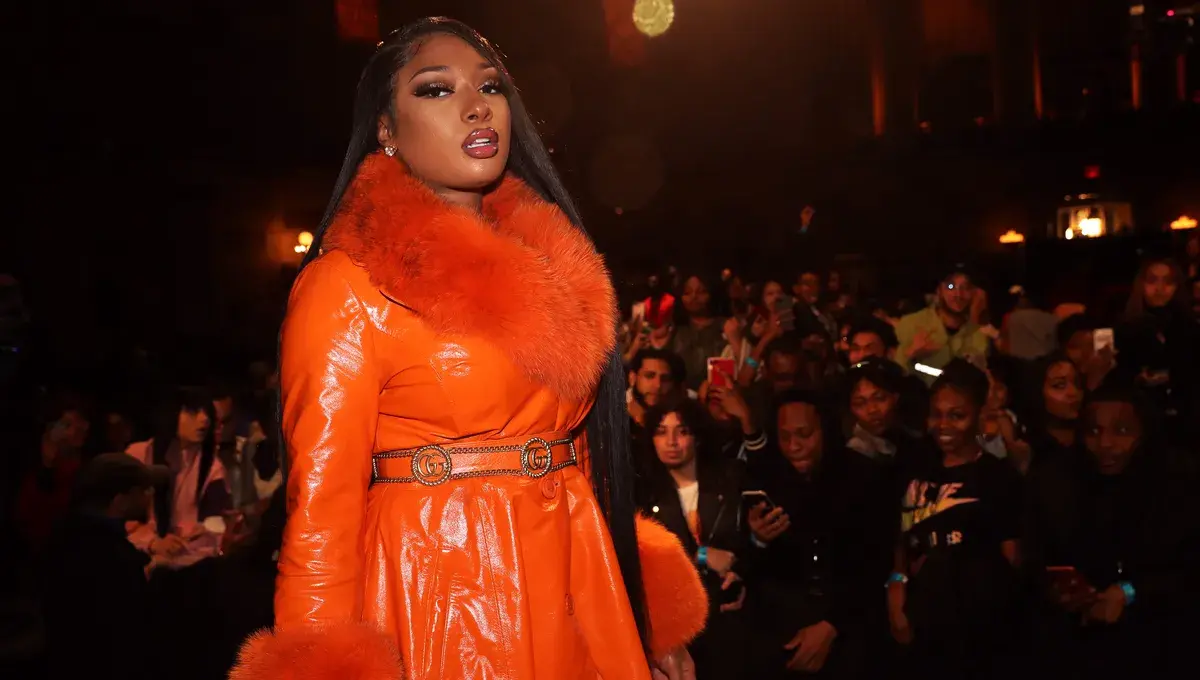
Megan Thee Stallion has never shied away from speaking truth to power. The Grammy-winning rapper, known for her unapologetic lyrics and magnetic stage presence, recently made a statement that resonates deeply with her fans and beyond: “Protecting Black women should not be controversial.” This straightforward yet powerful declaration captures a fundamental issue that has long plagued society—the disproportionate violence, neglect, and erasure faced by Black women. In a world where their struggles are often minimized or ignored, Megan Thee Stallion’s words serve as both a call to action and a reminder of the work that remains.
The Context of Controversy
For many, the idea of protecting Black women seems like an obvious moral imperative. Yet, time and again, when Black women advocate for their own safety or when allies speak out on their behalf, they are met with skepticism, backlash, or outright hostility. Megan Thee Stallion’s comment sheds light on a troubling paradox: why does something so basic become so politicized? This question is especially poignant given her own harrowing experience. In July 2020, Megan was shot in both feet following an altercation with Tory Lanez, an incident that thrust her into the national spotlight for reasons far beyond her music. The aftermath revealed a deeply flawed system—one that often fails to believe Black women, blames them for their own victimization, and treats their pain as fodder for public consumption.
Megan’s Journey from Houston to Global Stardom
Megan Jovon Ruth Pete, known professionally as Megan Thee Stallion, was born and raised in Houston, Texas. She rose to fame in the late 2010s with viral hits like “Big Ole Freak” and “Savage,” but her roots run deeper. Her mother, Holly Thomas, was a rapper herself and managed Megan’s early career until her passing in 2019. That loss profoundly shaped Megan, pushing her to pursue her dreams with even greater determination. By the time she released her debut studio album, Good News, in 2020, she had already become a cultural force—not just for her music but for her outspokenness on issues affecting women, particularly Black women.
Her lyrics often celebrate Black womanhood, sexuality, and strength, but behind the confident persona lies a woman who has navigated immense trauma. The shooting incident and the subsequent trial exposed her to relentless media scrutiny, online harassment, and victim-blaming. Despite winning a legal victory when Tory Lanez was convicted in 2022, the emotional toll remains. Megan has been open about her struggles with anxiety and depression, using her platform to destigmatize mental health care within the Black community. Her album Traumazine (2022) explored these themes directly, blending vulnerability with resilience.
A Broader History of Violence and Silence
Megan’s statement does not exist in a vacuum. The devaluation of Black women’s lives has deep historical roots, from slavery to the present day. Black women have been disproportionately targeted by violence, both inside and outside their communities, yet their cries for justice are often discounted. The term “missing white woman syndrome” highlights how media coverage and public attention disproportionately favor white victims, while Black women who go missing or are killed frequently go unnoticed. Statistics from organizations like the National Coalition Against Domestic Violence show that Black women experience intimate partner violence at higher rates than women of other races, and they are far more likely to be killed by their abusers. The justice system, too, often fails them—Black women who report assaults are less likely to be believed, and their attackers receive lighter sentences.
Megan’s call to protect Black women is therefore a direct challenge to these entrenched patterns. It is a demand that society sees Black women as worthy of care, safety, and empathy without qualification. This is not a radical idea, but it has been made to feel that way because it disrupts the status quo. Those who speak out—whether celebrities or everyday activists—are frequently accused of being “divisive” or “playing the victim.” Megan herself faced a torrent of online abuse after the shooting, with many questioning her credibility. Yet she persisted, testifying in court with remarkable poise and continuing to use her voice for advocacy.
The Role of Music and Culture
Megan Thee Stallion’s artistry is inseparable from her activism. Songs like “Thot Shit” and “Body” are anthems of sexual liberation, but they also assert agency in a world that often seeks to control women’s bodies. Meanwhile, tracks like “Anxiety” and “Flip Flop” reveal a more introspective side, addressing mental health and societal pressures. By weaving these themes into her music, Megan normalizes conversations that have long been taboo in hip-hop and beyond. She has also collaborated with organizations like the Houston Food Bank and launched scholarships for women of color, demonstrating a commitment to tangible change.
Her influence extends to fashion, where she frequently wears designs that celebrate Black culture, and to social media, where she engages with fans on topics ranging from politics to self-care. When she says protecting Black women should not be controversial, she is not just making a political statement—she is embodying the very protection she advocates for. By standing tall in her truth, she gives permission for other Black women to do the same.
Reactions and the Ongoing Debate
Following Megan’s statement, reactions poured in from fans, fellow artists, and commentators. Many praised her for articulating what is often left unsaid. Others, predictably, accused her of stirring up conflict. This polarization reflects the broader cultural war over race, gender, and justice. The controversy surrounding her words is itself evidence of the problem—if protecting Black women were truly a non-controversial goal, there would be no backlash. Instead, every time a Black woman speaks out, she risks being labeled “angry” or “divisive.” Megan’s defiance in the face of this double bind is a testament to her resilience.
Journalists and scholars have noted that Megan Thee Stallion’s advocacy has helped shift the conversation around Black women’s safety. For example, her case brought renewed attention to the need for legal reforms that protect victims of intimate partner violence and gun crimes. It also sparked discussions about how the music industry handles incidents of violence among its artists. While progress is slow, conversations matter—they create the pressure needed for change.
Megan Thee Stallion’s Legacy in the Making
At just 29 years old, Megan Thee Stallion has already achieved what many artists only dream of: multiple Grammy Awards, number-one albums, and a loyal fanbase. But her legacy will be defined not just by her commercial success but by her willingness to speak uncomfortable truths. She represents a new generation of Black women who refuse to be silenced, who demand to be seen and protected. Her statement that protecting Black women should not be controversial is both a simple observation and a revolutionary act. It forces us to ask: why is it so hard for our society to extend basic humanity to those who have been marginalized for centuries?
As Megan continues to tour, release music, and engage in philanthropy, her voice remains a vital part of the broader struggle for racial and gender justice. She reminds us that protecting Black women is not a favor—it is a duty. And it should never, ever be a matter of debate.
Source: Mouv' News