

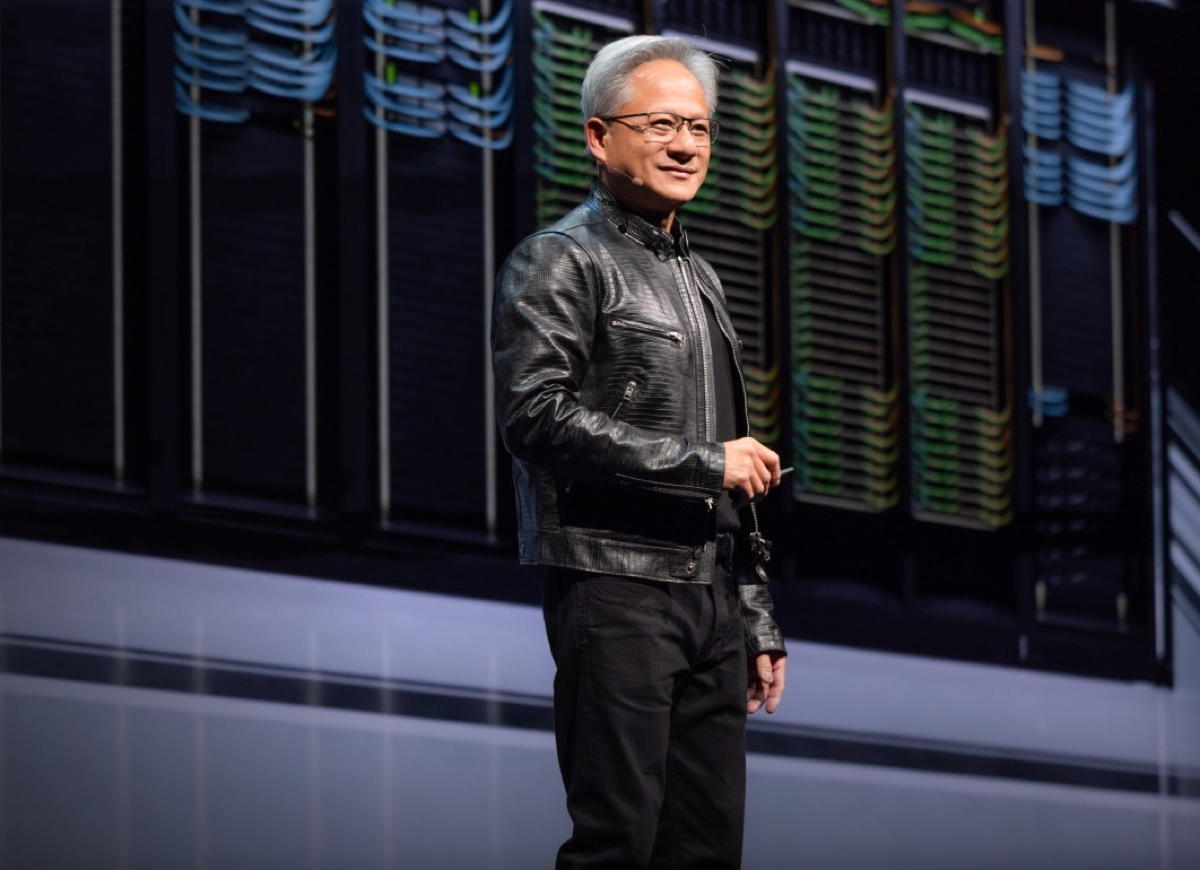
Nvidia chief executive Jensen Huang delivered a sobering update on the chipmaker's appetite for massive venture investments, stating that the company will "probably" not invest the speculated $100 billion in OpenAI. Speaking at a Morgan Stanley conference, Huang clarified that while Nvidia did participate in a $30 billion funding round for OpenAI last week, the much larger sum is unlikely to materialize.
"I think the opportunity to invest $100 billion in OpenAI is probably not in the cards," Huang said. He attributed this to the anticipated initial public offering (IPO) of the artificial intelligence startup, likely later this year. "This might be the last time we'll have the opportunity to invest in a consequential company like this," he added, implying that future investments would be channeled through public markets rather than private rounds.
Huang also commented on Nvidia's recent $10 billion investment in Anthropic, another leading AI research company. He indicated that this too might be "the last" such private investment in Anthropic due to its own expected IPO. The remarks came amid months of intense speculation about the evolving relationship between Nvidia and OpenAI, two titans of the generative AI boom that has reshaped the technology landscape.
Background of the Nvidia-OpenAI Relationship
Nvidia and OpenAI have been intertwined since the early days of the AI revolution. Nvidia's graphics processing units (GPUs), originally designed for gaming, proved exceptionally well-suited for the parallel processing demands of deep learning. OpenAI, founded in 2015 as a non-profit AI research lab, became one of the earliest and most prominent adopters of Nvidia's hardware. The launch of ChatGPT in late 2022 triggered a global frenzy, catapulting both companies to unprecedented valuation and influence.
Over the past year, Nvidia's market capitalization surged past $2 trillion, making it one of the world's most valuable companies. OpenAI, meanwhile, saw its valuation climb above $100 billion after a series of funding rounds, including a reported $13 billion from Microsoft. The two companies have often been described as symbiotic: Nvidia supplies the chips that power OpenAI's models, and OpenAI's success drives demand for Nvidia's hardware.
In September 2023, Nvidia announced a plan to invest up to $100 billion in OpenAI over several years. The investments were to be tied to OpenAI's deployment of Nvidia chips in data centers, effectively locking the startup into a long-term hardware relationship. However, few details were disclosed, and by January 2024, reports indicated that the agreement had stalled. Huang's latest comments confirm that the initiative has been effectively abandoned.
The $100 Billion Speculation
The $100 billion figure was never finalized as a binding commitment. Industry analysts viewed it as a symbolic gesture highlighting the deepening partnership. Yet the announcement spurred a rally in Nvidia's stock and prompted similar investment pledges from other tech companies eager to stake claims in the AI gold rush. The financial press buzzed with speculation about whether Nvidia could eventually own a significant equity stake in OpenAI, potentially reshaping the competitive balance in AI.
Huang's remarks at the Morgan Stanley conference put that speculation to rest. He emphasized that while Nvidia remains committed to providing cutting-edge hardware to AI developers, the era of massive private investments may be waning. "The economics of AI have changed," he said. The cost of building and operating the hyperscale data centers required to train and run advanced AI models has ballooned, forcing investors to recalibrate their expectations.
Data center infrastructure for AI now demands enormous amounts of electricity, water for cooling, and rare earth minerals for hardware manufacturing. A single large-scale training run for a model like GPT-4 can consume tens of millions of kilowatt-hours of electricity, equivalent to the annual energy use of hundreds of households. Water consumption for cooling has also drawn scrutiny, with studies showing that training one large language model can consume millions of liters of fresh water.
The Changing Economics of AI
The optimistic projections of 2023 have given way to the harsh realities of scaling AI infrastructure. Energy costs have spiked, supply chains for specialized components remain fragile, and regulatory pressures around environmental impact are mounting. Local communities near proposed data centers are increasingly pushing back, citing noise, water depletion, and rising energy prices. In some regions, permitting for new facilities has been delayed or denied.
Nvidia itself is not immune to these pressures. The company's latest Blackwell GPU architecture, while delivering massive performance gains, also increases power density, requiring more advanced cooling solutions. Jensen Huang has acknowledged these challenges but remains bullish on the long-term potential. "We are at the beginning of a new industrial revolution," he said in a recent earnings call. "But revolutions require sacrifice and adaptation."
The changing economics also affect start-ups like OpenAI and Anthropic. Both have raised billions of dollars but face tremendous capital expenditure requirements to maintain their competitive edge. OpenAI's reported revenue of $2 billion in 2023 is dwarfed by its spending on computing and talent. The company has explored various monetization strategies, including enterprise licensing, subscription tiers, and an app store for AI agents.
Anthropic, founded by former OpenAI employees, has positioned itself as a safety-focused alternative but faces similar cost pressures. Its $10 billion investment from Nvidia, while large, still represents a fraction of the capital needed to compete with hyperscalers like Amazon, Google, and Microsoft, which are pouring hundreds of billions into AI infrastructure.
Energy and Resource Concerns
The environmental impact of AI has become a central topic in boardrooms and policy circles. A single data center can draw as much electricity as a mid-sized city. According to the International Energy Agency, data centers consumed about 1-2% of global electricity in 2023, a share expected to rise sharply with AI adoption. Water usage for cooling is equally alarming, especially in drought-prone regions.
Companies like Nvidia and OpenAI are under growing pressure to disclose their environmental footprint and invest in sustainable technologies. Some are exploring nuclear power, geothermal energy, and carbon capture, but these solutions remain nascent. The debate over AI's sustainability is likely to intensify as regulatory frameworks tighten around climate disclosures.
Jensen Huang's comments indirectly touch on these concerns. By signaling a retreat from mega-investments, he may be acknowledging that the current trajectory of AI infrastructure is not sustainable without fundamental changes in energy generation and resource management. "We have to be responsible stewards," he said in a separate interview earlier this year.
Impact on Future Investments
Nvidia's reluctance to commit $100 billion to OpenAI could have ripple effects across the AI ecosystem. Other investors may follow suit, becoming more cautious about pouring capital into private AI companies. The expected IPOs of OpenAI and Anthropic will offer a liquidity event for early investors, but they also expose these companies to the scrutiny of public markets, where profitability and efficiency matter more than growth at any cost.
The shift could accelerate consolidation in the AI industry. Smaller start-ups without clear paths to revenue may struggle to raise funds. Larger incumbents like Microsoft, Google, and Amazon, with deep pockets and existing cloud businesses, are better positioned to ride out the turbulence. Nvidia itself could benefit from being a neutral supplier of hardware to all players, rather than being tied to any single start-up.
Huang's statement that the $100 billion investment is "probably not in the cards" is a pragmatic acknowledgment that even the most valuable tech companies face limits. It underscores a maturing industry that must balance ambition with financial and environmental realities. The generative AI boom is far from over, but its next phase will likely be characterized by more measured investment, greater emphasis on efficiency, and a renewed focus on sustainability.
The relationship between Nvidia and OpenAI will continue to evolve, but the era of open-ended checkbooks appears to be fading. As Huang put it, "The opportunity to invest $100 billion doesn't come along often, and when it does, you have to be sure the time is right." Evidently, the time is not now.
Source: Silicon UK News