

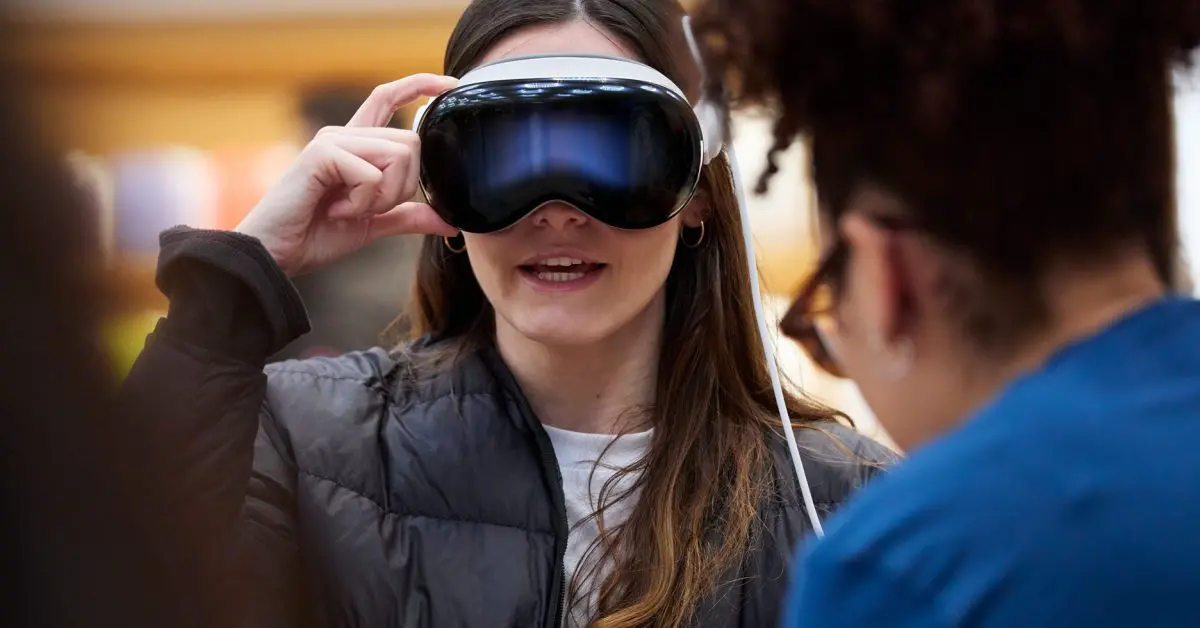
OpenAI has hired Paul Meade, the vice president responsible for Apple's Vision Pro headset and its nascent smart glasses program, according to a report from Bloomberg. Meade is expected to leave Apple by next week and will join OpenAI's hardware unit, where he will work on the company's upcoming family of AI-powered devices. The hire is the latest in a string of poachings from Cupertino by the artificial intelligence company, which has been aggressively building out its hardware capabilities under the leadership of former Apple design chief Jony Ive.
Meade's departure marks a significant loss for Apple. He had led the Vision Pro hardware engineering team for seven years and was instrumental in bringing the mixed-reality headset to market in early 2024. More recently, he had been spearheading Apple's efforts to develop its first smart glasses, a product category the company believes will be critical to its long-term future. The smart glasses are now expected to launch in late 2027, though Meade's exit could potentially delay or alter those plans.
OpenAI's hardware ambitions
OpenAI's pursuit of Paul Meade is part of a broader strategy to create AI-first hardware devices. Last year, the company announced a partnership with Jony Ive—the legendary designer behind the iPhone, iPad, and many other Apple products—and several members of Ive's design studio, LoveFrom. Together, they formed io, a subsidiary focused on developing hardware that leverages OpenAI's advanced artificial intelligence models. The goal is to create devices that are not just smart but fundamentally rethink how humans interact with technology.
The hiring spree has been ongoing. Since the io venture was announced, OpenAI has recruited a number of current and former Apple designers and engineers. Among them are Evans Hankey, who led Apple's design team for three years after Ive left, and Tang Ten, another longtime Ive collaborator. These individuals have been quietly working on the io team, and now Paul Meade's addition brings deep hardware engineering expertise—especially in the realm of head-worn devices and spatial computing.
For OpenAI, the appeal of Meade is clear. He has spent nearly two decades at Apple, rising through the ranks from a key iPad manager in 2010 to head of iPhone program management in 2012. In 2017, he joined the Vision Products Group (VPG), taking over all hardware engineering in 2019. His experience in delivering complex hardware at massive scale—such as the iPhone and iPad—combined with his recent work on cutting-edge wearables like the Vision Pro, makes him an ideal fit for OpenAI's ambitious hardware roadmap.
Why Meade left Apple
Meade's decision to leave Apple was not entirely unexpected. According to Bloomberg, it was precipitated by a major restructuring within Apple's hardware engineering division following the appointment of John Ternus as the company's new CEO. Ternus, who had previously served as Apple's senior vice president of Hardware Engineering, succeeded Tim Cook earlier this year. In the reshuffle, Apple's chips boss Johny Srouji was promoted to chief hardware officer, taking over many of Ternus's former responsibilities. Srouji then initiated a controversial shake-up of Apple's hardware engineering unit, which involved reassigning several vice presidents and creating additional layers of management.
Specifically, Meade and several other hardware leaders now report to Tom Marieb, the new vice president of hardware engineering, rather than directly to Srouji. Marieb, in turn, reports to Srouji, effectively pushing many of those executives down a level in the organization. Sources familiar with the matter said that some executives felt they had been demoted, and Meade was among those who decided to look for new opportunities. OpenAI, with its promise of working on groundbreaking AI hardware under the guidance of Jony Ive, proved to be a compelling next chapter.
The departure leaves a void in Apple's Vision Products Group. Fletcher Rothkopf, Meade's longtime deputy who was in charge of product design for the Vision Pro and smart glasses efforts, will now assume many of Meade's responsibilities. However, it remains to be seen whether Rothkopf has the same level of hardware engineering expertise and the relationships with external suppliers that Meade cultivated over years. Apple has not publicly commented on the change.
Impact on Apple's smart glasses and Vision Pro
The loss of Paul Meade could have significant consequences for Apple's future hardware roadmap. The Vision Pro, while hailed as a technical marvel, has struggled to achieve mainstream adoption due to its high price and limited use cases. Apple has been working on a lower-cost version of the headset, as well as on smart glasses that would be lighter and more socially acceptable. Meade was deeply involved in both projects.
With his departure, Apple must rely on the remaining VPG team to continue development. The company is known for its deep bench of engineering talent, but Meade's experience—particularly his seven years at the helm of Vision Pro hardware—is not easily replaced. The smart glasses project, which aims to deliver a product similar to Meta's Ray-Ban Stories but with tighter Apple ecosystem integration, may face delays as the new leadership team gets up to speed.
Meanwhile, OpenAI's hardware unit is expected to reveal its first product within the next two years. While details remain scarce, industry analysts speculate that the company could launch a wearable AI assistant—perhaps a pair of smart glasses or a headset—that integrates directly with ChatGPT and other OpenAI services. The hiring of Meade suggests that OpenAI is serious about competing not just in software but in premium hardware design and manufacturing.
The parallel between Apple's and OpenAI's strategies is striking. Apple has long been known for its vertical integration, designing both hardware and software in-house. OpenAI, with io, is attempting to replicate that model for the AI era. By bringing in talent like Paul Meade, the company is signaling that it wants to create devices that are as refined and polished as Apple's best products, but infused with a new generation of intelligent capabilities.
Broader industry implications
The poaching of a senior Apple executive by OpenAI is a testament to the fierce competition for talent in the technology industry. As AI becomes increasingly intertwined with consumer electronics, companies like OpenAI, Google, Meta, and Apple are all vying for the same small pool of hardware experts. Meade's move may encourage other Apple executives to consider opportunities at AI-first startups, especially if they feel constrained by Apple's more hierarchical structure.
For consumers, this hiring could accelerate the arrival of truly AI-native devices. While smartphones have evolved incrementally, the combination of large language models and advanced hardware could lead to radically new form factors. OpenAI's io venture is one of the most closely watched projects in the tech world, and the addition of Meade gives it even more credibility. The company has already demonstrated its ability to attract top talent; now it must prove it can deliver products that live up to the hype.
As for Apple, the company has already moved to fill the gap left by Meade, but the reshuffling has created uncertainty. The new hierarchy under Johny Srouji may help streamline decision-making, but it also risks alienating senior engineers who value autonomy. Apple's next generation of hardware—including the rumored smart glasses and the second-generation Vision Pro—will be a test of whether the company can maintain its innovative edge while undergoing a leadership transition at the very top.
Source: 9to5Mac News