

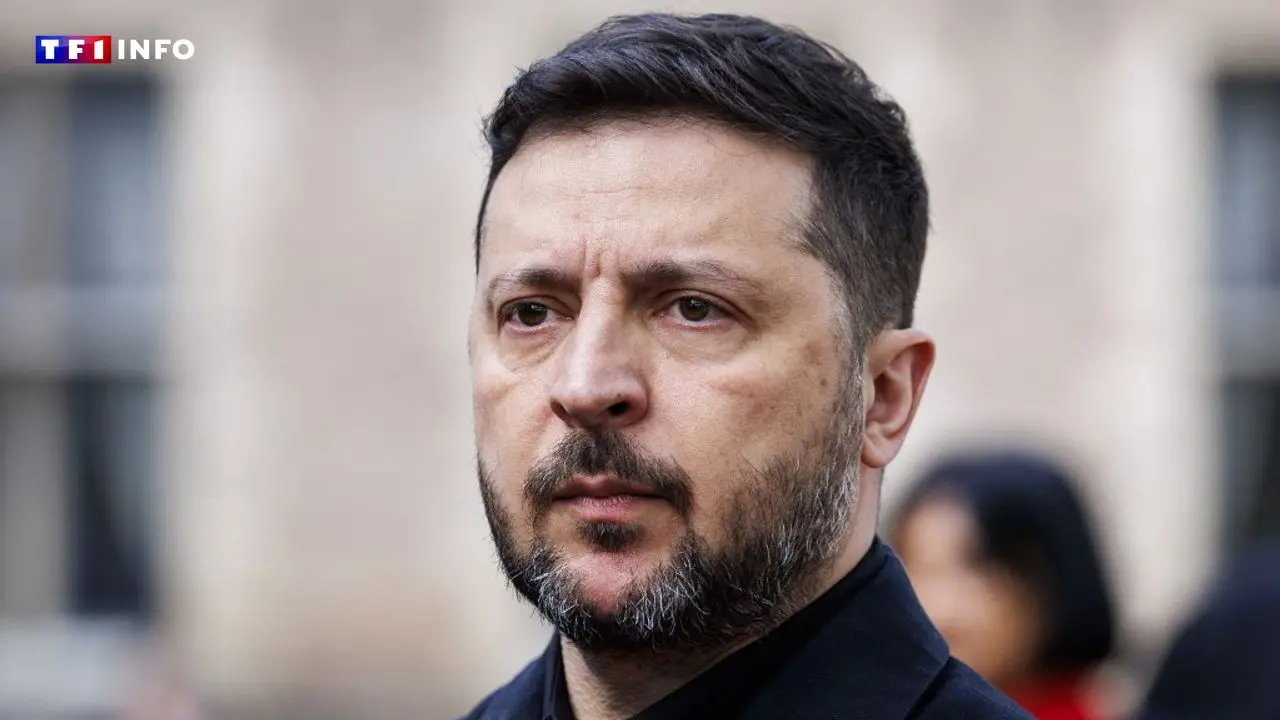
In a development that blends high-stakes diplomacy with dark irony, Ukrainian President Volodymyr Zelensky has formally ‘authorized’ the Kremlin’s annual Victory Day parade on Moscow’s Red Square. The move came as part of a three-day ceasefire announced by former U.S. President Donald Trump on May 8, 2026, which both Kyiv and Moscow accepted after days of mutual accusations over earlier truce violations.
A Ceasefire Born from Controversy
The ceasefire, the first of its kind since the conflict entered its fifth year, was negotiated amid growing international pressure to de-escalate. Trump, who has maintained close ties with both leaders, brokered the deal on the condition that Russia and Ukraine would halt all offensive operations for 72 hours. In a surprising twist, Zelensky not only agreed but also signed a presidential decree specifically permitting the May 9 parade to proceed without Ukrainian interference. ‘Considering numerous requests, and for humanitarian purposes as defined during negotiations with the American side on May 8, 2026, I decide: to authorize the holding of a parade on May 9, 2026, in Moscow,’ the decree stated, as published on the presidential website.
The Symbolism of May 9
The Victory Day parade, which commemorates the Soviet Union’s victory over Nazi Germany in 1945, holds immense symbolic weight for President Vladimir Putin’s regime. For years, the event has served as a display of military might and national unity. However, the 2026 edition was notably scaled down, with no heavy military equipment rolling across the cobblestones of Red Square. Officials cited security concerns amid a surge in Ukrainian drone attacks deep inside Russian territory. Over the past year, Kyiv has repeatedly launched long-range drones targeting Moscow and other cities, turning the parade into a potential vulnerability for the Kremlin.
Zelensky had previously mocked Putin’s desire to hold the parade, saying, ‘They want from Ukraine a permit to hold their parade, so they can safely come out on the square for one hour once a year, and then resume their killings.’ The Ukrainian leader also censured foreign dignitaries planning to attend, calling it a ‘strange desire’ to celebrate in a city that has been a launchpad for attacks on Ukraine.
A Prisoner Exchange as the Deal’s Core
Behind the theatrical gesture lies a concrete humanitarian objective: a large-scale prisoner swap. According to Trump’s announcement, both nations agreed to exchange up to 1,000 prisoners of war each. ‘Red Square is less important to us than the lives of Ukrainian prisoners who can be repatriated,’ Zelensky emphasized. The prisoner exchange, if carried out, would be the largest since the war began, offering a glimmer of hope for thousands of families separated by the conflict. The decree explicitly ordered the Ukrainian military to ‘exclude the Red Square area from the plan of use of Ukrainian weapons’ for the duration of the parade, adding a provocation by listing the precise GPS coordinates of the site—a move widely interpreted as a reminder that Kyiv could strike if it chose to.
Drone Threats and the Scaled-Down Parade
Security around the parade was extraordinarily tight. In the weeks leading up to the event, Moscow had erected anti-drone nets over key buildings, including parts of Red Square, and deployed electronic warfare systems to jam signals. The threat was far from theoretical: Ukrainian drones had struck several military airfields and oil depots across Russia in the preceding months, proving that no location, not even the capital, was immune. The decision to hold a modest parade without armored vehicles reflected both a desire to minimize risks and an acknowledgment of the ongoing war’s toll on Russia’s conventional arsenal.
For Moscow, the event was a carefully managed exercise in propaganda. State television broadcasted the parade live, but camera angles avoided showing the sparse crowds and the absence of heavy equipment. Putin, in his address, cast the ceasefire as a victory for Russian diplomacy, though he made no mention of the Ukrainian drone ban or the quid pro quo deal with Zelensky.
International Reactions and War Fatigue
The ceasefire and the unusual authorization drew mixed reactions globally. Western allies expressed cautious optimism, with the European Union urging both sides to extend the truce. However, analysts warned that the three-day pause might be a strategic lull rather than a step toward peace. Ukrainian soldiers on the front lines reported sporadic shelling in some sectors even after the ceasefire began, highlighting the fragility of the agreement. Meanwhile, in Moscow, some war supporters criticized the Kremlin for ‘negotiating with the enemy,’ while others grudgingly admitted that a prisoner exchange was a worthwhile concession.
Zelensky’s decree, while framed as a humanitarian gesture, also served a domestic purpose: it reaffirmed his government’s control over military operations and undercut Russian narratives that Kyiv was intransigent. By explicitly ‘allowing’ the parade, Zelensky turned a symbol of Russian power into a potential embarrassment—a display that took place only because Ukraine tolerated it. The move was consistent with his wartime strategy of combining military toughness with psychological operations.
Historical Parallels and the Irony of ‘Authorization’
The concept of one warring nation ‘authorizing’ a ceremonial event by its adversary is virtually unprecedented in modern conflict. It echoes the cynical language of realpolitik, where such permissions are granted only when the benefits outweigh the symbolic costs. For Zelensky, the calculation was clear: 1,000 Ukrainian prisoners were worth more than a few hours of peace on Red Square. Yet the gesture also exposed the asymmetry of the conflict—Ukraine, though outgunned, had managed to force Russia to accept conditions for its most sacred holiday.
The 2026 parade will likely be remembered not for its military displays but for the irony that it happened at all. Russian state media initially tried to spin the story, claiming that Moscow had ‘secured’ the ceasefire on its own terms, but the publication of Zelensky’s decree with GPS coordinates undercut that narrative. In the end, the square was quiet except for the steady tramp of soldiers and the distant hum of drones that stayed away—thanks to a signature from Kyiv.
Source: TF1 INFO News