

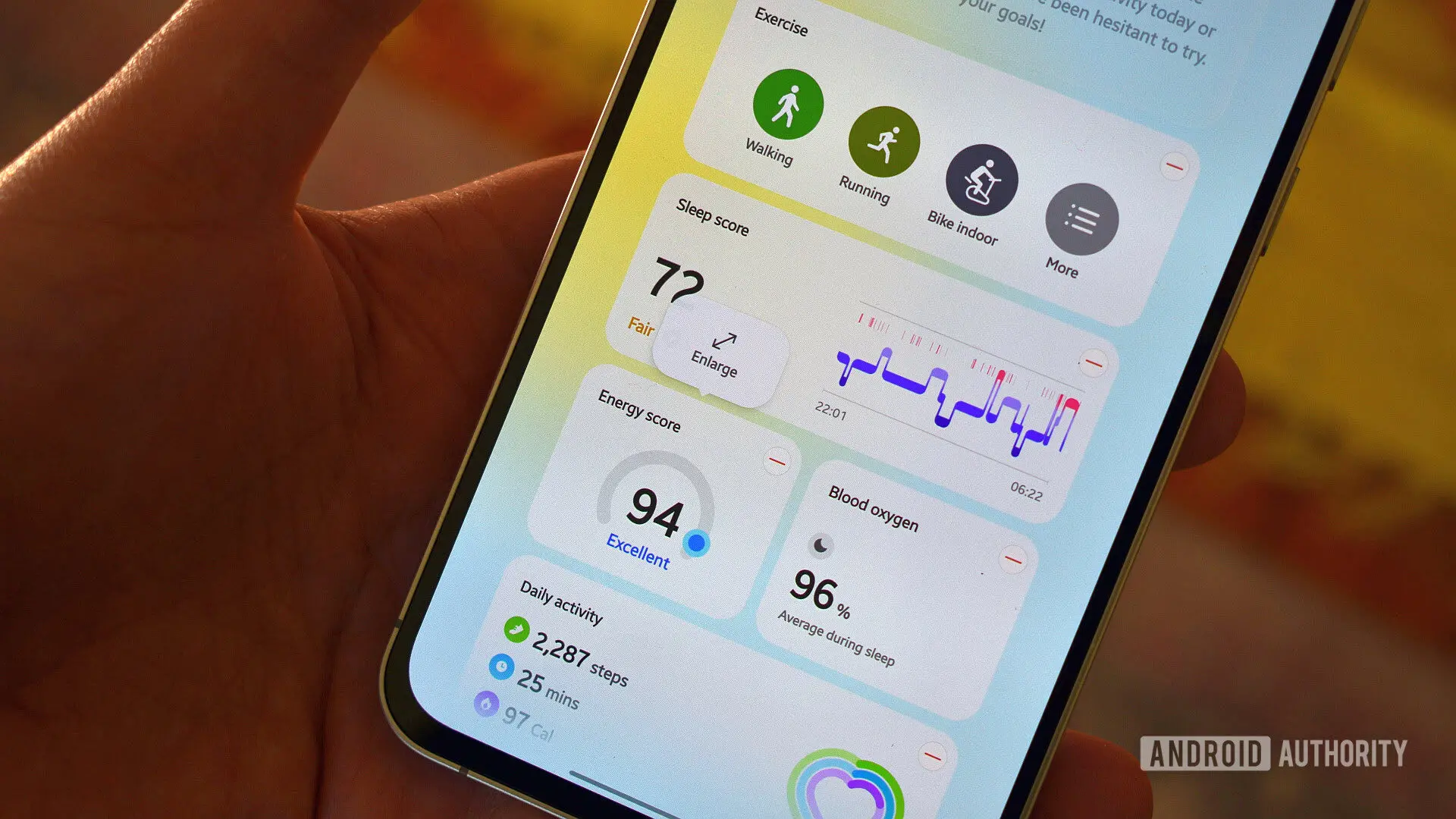
A recent uproar among Samsung Health users stemmed from a confusing warning dialog that appeared when toggling the option to opt out of having personal health data used for AI training. The message suggested that revoking consent would result in the deletion of previously uploaded health data and the cessation of new data syncing. This naturally led to widespread concern that the popular health tracking app would become unusable for those prioritizing privacy.
However, after backlash and media attention, Samsung has provided a clarification that paints a very different picture. According to a statement shared with SamMobile, the warning's wording was misleading. The deletion refers exclusively to data that has been separately collected and used for AI development purposes—not the health data that is stored for the regular functioning of Samsung Health services. In essence, the data subject to deletion is a subset that was created or retained specifically for training machine learning models, and it is stored in a distinct database from the user-facing health records.
What Data Is Actually Affected?
Samsung explicitly lists the types of health information that may be used for AI training. These include health and wellness data (body measurements, nutrition, step count, activity, and sleep), medication data (prescriptions and dosages), health records (diagnoses, prognoses, test results, past records and treatments), and cycle tracking data (menstrual cycles, physical conditions, and physiological indicators like heart rate). It is important to note not all of this data is automatically siphoned for AI purposes; a separate consent toggle exists specifically for AI training, and only data gathered after that toggle is enabled—or data explicitly marked for AI use—falls under the deletion clause.
Practically, when a user opts out, Samsung will remove only the copies or aggregated datasets that were prepared for AI model training. The primary health data that populates the Samsung Health dashboard—such as step logs, sleep patterns, and heart rate history—remains untouched. Furthermore, independent testing conducted after the clarification confirmed that syncing data from wearables and other sources continues to function normally even after opting out. The warning's phrasing, which stated "health data will be deleted" and "syncing new health data will no longer be possible," was therefore an overreach that caused unnecessary panic.
Why the Initial Warning Was So Alarming
The initial dialog appeared to users who navigated to the "Health data for AI" toggle within Samsung Health's settings. The pop-up read: "If you choose not to share your health data to train AI, your health data will be deleted, and syncing new health data will no longer be possible." Given the critical role of health data in users' exercise routines, medical tracking, and overall wellness management, the implication was devastating. Many users took to social media and forums to express frustration, accusing Samsung of coercing consent through fear of losing their personal records. The backlash was swift, with some even considering leaving the platform.
This incident highlights a broader issue in the technology industry: the communication gap between companies' internal data management practices and how they are presented to users. Data privacy experts have long argued that terms of service and consent dialogs are deliberately vague or misleading, a practice known as "dark patterns." Even if Samsung intended no malice, the wording of its warning was clearly ambiguous and led to a logical—but incorrect—interpretation.
The Distinction Between Service Data and AI Training Data
To understand why the deletion only affects a separate set of data, it helps to examine how modern health platforms handle data. When a user syncs a step count or heart rate measurement, that information is stored in a primary database that powers the app's core features: charts, trends, goal tracking, and sharing with healthcare providers. This data is considered essential for the service to function and is subject to standard privacy policies, including the right to export or delete upon account closure.
However, companies often create a secondary copy of anonymized or pseudonymized data for the purpose of training machine learning algorithms. This copy is stripped of direct identifiers (though not always perfectly) and aggregated into large datasets used to improve product features, such as personalized health insights, sleep recommendations, or activity predictions. Because this copy is not essential for the app's operation, it can be deleted without affecting the user's personal dashboard. Samsung confirmed that opting out removes only this secondary dataset. The company also noted that data that has already been used to train models cannot be retroactively removed from those models, but no new data will be collected or used.
Regulatory and Ethical Implications
The situation also touches on regulatory frameworks like GDPR in Europe and CCPA in California, which grant users the right to withdraw consent for data processing. Under GDPR, a controller must inform users clearly about the consequences of withdrawing consent. However, the regulation states that the withdrawal must be as easy as giving consent and cannot lead to a degradation of service unless the data is essential. Here, Samsung's warning implied a degradation of service (deletion of data and loss of syncing) that was not actually the case. This could be seen as an attempt to discourage consent withdrawal, which regulators might view unfavorably.
Similarly, under the upcoming EU AI Act, companies are required to be transparent about the use of personal data for AI training. Misleading notifications could violate the principle of transparency and fair processing. Samsung has committed to improving the notice text, which is a step in the right direction, but the incident underscores the need for stronger enforcement of clear language in consent dialogs.
What Users Should Do Now
Users who have already opted out of AI training in Samsung Health do not need to worry. Their health data remains intact, syncing continues, and the only change is that their data will no longer be used to train AI models. Those who have not yet made a choice can now navigate to the settings with a clearer understanding. It is recommended to regularly review app permissions and data-sharing options, especially for sensitive data like health metrics. Users should also consider enabling two-factor authentication and regularly exporting their data for backup.
Moving forward, Samsung plans to release an updated version of the notice that explicitly states the specific data being deleted. The company is also likely to face increased scrutiny from privacy advocates and regulators. This episode serves as a valuable lesson for the entire tech industry: every wording matters when it comes to user consent, and ambiguity can erode trust faster than any technical flaw.
As digital health platforms become more intertwined with daily life, the ethical handling of user data remains paramount. Transparency is not just a legal requirement; it is a cornerstone of user loyalty. Samsung's quick clarification and commitment to improvement are positive steps, but the initial misstep demonstrates how easily a poorly worded prompt can spiral into a public relations crisis. For now, Samsung Health users can breathe easy knowing their step counts, sleep logs, and heart rate trends are safe, regardless of their choice on AI training.
Source: Android Authority News