

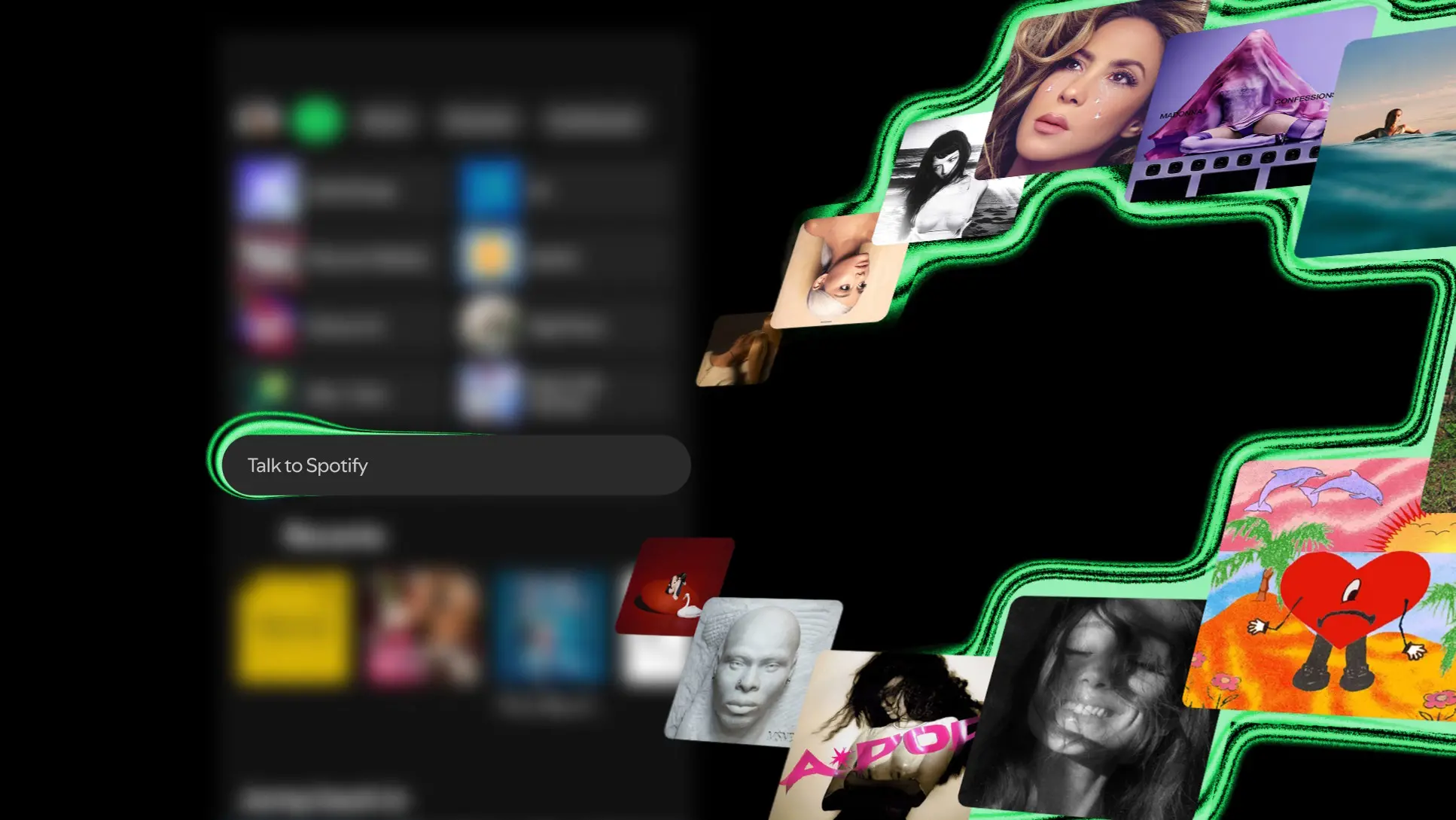
Spotify Introduces 'Talk to Spotify': A Conversational AI Chatbot for Premium Users
Spotify has taken another significant step in integrating artificial intelligence into its platform with the announcement of 'Talk to Spotify,' a new conversational AI feature that brings a text-and-voice chatbot directly into the app. The feature, currently rolling out in beta to English-language Premium subscribers aged 18 and above in the United States, Ireland, and Sweden, aims to transform how users interact with music, podcasts, and audiobooks. By allowing users to type or speak natural language commands, Spotify is positioning itself at the forefront of a new wave of AI-driven music discovery and control.
How Talk to Spotify Works
The core of the feature is an omnipresent text and voice input interface that enables back-and-forth conversations with the app. Users can issue commands such as 'Play some artists I haven't heard before' or 'Save this song,' and then follow up with contextual requests like 'Play more of this' or 'What other podcasts has this guest been on?' The AI understands not only direct playback controls but also queries about album release dates, artist discographies, and even analyzes a user's own listening history. For instance, a user could ask 'What genres have I been into recently?' and receive a detailed breakdown of their recent musical preferences.
Expanding Spotify's AI Ecosystem
This move is part of a broader strategy by Spotify to embed AI across its platform. In recent years, the company has introduced features like AI DJ, which uses machine learning to curate personalized playlists with voice commentary, and AI-powered playlist generation such as 'Daylist' that updates throughout the day. The 'Talk to Spotify' chatbot represents a more interactive and conversational layer, allowing users to seamlessly switch between discovery, control, and information retrieval without tapping through multiple menus. The integration of voice and text input also caters to different user preferences, whether they are driving, working out, or simply relaxing at home.
Comparison with Competitors
Spotify is not alone in exploring conversational AI for music streaming. Apple Music has integrated Siri for voice commands, but its functionality is limited to basic playback and simple queries. Amazon Music leverages Alexa for similar hands-free control, but neither offers the depth of conversation or the ability to analyze personal listening habits with such nuance. Google's YouTube Music uses Google Assistant, yet it lacks the persistent chat interface that 'Talk to Spotify' provides. By embedding a dedicated chatbot that remembers context throughout a session, Spotify is aiming for a more fluid and intelligent user experience that could set a new standard in the industry.
Privacy and Data Concerns
As with any AI feature that processes user data, 'Talk to Spotify' raises important privacy considerations. The chatbot requires access to listening history, playlists, and potentially voice recordings to function effectively. Spotify has stated that user feedback from the beta will shape future iterations, but the company must navigate regulations such as GDPR in Europe and CCPA in California. The feature is opt-in for Premium users, and Spotify assures that data handling complies with its privacy policy. However, transparency about how voice data is stored, processed, and used will be critical to maintaining user trust. Competitors like Apple have emphasized on-device processing for AI features, which could become a differentiator.
Beta Limitations and Future Prospects
During the beta phase, the feature may not always produce perfect responses, as Spotify acknowledges. The company is likely using this period to gather data on user interactions and improve the underlying language model. The initial rollout is limited to three English-speaking markets, but expansion to other languages and regions is expected if the beta proves successful. Additionally, the chatbot currently supports only audio control and information queries, but future updates could integrate with other parts of the app, such as social features like Spotify Blend or even purchasing tickets for live events. The potential for AI-generated recommendations based on real-time conversation is immense, and Spotify's investment in natural language processing could pay dividends as the technology matures.
Impact on User Engagement and Discovery
By making the chatbot a central part of the experience, Spotify is betting that conversational interfaces will drive deeper engagement. Users may spend more time exploring music they otherwise would not discover, as the AI can recommend artists based on obscure criteria like instruments, mood, or era. For podcast enthusiasts, the ability to ask about guests without leaving the app enhances convenience. The feature also reduces friction in curating playlists—users can simply say 'Build a playlist for my morning run with up-tempo songs from the last year' and let the AI handle the rest. This level of personalization could increase user retention and differentiate Spotify from competitors in a crowded market.
Technical Architecture and AI Models
Although Spotify has not disclosed the specific AI models powering 'Talk to Spotify,' it likely combines large language models (LLMs) with its proprietary recommendation algorithms. The company has a history of acquiring AI firms, such as Niland (music recommendation) and The Ringer (podcast content matching), and has developed in-house tools for natural language understanding. The chatbot must process a wide range of commands, from precise requests like 'Play the latest episode of The Joe Rogan Experience' to ambiguous ones like 'Find me something relaxing.' To achieve this, Spotify likely employs a hierarchical architecture that first classifies the intent, then retrieves relevant data from its catalog, and finally generates a natural language response. Edge cases, such as handling overlapping meanings (e.g., 'track' as a song vs. a running path) require robust disambiguation.
User Reactions and Early Feedback
Early testers on social media have reported mixed experiences. Some praise the convenience of voice control, especially for hands-free use during driving or cooking. Others note that the chatbot sometimes misinterprets queries or provides irrelevant answers. For example, asking 'Play something like Taylor Swift' might yield a playlist from Taylor Swift herself rather than similar artists. Spotify is likely using this feedback to fine-tune the system. The beta also reveals limitations in handling complex multi-step commands, such as 'Add this song to my workout playlist and then play something from the 90s.' These issues are common in early AI deployments and are expected to improve over time.
The Road Ahead for AI in Streaming
As streaming services become increasingly commoditized, AI features like 'Talk to Spotify' offer a path to differentiation. The ability to have a natural conversation with an app could redefine how users interact with their audio libraries, moving away from static interfaces toward dynamic, adaptive experiences. Spotify's competitors will likely accelerate their own AI investments, leading to a new wave of innovation in the industry. Meanwhile, the success of 'Talk to Spotify' will depend on its accuracy, speed, and privacy safeguards. If executed well, it could become a staple feature that millions of users rely on daily, further embedding Spotify into their lives.
Source: Android Authority News