

A federal jury in Oakland, California, on Monday handed OpenAI a decisive legal victory over Elon Musk, ruling that the billionaire entrepreneur waited too long to file his lawsuit claiming the ChatGPT maker had betrayed its nonprofit mission. The verdict, delivered after less than two hours of deliberation, essentially ended the case on a procedural technicality: Musk missed a statutory deadline for his claims.
The trial, which lasted three weeks, featured testimony from some of the technology industry's most prominent figures, including OpenAI CEO Sam Altman and Musk himself. The dispute centered on whether OpenAI, Altman, and co-founder Greg Brockman had abandoned a shared vision to keep the artificial intelligence company a nonprofit focused on benefiting humanity. Musk had sought Altman's ouster and other changes to OpenAI's governance.
A Verdict on Procedure, Not Substance
Judge Yvonne Gonzalez Rogers instructed the jury to focus on whether Musk had filed his lawsuit within the applicable statute of limitations. The nine-person panel concluded he had not, siding with OpenAI's argument that Musk knew about the alleged betrayal years earlier. Musk immediately vowed to appeal, calling the judge a "terrible activist" and accusing her of using the jury as a "fig leaf" to create bad precedent.
"She just handed out a free license to loot charities if you can keep the looting quiet for a few years!" Musk wrote on his social media platform X, formerly Twitter. Legal experts noted that appeals courts typically show considerable deference to jury verdicts, making an overturn unlikely.
Costly Revelations for Both Sides
While OpenAI avoided what could have been a financially crippling loss and potential restructuring, the trial inflicted reputational damage on both the company and its CEO. Witnesses including former OpenAI board members Helen Toner and Tasha McCauley testified that there had been concerns about Altman's truthfulness, echoing the board's decision to briefly oust him in November 2023.
Internal emails and diary entries became public, revealing Silicon Valley's messy inner workings. Text messages between Altman and a former executive became meme fodder and inspired parody songs. The trial also highlighted the close ties and bitter rivalries among the small group of billionaires driving AI development.
"The trial highlighted not just a dispute between Musk and Altman, but a broader disconnect between the people building these systems and many of the people increasingly expected to live and work alongside them," said Sarah Kreps, director of Cornell University's Tech Policy Institute.
AI's Future Hinges on a Handful of Billionaires
The case underscored how much the future of artificial intelligence depends on a remarkably small group of powerful tech figures and their personal rivalries. Musk, Altman, and others control companies valued in the hundreds of billions of dollars, including OpenAI (valued at $852 billion), Musk's SpaceX, and Anthropic, a rival AI startup founded by former OpenAI employees.
All three companies are planning massive initial public offerings. The trial's dirty laundry could affect investor sentiment, though analysts said AI's transformative potential remains a powerful draw. "It's a lot of dirty laundry that doesn't look very appealing, and that may hurt their reputation," said University of Richmond Law School professor Carl Tobias. "But AI is likely to come forward and continue even if it isn't OpenAI."
Broader Implications for AI Governance
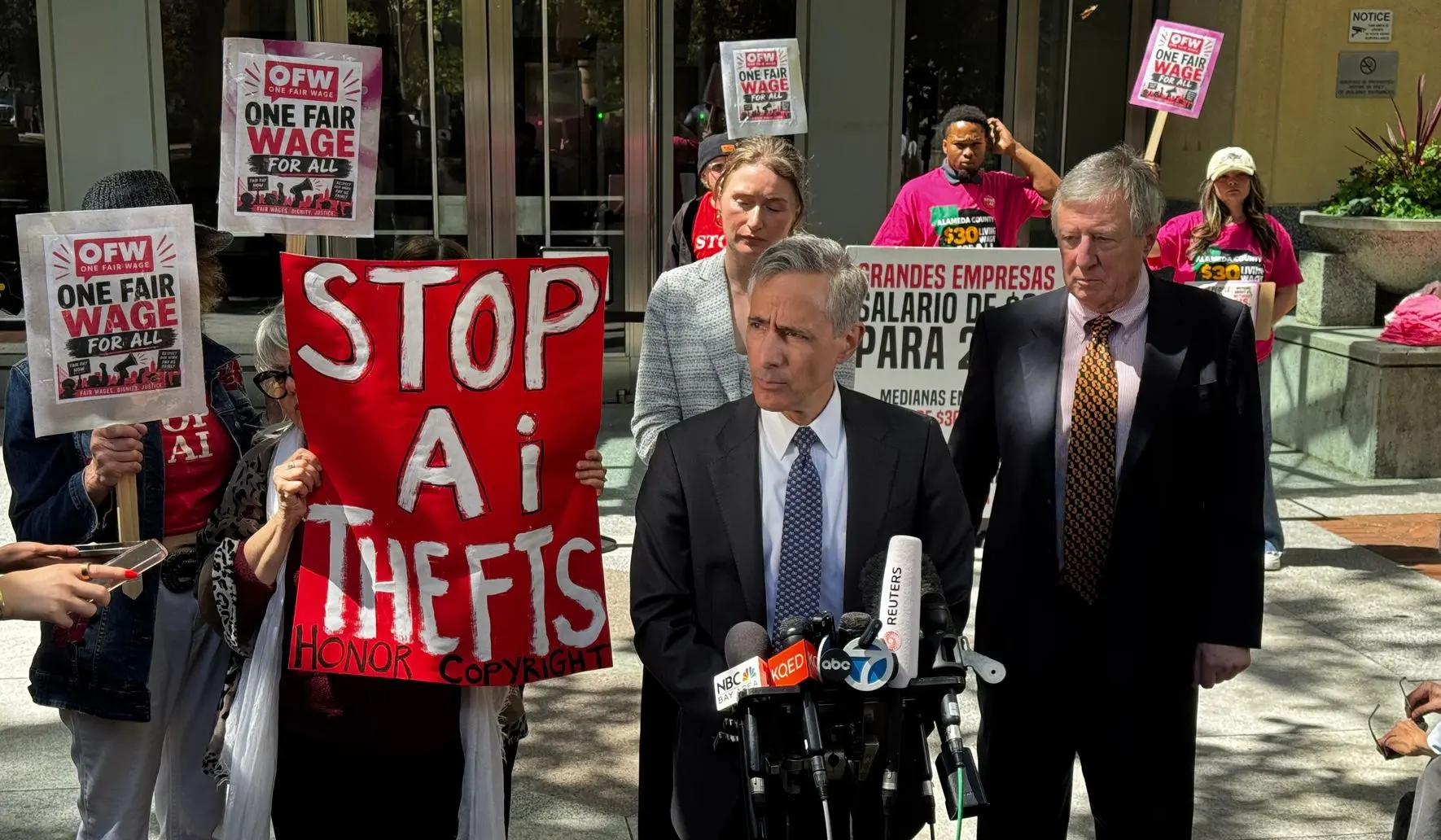
The trial also raised unresolved questions about the risks of AI, including job losses, mental health impacts, and even existential threats. Demonstrators outside the courthouse held signs declaring that regular people were the real losers, their lives upended by an industry controlled by out-of-touch billionaires.
Columbia Law School professor Dorothy Lund noted that the situation is "a funny microcosm of this moment where we have this hugely important technology being developed by for-profit corporations run by people like Musk and Altman, not as part of some government-led initiative."
Musk had accused OpenAI of betraying its original nonprofit mission by pursuing profits. OpenAI countered that Musk's lawsuit was sour grapes aimed at undermining a competitor while promoting his own AI company, xAI, now part of SpaceX. The jury's decision leaves OpenAI free to continue its path toward an IPO, but the trial's exposure of boardroom dysfunction and ethical ambiguities may linger.
Both Musk and Altman have portrayed themselves as guardians of AI safety, yet the trial revealed deep personal animosities and opportunistic maneuvering. As AI continues to reshape industries and daily life, the public now has a clearer view of the flawed humans behind the technology.
Source: The Washington Times News