

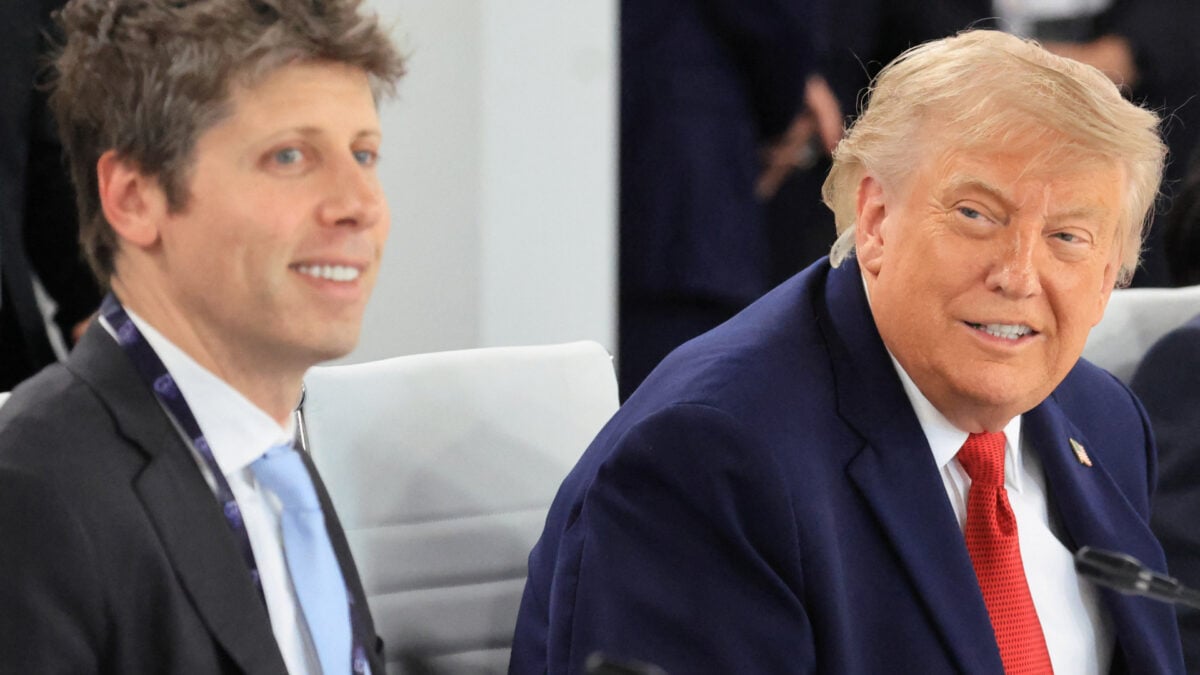
Economic chiefs from some of the world's largest economies are meeting in North Carolina this week for a round of G20 ministerial talks, and artificial intelligence has moved to the center of the agenda. The Trump administration is using the meetings to urge other governments to take a lighter approach to AI regulation, pushing a proposed agreement that would discourage new AI-specific laws unless truly novel problems emerge.
The meetings come ahead of the U.S.-hosted G20 summit in December. Finance ministers and central bank governors began the week in Asheville, while trade and commerce ministers are gathering in Raleigh-Durham for a two-day Innovation Ministerial. The American side is co-hosting the event through Commerce Secretary Howard Lutnick and White House tech adviser Michael Kratsios, who helped shape the administration's AI policy. According to reporting from the ministerial, the American delegation is pressing leaders in attendance to sign an emerging accord called the 'Carolina Principles.'
What are the Carolina Principles?
The Carolina Principles are designed to keep government oversight of AI relatively limited. As described by officials preparing for the ministerial, the principles would commit signatory countries to invest in foundational research, strengthen commercial AI opportunities, and 'reserve new regulation for novel considerations' when dealing with AI. In practice, the language suggests that governments should avoid creating AI-specific rules except in extraordinary circumstances and should remove barriers that could slow down companies working on next-generation systems.
That message is central to the Trump administration's larger technology policy. Administration officials have repeatedly said that excessive rules could hurt American competitiveness, especially against China. They argue that innovation in AI is moving quickly and that governments risk smothering it if they impose broad requirements without clear evidence of harm. Kratsios, in prepared remarks for the ministerial, was expected to tell other leaders: 'Policymakers do not need to approach each innovation in isolation and should not treat every emerging technology as a first-of-a-kind policy problem.'
The broader framing reflects a worldview popular in parts of the U.S. technology industry: general-purpose AI should not be regulated like a rare piece of machinery, and existing laws may be enough if they are applied carefully. The administration has resisted calls to treat frontier AI models as inherently risky systems requiring extensive pre-market approvals or strict transparency mandates.
A divide between the U.S. and other governments
The American push for a hands-off approach sets up a clear contrast with other governments arriving in North Carolina with their own AI policy goals. Canadian officials told reporters before the ministerial that their delegation would advocate for a balance between innovation, public trust, and safety. That position is closer to the approach of the European Union, which has spent years building a formal AI regulatory framework.
The divergence matters because G20 members represent a large share of global economic activity and AI investment. If the Carolina Principles gain traction, they could serve as a counterweight to the EU's AI Act, the world's first comprehensive AI law. European regulators have been in a standoff with American tech companies over issues ranging from systemic risk assessments to copyright and transparency rules. Some U.S. companies claim these obligations create uncertainty and raise compliance costs. The Trump administration's proposed G20 declaration would make that case on a diplomatic stage.
The administration's deregulatory push is not new. Soon after taking office, the president moved to nullify an earlier executive order on AI safety that required federal agencies to evaluate risks and set standards. In international forums, the U.S. has also avoided endorsing binding governance mechanisms that would give global institutions authority over AI development. Instead, the administration prefers voluntary commitments and bilateral deals it says protect innovation at a time when Washington is locked in a technological rivalry with Beijing.
Critics, however, see a different motivation. They argue that the hands-off approach benefits the companies building AI systems while leaving the public to absorb costs: biased automated decisions, labor displacement, increased energy use, and safety risks that may only become clear after crises occur. For those critics, the phrase 'collateral damage' is not abstract. They point to municipal budget problems caused by generative AI tools that give confident but false answers to critical questions, or to rapid deployment of models in health-care settings without careful validation.
These concerns go beyond advocacy groups and academic researchers. United Nations Secretary-General Antonio Guterres has warned in unusually direct terms that AI is being deployed faster than rules can be created. At an AI dialogue in July, Guterres said, 'A technology that can reshape economies, transform the world of work, sway elections and tilt the balance of security is being deployed faster than anyone, including the people building it, can keep up.' He added that 'innovation needs guardrails.'
Financial regulators raise red flags
Safety concerns are also arriving from the financial sector. Andrew Bailey, head of the G20's Financial Stability Board and governor of the Bank of England, sent a letter to the finance ministers and central bank governors gathered in Asheville. The letter warned that frontier AI systems could pose unusual financial and cyber risks that cross borders quickly. For financial regulators, AI can make markets faster, but it can also concentrate risk in ways that traditional oversight tools are not designed to catch.
That financial warning is significant because it moves the AI conversation away from abstract futurism and into the daily work of economic governance. Banks and trading firms are adopting machine-learning systems at scale, and regulators have been struggling to ask the right questions about model opacity, third-party dependencies, and the concentration of AI capacity in a handful of providers.
The U.S. delegation's position is that these issues can be addressed by existing authority. In effect, the administration wants the G20 to agree that AI does not require a separate, universal regulatory system. It prefers a posture of watchful waiting, but with a bias toward allowing research and deployment to proceed.
Silicon Valley takes center stage
The Innovation Ministerial is also notable for the people in the room. Commerce Secretary Lutnick is hosting fireside chats with OpenAI CEO Sam Altman and Nvidia CEO Jensen Huang at the two-day event. Altman is expected to preview advances in AI and their economic implications. Huang's Nvidia is perhaps the most important company supplying the computing hardware needed for AI development, so his presence ties the policy talks directly to the commercial side of the industry.
Other figures are attending as well. Elon Musk, Google DeepMind co-founder Demis Hassabis, and the former White House AI adviser and venture capitalist David Sacks are scheduled to address attendees. Meta CEO Mark Zuckerberg is also in the lineup, according to a separate report. The guest list offers a signal that the Trump administration sees AI companies not as adversaries to be policed but as partners in building American dominance in the field.
OpenAI's presence is especially notable because the company has been facing tougher regulations in the European Union over its ChatGPT product. Its leadership has increasingly favored open dialogue with regulators, but the company also benefits from a global environment where the U.S. can set a permissive tone. Nvidia, for its part, has enormous commercial exposure to export-control debates and international demand for AI chips, which means its chief executive is likely to focus on keeping supply chains open.
Musk's presence adds a layer of political significance. He leads a group of AI companies and has simultaneously warned about existential risks while pushing to expand his own AI infrastructure at enormous speed. His appearances at government events often reflect the tension between catastrophic-risk language and a business model that demands rapid data-center construction.
What happens next?
The immediate question is whether the Carolina Principles can produce a joint statement at the ministerial. Negotiations among trade and commerce ministers are usually less formal than summit declarations, but success would still carry diplomatic weight. The Trump administration may not need unanimous endorsement; a smaller group of countries willing to sign could create a like-minded coalition in future conversations about AI policy.
There are signs that not every G20 member will be comfortable. Canada has staked out a middle ground, and European countries are already committed to the European Union's regulatory path. The United Nations has its own advisory process aimed at strengthening international AI cooperation. The Financial Stability Board is preparing recommendations that may go beyond what the U.S. wants if AI-related market risks grow. And as national elections and economic disruptions create pressure on governments to act, the cost of appearing passive on AI may rise.
At the same time, the companies attending the ministerial have enormous leverage. They are the ones with the data centers, the advanced chip supply chains, and the engineering talent required to make frontier AI a reality. Their leaders are meeting with ministers inside the venue and with reporters outside of it. If even a few major economies sign the Carolina Principles, the global baseline for AI governance will tilt toward deregulation for the foreseeable future.
For now, the pressure is on the governments gathering in North Carolina. The administration has ended its public push to persuade them that AI does not need a special legal regime. Whether they agree will help determine how quickly AI tools are introduced into everything from health care and education to defense and financial markets, and whether democratic institutions can keep up with a technology moving faster than written law.
Source: Gizmodo News