

On the market for a smartphone? You are positively spoiled for choice. Budget-friendly phones for people who just need a phone; minimalist phones for people who are tired of all the distractions; flagship phones so powerful they can play AAA PC games. But there are a few models we'd steer you away from.
Our criteria here are varied. Some smartphones you should avoid simply because reviews have been poor. Some are on their last legs in terms of updates. We're also taking into account smartphones that have known issues or suffer from poor repairability. This list is by no means comprehensive, and the smartphone landscape may change before 2026 is through. With that in mind, you might reconsider buying any one of these 13 smartphone models.
Samsung Galaxy S23 Ultra (or older)
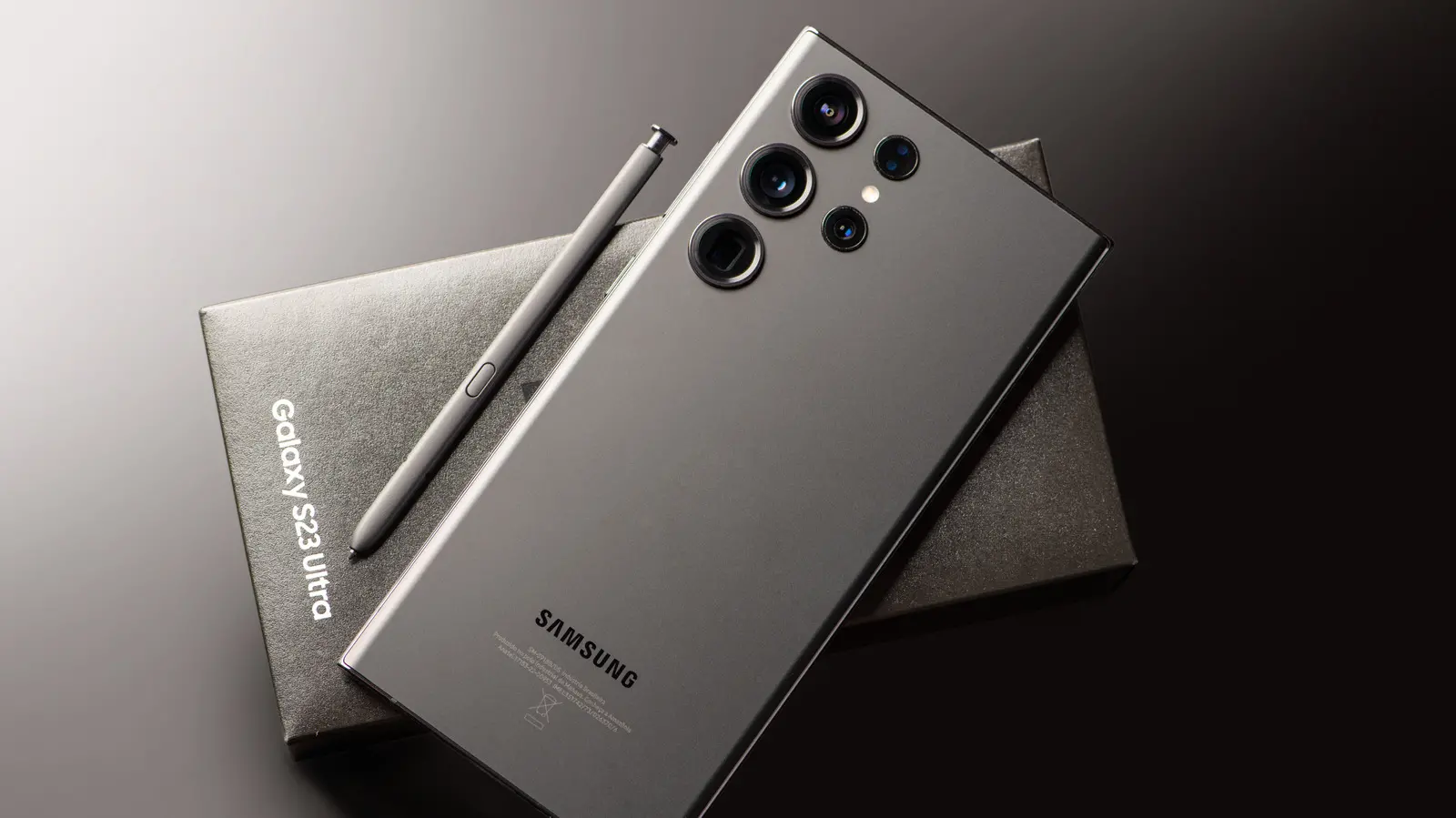
When the Samsung Galaxy S23 Ultra released in 2023, it was an exceptional smartphone. Our Chris Davies found its price to be the only major stumbling block. Even three years later, this would seemingly still be an excellent choice for a used phone; phones have been so powerful during the 2020s that people have had vanishingly less reason to upgrade more than once every five years. However, we'd urge anyone looking at a used Samsung Galaxy S23 Ultra — or any prior Ultra models — to abstain for one simple reason: its end of life.
The Samsung S23 Ultra is currently receiving monthly security updates and recently got upgraded to Android 17, which would seem to be a good sign. The problem is that that's the end of the road. This device will not be upgraded beyond Android 17, and updates will end in 2028. Unfortunately, the Samsung S23 Ultra was just a single generation shy of Samsung's seven-year update pledge.
The point is, this phone doesn't have much rope left. You'd be much better off buying a Samsung Galaxy S24 Ultra, estimated to receive support until 2031 — a full five years, even though the phone is only two generations behind. We'd only recommend the S23 Ultra if you plan to upgrade it in 2028, or if something like LineageOS supports it later on.
Older-generation Samsung foldables
Foldable smartphones are a niche category that has improved dramatically over recent years, so much so that even Apple is getting in on the game. The biggest drawback is the price. Phones with big screens that can bend aren't cheap, so some might be considering an older foldable as a result. We'd suggest reconsidering.
For starters, these older foldables have the same issue as the Samsung Galaxy S23 Ultra, in that some just barely missed the cutoff for seven years of updates. The Galaxy Z Fold 3 and Galaxy Z Flip 3 are at the end of their four-year update cycle despite releasing in 2021. The Z Fold 4 and Flip 4, as well as the Z Fold 5 and Flip 5, have the same four-year guarantee. Our point is, you're paying a lot of money for these phones, only for updates to end soon.
The other problem is that it would seem we are still in the growing pains of the foldable era. Cutting-edge foldables like the Z Fold 7 still have fragile inner screens with creases and hinges susceptible to dust. There's an alarming amount of user reports claiming faulty inner screen protectors and screens cracking along the crease, often with Samsung allegedly refusing to honor warranty repairs. Users of more recent Z Fold 6 and Z Fold 7 units also have complaints. Whether this is because of poor manufacturing or because Samsung still needs to work out the kinks in this new technology, the conclusion is the same: Avoid older foldables, and be skeptical even of the newer ones.
Samsung Galaxy S25 Edge
In recent years, there seems to be a race between smartphone manufacturers to make their devices insanely thin and light. Samsung's Galaxy S25 Edge is one that approaches paper-thinness. It measures only 5.8 mm thick. Reviewers generally admit that the thinness is less about the engineering achievement and more about the phone being light and easy to hold. The problem is that being thin and light necessitates compromises — and a high price tag.
Reviewers almost unanimously agree that the battery life is quite poor. You also miss out on the telephoto lens, a big deal for any zoomed pics. That battery is the main reason we'd recommend staying away from this phone. Unfortunately, Apple, Google, and Samsung are not using silicon-carbon batteries, which would give the S25 Edge much more capacity in its slim form factor. Further, silicon-carbon batteries are really just a transitional battery chemistry meant to tide us over before improved battery technologies completely flip the market.
In a nutshell, it's really cool how thin smartphone manufacturers can make these phones, but the uber-thin concept makes too many compromises that our current tech cannot mitigate. We'd recommend waiting until these phones can get great battery life and figure out how to re-introduce the compromises they strip away.
iPhone Air
The iPhone Air is Apple's attempt at the thin-and-light category, achieving a 5.6 mm thickness (not the thinnest phone on the market, for the record) with a titanium frame and a huge 6.5-inch screen. It's surprisingly durable, too. YouTuber JerryRigEverything needed a crane scale and 225 pounds of pressure to snap it. Once more, though, the thinness came at a great cost.
Reviewers point out that battery life is poor, and similar to Samsung, the camera had to be kneecapped despite sticking far out from that thin body. It also had heat dissipation issues, like the S25 Edge. In this case, there was one additional downside that could be a huge deal for those who consume a lot of content on their phone: a mono speaker rather than stereo. If you watch content in landscape mode, that could be a huge annoyance.
We make the same argument here as with the Samsung Galaxy S25 Edge: These thin phones are impressive, but they cost a lot more and require too many compromises. Wait until battery tech improves and manufacturers figure out ways to overcome the limitations.
iPhone 10 and 11 series
iPhones tend to age so gracefully that it's not a bad idea to buy a used or refurbished iPhone. Software-wise, they get updates for up to seven years. People still somehow using an iPhone 6S continue to get security updates even now in 2026. So, you can safely buy an iPhone that's a few generations old and trust that it'll work for some years more. However, we have to draw a line in the sand at some point, and that line in 2026 is roughly at the iPhone 10 and 11 series.
The iPhone X series (including the XS, XR, and XS Max) will not upgrade to the upcoming iOS 27. As for the iPhone 11 series, iOS 27 may be its final upgrade. Many were surprised that it wasn't axed alongside the X series. Though it's not confirmed, it's highly likely that the iPhone 11 family will not get iOS 28 since it released in 2019, meaning 2026 would therefore conclude seven years of updates. Per to Apple's own documentation, the iPhone 11 Pro and iPhone 11 Pro Max are both considered vintage devices, lending credence to this possibility.
You can still use a vintage iPhone. Just prepare for far fewer bug patches, apps gradually cutting off support for your iOS version, and challenges getting repairs. Since both of these series are at the end of their software lives, we'd really recommend that you buy an iPhone 12 or a newer model.
iPhone 16
The iPhone 16 is only a generation old, releasing in 2024. Why are we including it on this list? For a couple of reasons. One, you might as well just grab the iPhone 17 and pay the difference. The iPhone 17 was a significant hardware upgrade; it has a bigger screen, a 120 Hz ProMotion Always-On display, more battery life, the new Center Stage selfie cam, and better Ceramic Shield protection. The default storage was bumped up to 256GB from 128GB. Finally, the iPhone 17 got Apple's new, more battery-efficient N1 wireless networking chip. If nothing else, the increase to a 120Hz display is a huge selling point, since prior base iPhones have stubbornly clung to 60Hz for years.
The second reason you might want to avoid the iPhone 16 is based solely on rumors. The iPhone 18 (which we may see in 2027) could possibly get 12GB of RAM. This is significant because some of the new Apple Intelligence features — like advanced dictation — are unfortunately restricted to devices with a minimum of 12GB of RAM. Future AI features could also be limited to 12GB-RAM devices. So if you can wait another year, it might be a wait well worth it.
Moto G (2025)
Motorola has been around for a long time, and it makes a lot of devices for all budgets. One we'd avoid is the Moto G (2025) in particular. Why? For one, it wasn't much of a hit with reviewers. When a budget phone that costs a quarter of what flagships do is still criticized for poor performance and hardware, that should say a lot.
It's also worth keeping in mind that Motorola has a fairly short support window for its devices. This model is only supported until December 2027. While you might be able to freshen the phone up with LineageOS, the whole package is quite underwhelming, especially when the budget phone market has tons of great options near the $200 mark. In fact, we recommend against the Moto G 2025 in our list of Android phones to avoid. Upgrade your budget by $100 to $200, and you can get an even better phone that will likely last significantly longer.
Pixel 10
Google Pixel phones are awesome, especially for their peerless AI features. But there is a growing list of downsides to buying a Pixel. Enough that we'd recommend against the latest Pixel 10 for a few reasons. For one, the phone is on the cusp of being replaced; you may find the Pixel 11 worth waiting for. For another, Pixel phones have a concerning number of issues, more than we're accustomed to seeing with other major phone brands.
The best recent example was the April 2026 update that made Pixels drain battery at an unprecedented rate and caused a flood of issues ranging from wireless connectivity to cameras. Sadly, some of the Pixel 10's inherent issues that have been there since day one — like the infamous rainbow snow screen glitch — are still there. Couple that with the Pixel 10's 6/10 iFixit repair score — worse than that of famously not-very-repairable iPhones — and it's challenging to recommend it. It seems like Google needs to pull an Apple and focus less on new features and more on squashing bugs.
Pixel 6
We want to reiterate that we don't recommend against buying Google Pixel phones, since they're (generally) great phones. But if the concerns with the Pixel 10 didn't bother you and you're considering an older Pixel model to save money, avoid the Pixel 6 or prior. When it released, the Pixel 6 got a fair bit of acclaim. This was when Google really started to kick off its awesome new AI features. However, software support will soon make this phone a dealbreaker.
Google promised seven years of updates like Samsung, but not for older models. The Pixel 6 has received what appears to be its final update to Android 17 in 2026, five years after it released; users didn't even expect it to get this far. Unlike other Android phones that you can load up with LineageOS, we would struggle to recommend the same for the Pixel 6 because (based on personal experience) LineageOS typically removes vendor features. All the awesome Google AI stuff you got used to — often baked into the OS — would either not work or not work the same.
Pixel 10 Pro Fold
If you've read this far, then you know our thoughts on foldables. Expensive, bleeding-edge technology that's cool, but still needs a few years in the oven before the average person should grab one. It's a similar story with the Pixel 10 Pro Fold. On top of having a fragile inner screen and a hinge prone to dust, many reviewers also feel that the Pixel 10 Pro Fold lags behind the folding competition for the price it charges. Not a bad phone by any means, just a somewhat tough recommendation in the current market.
There's an even bigger reason why you shouldn't get it: It might explode on you. YouTuber JerryRigEverything performed his industry-famous durability test on the Pixel 10 Pro Fold by trying to fold it backward. The phone breaks shockingly easily, then catches on fire. According to him, this was the first time a phone's battery had flared up during his durability tests. Considering how many people are prone to sitting on their devices, we cannot recommend this one in good conscience. Either get a Samsung, or wait for these foldables to earn their stripes.
Any OnePlus phones
OnePlus has been around for a hot minute, starting out as a budget flagship killer brand and transitioning into just another flagship brand — though a good one. Its latest OnePlus 15 is a wonderful phone, all things considered. However, we can't recommend any OnePlus device, be it new or old, for one simple reason: OnePlus is done for.
Let's be very careful with our language here. OnePlus is not closing its doors as a company. Rather, its operations in Western markets (the U.S. and Europe) are ceasing, though customers will still get software and hardware repair support. OnePlus phones will now run ColorOS (the flavor OPPO uses) going forward on supported phones. You won't be able to officially purchase a OnePlus phone if you live in these regions, and even if you can get your hands on one, we wouldn't recommend it.
Some smartphone manufacturers push emergency security updates to older, unsupported devices. OnePlus has done this in the past, giving generous updates when it had previously said it was through. But being out of the market, OnePlus may not have the incentive to continue that for its now-stranded Western customers. It reminds us of LG phones, which (because LG thoroughly abandoned the smartphone market) cannot get any updates whatsoever and therefore are a security risk to use. There are plenty of good alternatives at this price point on the market. Shop elsewhere.
Trump phone
When Donald Trump created Trump Mobile and announced the Trump T1 phone back in 2025, some of us got out the popcorn for the dumpster fire we knew would come. We didn't have to wait long. Trump Mobile marketed the $499 phone as American-made, a claim later silently removed because getting that price with U.S. manufacturing would be impossible; eagle-eyed users noticed the phone looked awfully similar to the existing HTC U24, a phone so bad it had to be recalled and was worth much less than $499; furious supporters who dropped $100 to secure a device were angry when it shipped almost a year late. And that was all before anyone got their hands on it.
The reviews are generally consistent: Aside from a few pluses, this thing is basically all minus. YouTuber Snazzy Labs gives an excellent review of the whole process from buying the phone to receiving it. The entire process of purchasing and receiving the phone appears scammy based on the review. After hours of sketchy customer service calls and emails that went straight to spam, the phone finally arrived. Quinn's unboxing revealed cut corners everywhere. The SIM card was shipped in a handwritten letter; the quick-start guide was printed on regular printer paper; the fingerprint reader didn't work; the base messaging app kept crashing. The list goes on. There are better phones you can get for the price, and better mobile providers.
Nothing Phone (3)
The Nothing Phone (3) is by no means a bad device. Like a spiritual successor to OnePlus, Nothing aims to make flagship specs and features affordable at a lower price while bringing its own flair to the table. Unfortunately, this is one of the weakest-reviewed Nothing phones yet. Reviewers often gave it a passing score while admitting that, in terms of price-to-performance, it could have done better.
What really earned its place on this list, though, is its 3/10 repairability score from iFixit. The "repair nightmare" in the title should give you a hint. First, it takes too many steps to get to literally anything inside the phone. Once you remove the transparent backplate and then unscrew the many screws — some of which are hidden under stickers — you'll encounter even more plates, stickers, and hidden screws to access various components. iFixit also notes that replacing the display is pretty onerous. So coupled with review scores that weren't the greatest and repairability that seems unnecessarily complicated, it's one to avoid in 2026. Maybe wait for the Nothing Phone (4), said to be coming in 2027 with upgrades that really matter.
Source: SlashGear News