

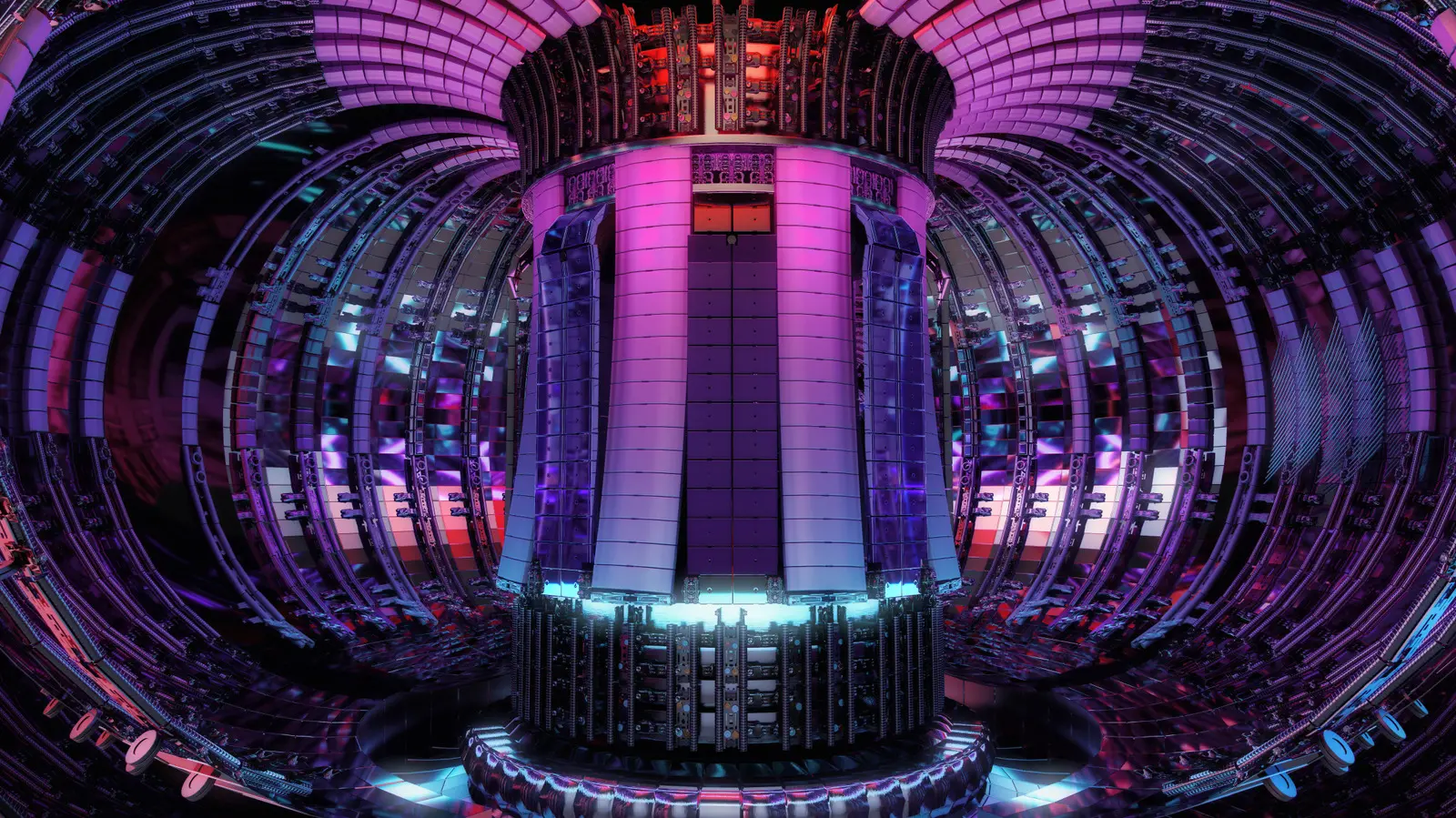
The "40-year" figure is something that gets thrown around more often than it should be when lifespans of nuclear reactors are being discussed — even though it has nothing to do with how long they really hold up. The thing is that when American regulators started handing out operating licenses, 40 years was roughly how long it was expected that the reactor would earn back its construction cost – and that's how the number stuck. So it was more of an accounting decision rather than anything else, like the components or materials the reactors are made of. Plenty of people back then also figured the then-current version of the technology would be obsolete by that point anyway.
However, those people couldn't have been any more wrong. With the right upkeep, most of these reactors last a lot longer than initially thought. In fact, the Nuclear Regulatory Commission (NRC), the federal agency that licenses every commercial reactor in the country, has been handing out 20-year extensions for these units — once the operator can show how the plant's parts are wearing down, and how they plan to stay ahead of it.
Most of the American nuclear reactor fleet (all but eight of the reactors running today) has already grabbed these licenses. As it stands, the NRC has been studying reactor aging since 1982, and they have consistently found that any wear is manageable. On top of that, the Department of Energy (DOE) has reported that there's no technical limit that stops one at 80 years. Researchers are even looking into whether that limit could stretch to 100 years.
The licensing process for nuclear reactors was originally set at 40 years based on the amortization period for the initial capital investment. This was a standard practice for many large industrial projects, not just nuclear power plants. The idea was that the plant would have paid off its construction debt within that timeframe, and then the license could be extended if the plant remained safe and economically viable. However, many critics and members of the public misinterpreted this as the physical lifespan of the reactor. In reality, the reactor core and its major components can last much longer with proper maintenance, component replacement, and ongoing inspection.
The NRC requires a comprehensive aging management program for any reactor seeking a license renewal. This includes monitoring of reactor pressure vessels, steam generators, piping, and electrical cables. For example, the reactor pressure vessel is subjected to neutron embrittlement over time, but through careful analysis and sampling, operators can demonstrate that the vessel remains within safe limits. Similarly, steam generators can be replaced entirely, as has been done at many plants across the United States. The cost of such replacements can run into the hundreds of millions of dollars, but it is often cheaper than building a new plant from scratch.
Internationally, other countries have taken different approaches to reactor lifespan. In France, where nuclear power provides about 70% of electricity, the state-owned utility EDF has conducted extensive studies on extending the life of its 56 reactors from 40 to 50 or even 60 years. This involves significant investment in replacing key components and upgrading safety systems. Japan, after the Fukushima Daiichi accident in 2011, imposed stricter regulations that led to many reactors being taken offline for longer periods. Some older units, like the Mihama and Takahama plants, have been allowed to operate beyond 40 years after meeting new safety standards.
Not every reactor gets to grow old
With most of those first extensions set to expire through the 2030s, there's now a second 20-year renewal on the table, and a few reactors have already scored one. That said, not all nuclear plants made the cut for extension, though that was simply because they've been operating far longer than others. The first 80-year extension only arrived in 2019, and most of the reactors decommissioned in the U.S. shut down earlier than that.
When it finally is decommissioning time, the reactor goes through a relatively tedious process. It all starts with unloading the fuel, before moving onto scrubbing contamination off everything the fuel touched. It only concludes when regulators agree the site is clean enough, once the radiation left in the soil sits under the legal limit.
There are three ways to retire a plant. Immediate dismantling means crews start the process within months of shutdown, though even then the land is available only after a decade for other uses. Then there's the Safstor (short for safe storage) method. In it, the buildings get sealed and monitored for 40 to 60 years while the radioactivity fades. Finally, there's entombment, which means burying anything that's left in concrete and leaving everything right there. The Chernobyl plant, a tragic time capsule even 40 years later, went with Safstor – though the reactors are estimated to not be dismantled until the 2060s.
The decommissioning process is governed by strict regulatory requirements and can cost hundreds of millions of dollars. In the United States, utilities are required to set aside funds in a decommissioning trust throughout the plant's operating life. These funds are intended to cover the eventual cleanup costs. However, for older plants that were built before such requirements were in place, there have been challenges in ensuring enough money is available. The Nuclear Regulatory Commission oversees the decommissioning process and requires that the site be released for unrestricted use, meaning that radiation levels must be below established limits for background radiation.
The three primary decommissioning strategies have different advantages and trade-offs. Immediate dismantling, also known as DECON, allows the site to be returned to other uses relatively quickly, but it requires a larger upfront investment and exposes workers to higher radiation doses. Safstor, also called SAFSTOR, defers most of the dismantling for decades, allowing radioactive decay to reduce worker exposure, but it requires long-term monitoring and maintenance of the sealed facility. Entombment is the least common approach and involves encasing the remaining radioactive structures in a durable material like concrete. This option is typically only used for small or unusual facilities, as it requires perpetual monitoring and institutional controls.
Decommissioning also involves managing the spent nuclear fuel. While the fuel assemblies are removed from the reactor core, they still contain highly radioactive fission products. Most reactors store this fuel in on-site spent fuel pools for several years to allow heat and radioactivity to decrease. After that, the fuel may be moved to dry cask storage, where it is placed in robust steel and concrete containers. Ultimately, the goal is to dispose of spent fuel in a permanent geological repository, but such facilities remain controversial and have faced long delays in many countries.
The oldest reactors still running fired up in 1969
Today, in the USA – the country that generates the most nuclear power – the average reactor age sits at about 44 years, as of March 2026. If newer estimates are taken into account, that's a little over half the total lifespan, so there's plenty of open road ahead.
Money and regulation can save a reactor, too, as easily as it can kill one. For instance, for six years, India's two oldest reactors were being kept offline. They were close to being killed off, but the country spent that entire stretch rebuilding them and replacing their coolant recirculation piping. These reactors — Tarapur units 1 and 2 — are a pair of General Electric units on the Maharashtra coast, and they went commercial way back in 1969, making them the oldest operating reactors on the planet today. Both went dark in 2020 before roaring back to life in June 2026. Something similar happened with Japan's largest nuclear reactor, which was taken offline just a day after reopening — though it's online again now. That said, both Beznau 1 in Switzerland and Nine Mile Point 1 in New York also date to 1969, so the podium is a bit crowded.
The longevity of these early reactors demonstrates that with careful management, nuclear plants can far exceed initial expectations. The Tarapur reactors, for example, have undergone multiple refurbishments, including replacement of steam generators and major piping. The high cost of such refurbishments was justified by the value of the electricity they continue to generate. Similarly, the Beznau 1 reactor in Switzerland has been operating for over 50 years, although it has faced numerous inspections and upgrades following incidents. The reactor's operator, Axpo, has invested heavily in safety improvements to meet current standards.
Nine Mile Point Nuclear Generating Station in New York, owned by Constellation Energy, began commercial operation in December 1969. It has received two license renewals, allowing it to operate until 2029 for Unit 1. Unit 2, which came online in 1988, has a license until 2046. The station has been a significant contributor to the local economy and provides carbon-free electricity to the grid. Its robust performance has been recognized with industry awards for reliability.
Looking ahead, the nuclear industry is exploring new reactor designs that promise even longer lifespans. Small modular reactors (SMRs) are often designed for 60 to 80 years of operation with planned mid-life refurbishments. Advanced reactors, including Generation IV concepts, aim for 100-year lifetimes through the use of more durable materials and simpler designs. These newer systems also incorporate passive safety features that reduce the need for active components that can wear out. Additionally, some designs allow for online refueling, meaning the reactor can continue operating while spent fuel is removed and fresh fuel is added, potentially extending the time between major outages.
The economic case for longer reactor lifetimes is strong. Existing nuclear plants have already recovered their construction costs, so their operating expenses are primarily fuel and maintenance. This makes them highly competitive with fossil fuel plants, especially when carbon pricing is considered. Extending the life of a reactor also avoids the need to build new generating capacity, which takes years to permit and construct. Furthermore, nuclear power provides a stable baseload of electricity that complements intermittent renewable sources like solar and wind.
However, long-term operation also poses challenges. As components age, they must be inspected more frequently and replaced when necessary. The regulatory burden can increase, and public acceptance may wane if safety concerns are not addressed transparently. The nuclear industry has responded by sharing best practices through organizations like the World Association of Nuclear Operators (WANO), which conducts peer reviews and promotes operational excellence. Many countries have also established independent regulatory bodies to ensure that safety decisions are based on science and not political pressure.
The future of nuclear power depends in part on the successful management of aging plants and the safe decommissioning of those that reach the end of their lives. While the 40-year myth persists, the actual experience with nuclear reactors has shown that they can be reliable sources of clean energy for many decades beyond that initial timeframe. The key is a commitment to rigorous maintenance, continuous improvement, and a clear path for eventual decommissioning. With those elements in place, nuclear reactors will continue to play a vital role in the global energy mix.
Source: SlashGear News