

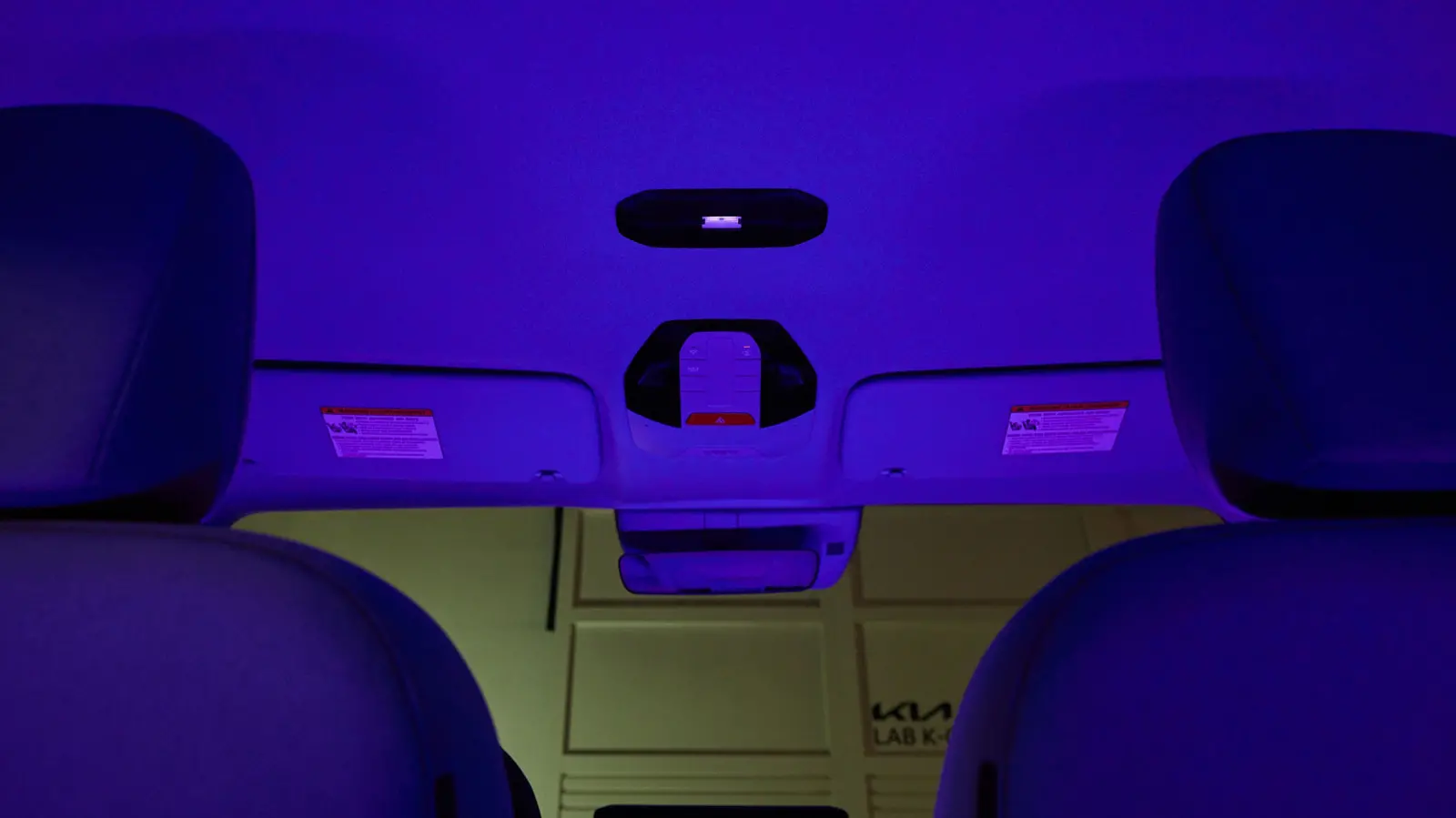
Introduction to Plasma Care UVC
Maintaining a spotless car interior has always been a challenge for vehicle owners, especially those who prioritize health and cleanliness. The invisible world of bacteria, viruses, and fungi can accumulate on surfaces like steering wheels, seats, and air vents, posing potential health risks. While conventional cleaning methods such as sprays and wipes are effective, they require time and effort, and they often miss hard-to-reach areas. Hyundai and Kia, two of the world's leading automotive manufacturers, have now introduced a groundbreaking solution: Plasma Care UVC. This technology leverages far-ultraviolet C (far-UVC) light to sanitize the entire cabin quickly and safely, even when occupants are present. The system represents a significant leap forward in automotive hygiene, merging advanced photonics with practical vehicle design.
The concept of using UV light for sterilization is not new; it has been employed for decades in hospitals, water treatment plants, and food processing facilities. However, traditional UVC light typically operates at a wavelength of around 254 nanometers, which is effective at killing pathogens but also hazardous to human skin and eyes. Exposure can cause severe burns, eye damage, and even long-term health issues. Hyundai's innovation lies in using far-UVC light at a narrower wavelength range of 200–230 nanometers. This specific band has been scientifically shown to inactivate microbes without penetrating the outer layer of human skin or causing harm to eyes. Thus, the technology can operate continuously while the driver and passengers are inside the vehicle, offering real-time, hands-free sanitation.
How Far-UVC Works Against Germs
Far-UVC light works by breaking down the molecular bonds in the DNA and RNA of microorganisms. When bacteria or viruses are exposed to this light, their genetic material becomes damaged, rendering them unable to replicate or cause infection. This process is highly efficient, requiring only seconds to minutes of exposure to achieve a significant reduction in microbial load. Hyundai's Plasma Care UVC system is designed to bathe the entire cabin interior in a gentle yet effective glow, reaching surfaces like the dashboard, seats, floor mats, and even the air circulating through the ventilation system. The technology can be integrated into the vehicle's existing lighting or HVAC systems, making it both unobtrusive and practical.
One of the key advantages of far-UVC over chemical disinfectants is that it leaves no residue and does not contribute to the growing problem of antimicrobial resistance. Many bacteria have evolved resistance to antibiotics and household cleaners, but UV light remains a physical method that pathogens cannot easily adapt to. Additionally, far-UVC does not produce harmful byproducts or strong odors, making it ideal for enclosed spaces like cars. Hyundai's engineers had to overcome several technical hurdles to adapt this technology for automotive use. The most significant challenge was miniaturization: existing far-UVC systems designed for hospital rooms or industrial settings are bulky and power-hungry. Hyundai's team developed a compact, energy-efficient module that can be discreetly installed in the roof liner, door panels, or center console. They also incorporated an optical filter to ensure that no stray UV light outside the safe wavelength range is emitted, providing an extra layer of protection for occupants.
Development and Testing Process
To validate the effectiveness and safety of Plasma Care UVC, Hyundai partnered with specialized research institutions and conducted rigorous tests under real-world conditions. The system was first installed in a Hyundai PV5 minivan, a versatile platform designed for various commercial and personal transportation roles. The PV5 was chosen because it represents a typical use case where sanitation is critical—shuttling passengers, carrying goods, or serving as a mobile workspace. During the testing phase, the vehicles were subjected to high levels of bacterial and viral contamination, including common pathogens like E. coli, Staphylococcus aureus, and influenza A virus. The far-UVC system consistently reduced microbial counts by over 99.9% within 15 minutes of operation, without any measurable effect on the vehicle's materials or electronics.
Safety validation was equally important. Hyundai conducted skin and eye exposure tests using dummies and controlled human trials, monitoring for any signs of irritation or damage. The results confirmed that far-UVC light at the specified wavelength and intensity posed no health risks, even for prolonged exposure scenarios such as a long road trip. The company also assessed the durability of the system under extreme temperatures, humidity, and vibration, ensuring it would function reliably over the vehicle's life. These tests paved the way for the technology to be considered for future production models.
Potential Applications Across Vehicle Types
Hyundai and Kia envision numerous applications for Plasma Care UVC beyond personal cars. The technology is particularly well-suited for autonomous vehicles and purpose-built vehicles (PBVs), which are increasingly used for ride-hailing, delivery services, and public transportation. In autonomous taxis, where multiple passengers cycle through daily, maintaining a sanitized cabin is critical for user trust and safety. With far-UVC, these vehicles could self-clean between trips without human intervention, reducing the spread of seasonal illnesses like colds and flu. Similarly, school buses, shuttle vans, and food trucks could benefit from built-in sanitation. For example, a school minibus equipped with Plasma Care UVC could continuously disinfect surfaces as children board and exit, lowering absenteeism and protecting vulnerable students.
Another promising application is in emergency vehicles and medical transport. Ambulances often carry patients with infectious diseases, and thorough cleaning protocols are time-consuming. An integrated far-UVC system could immediately start sanitizing the cabin after each call, reducing the risk for paramedics and subsequent patients. The technology could also be adapted for non-automotive uses, such as cleaning aircraft cabins, hotel rooms, or office spaces. Hyundai's modular PBV platform, which includes the ST1 and other modular electric vehicles, is designed to be customized for specific jobs. Installing Plasma Care UVC in these vehicles would add a valuable hygiene feature, especially in the post-pandemic era where cleanliness has become a top priority for consumers.
Industry Context and Competitor Efforts
Hyundai and Kia are not the only automakers exploring UV sterilization. Several other manufacturers have experimented with UV-C light in vehicles, but most have focused on standalone devices or systems that operate only when the vehicle is unoccupied. For instance, some luxury brands have introduced UV-C wands for manually disinfecting high-touch areas, while others have integrated germicidal lamps into glove compartments or HVAC ducts. However, Plasma Care UVC is unique in its ability to function safely with people inside the car. This breakthrough was made possible by the growing body of scientific evidence supporting the safety of far-UVC, which was highlighted in studies published by Nature and other journals during the COVID-19 pandemic.
Hyundai's approach also differs in its integration with the vehicle's electrical architecture. The system can be activated via the infotainment screen, a dedicated button, or even through a smartphone app, allowing users to schedule sanitation cycles remotely. It can also be set to run automatically whenever the car is parked or when motion sensors detect new occupants. This level of convenience could make Plasma Care UVC a compelling selling point, much like heated seats or panoramic sunroofs. Moreover, the technology aligns with broader trends in connected and autonomous mobility, where cleanliness is a key component of the user experience.
Challenges and Future Roadmap
Despite its promise, bringing Plasma Care UVC to mass production is not without obstacles. Hyundai has stated that further safety and technical validation tests are required before the system receives final approval for commercial vehicles. One concern is the long-term effect of UV exposure on interior materials such as leather, plastic, and fabric. Although far-UVC is less energetic than traditional UVC, repeated exposure over years could cause fading, cracking, or other degradation. Hyundai's engineers are working to mitigate these effects by carefully controlling the intensity and duration of light bursts, as well as selecting UV-resistant materials for future models.
Another challenge is regulatory approval. Different countries have varying standards for UV-emitting devices, especially those intended for use in occupied spaces. Hyundai will need to obtain certifications from organizations like the FDA, EPA, and equivalent international bodies. The company is also exploring patent protection for its miniaturized far-UVC module and optical filter design, which could give it a competitive advantage. Regarding timeline, Hyundai has not announced a specific launch date, but industry insiders speculate that the technology could appear in high-end Genesis models or Kia's electric vehicles within the next two to three years. The company is also considering offering it as a dealer-installed accessory for existing vehicles, expanding its reach.
In summary, Plasma Care UVC represents a significant step forward in automotive hygiene, combining cutting-edge science with practical engineering. By harnessing the germicidal power of far-UVC light in a safe, occupant-friendly manner, Hyundai and Kia are addressing a growing consumer demand for healthier vehicles. While the system is still undergoing final validation, its successful demonstration in the PV5 minivan suggests that a germ-free driving experience may soon be within reach for everyone.
Source: SlashGear News