

For nearly two weeks, senior executives at Anthropic have been locked in high-stakes negotiations with the Trump administration, seeking the removal of a highly restrictive export control directive. According to a detailed report from Wired, the talks initially faltered—in part because Dario Amodei, Anthropic’s CEO and co-founder, was personally involved. Sources close to the discussions described Amodei as difficult to work with, emotionally volatile, and a poor listener. Since Amodei was replaced in the negotiations by co-founder Tom Brown, however, the tone has reportedly improved, and progress is being made.
The White House is now speaking directly with Tom Brown, whose official LinkedIn title simply reads “Co-founder.” An anonymous participant in the calls told Wired, “Tom Brown is not being a weirdo like Dario and can actually engage.” The shift in personnel reflects a broader frustration with Amodei’s interpersonal style. Past reporting has characterized Amodei as prone to rambling tangents and unable to control his emotions. Public appearances reveal a man with a queasy resting expression, a trumpet-like voice, and a tendency to gesticulate wildly while breaking eye contact—sometimes tilting his entire head toward the ground mid-sentence.
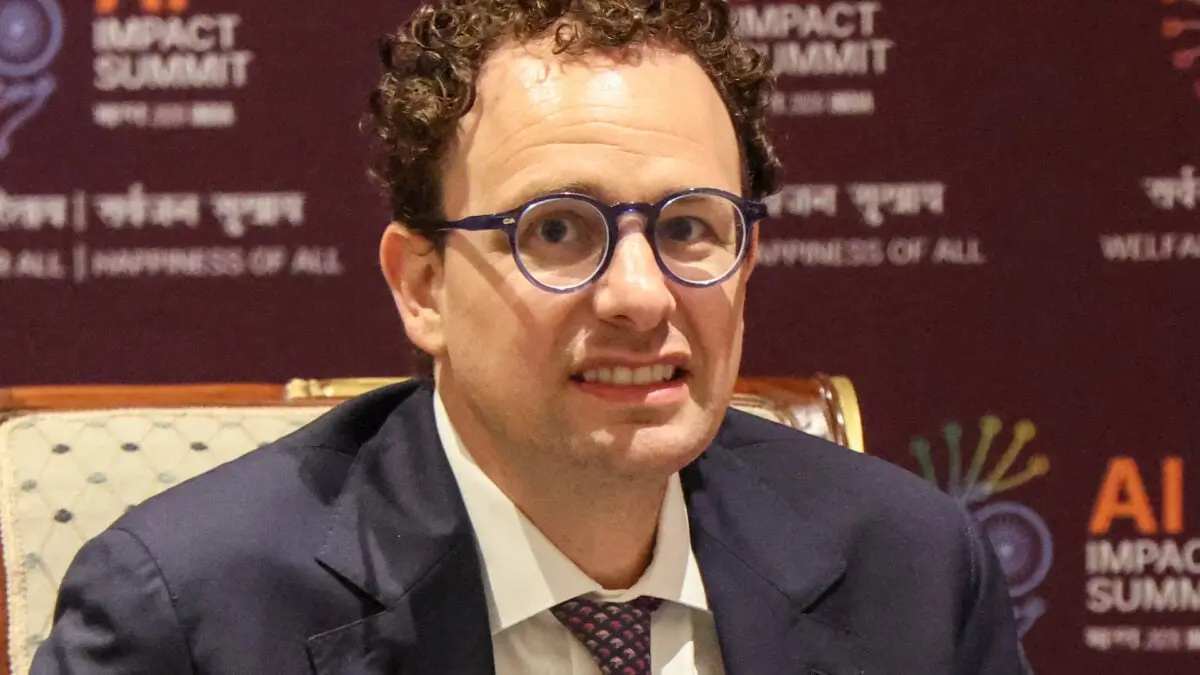
Brown, by contrast, presents a more conventional, approachable demeanor. While still exhibiting the nervous energy common among AI researchers, his speaking style is warmer, softer, and steadier. He smiles easily and maintains a calm presence that contrasts sharply with Amodei’s intensity. Accompanying Brown in the talks is Sarah Heck, Anthropic’s Head of Public Policy, whose public appearances show a disciplined, cautious communicator—ideal attributes for navigating the treacherous waters of federal AI regulation.
The Core Dispute: Claude Fable 5 and Export Controls
At the heart of the negotiations lies Anthropic’s Claude Fable 5, the company’s most advanced consumer-facing AI model. Anthropic categorizes Fable 5 as a “Mythos-class” model, built on the same core technology as Claude Mythos Preview—a model the company itself deemed too dangerous for public release. Fable 5 was ostensibly stripped of capabilities that could pose cybersecurity threats, but shortly after its launch, researchers at Amazon notified the White House that jailbreaks could easily remove these safeguards.
Even before the jailbreak issue came to light, the administration was already concerned that bad actors affiliated with Chinese interests had accessed the model. Consequently, the White House issued an export control order roughly three days after Fable 5’s release, requiring Anthropic to prevent non-U.S. nationals from using both Fable 5 and an even more exclusive model, Mythos 5. In response, Anthropic pulled Fable 5 offline on June 12, and talks with the White House commenced soon after.
This is not the first time Anthropic has faced regulatory scrutiny. The company, founded in 2021 by siblings Dario and Daniela Amodei, along with a group of former OpenAI employees, has positioned itself as a safety-first AI lab. Its mission is to develop “constitutional AI”—systems aligned with human values and governed by explicit ethical principles. Yet even a safety-focused organization can find itself at odds with government regulators, especially when national security and geopolitical tensions are involved.
Background on the Players
Dario Amodei, a former Google Brain and OpenAI researcher, is known for his deep technical expertise but also for a reputation that can be polarizing. Colleagues have described him as brilliant yet intensely passionate to the point of being overbearing. His deep involvement in the White House talks reportedly frustrated officials, who found him unfocused and combative. By replacing Amodei with Brown, Anthropic effectively signaled a willingness to shift from a visionary’s zeal to a diplomat’s tact.
Tom Brown, another Anthropic co-founder, came from OpenAI, where he contributed to the development of GPT-3 and other foundational models. His technical background is robust, but his communication style is more measured. That he is now leading negotiations highlights the importance that Anthropic places on smooth interactions with regulators.
Sarah Heck, the public policy head, brings another dimension to the team. With previous experience in government affairs and tech regulation, she understands the labyrinthine processes of federal agency negotiations. Her on-message enthusiasm, tempered by caution, makes her an effective partner for Brown.
The Broader Regulatory Landscape
The Fable 5 case is part of a larger trend of increasing government oversight of artificial intelligence. The Trump administration has taken a varied approach—sometimes lauding AI’s economic potential, other times clamping down on perceived threats. Export controls have become a favorite tool for curbing the spread of advanced technology to rivals like China. The White House’s swift action against Fable 5 suggests a heightened sensitivity to AI models that could be weaponized or studied by adversarial nations.
Meanwhile, other AI companies are facing similar pressures. OpenAI, for example, has been navigating its own regulatory challenges, including a statement that “we don’t believe this kind of government access process should become the long-term default.” The broader industry is watching the Anthropic-White House talks as a potential bellwether for how future AI regulations will be formed and enforced.
Anthropic’s situation is further complicated by its close ties to Amazon. The e-commerce giant has invested heavily in the startup, and it was Amazon’s researchers who flagged the jailbreak vulnerability. This dynamic raises questions about the relationship between big tech and AI labs, and whether such disclosures are acts of partnership or surveillance.
Technical Dimensions of the Fable 5 Model
Claude Fable 5 represents the latest iteration of Anthropic’s Claude series. The model excels in creative writing, nuanced dialogue, and complex reasoning tasks. But its Mythos-class underpinnings mean it shares core architecture with the Claude Mythos Preview, which Anthropic judged too risky for wide release. The safeguards removed during Fable 5’s development were designed to prevent it from generating code for malware, crafting sophisticated phishing scams, or assisting in the design of chemical weapons. Yet, according to Amazon’s researchers, these safeguards were fragile.
The jailbreak method apparently exploits a known weakness in large language models: carefully crafted prompts that circumvent safety filters. Models trained with constitutional AI may be less susceptible than others, but no system is foolproof. The White House’s pre-existing concern about Chinese access may have been amplified by the jailbreak revelation, creating a perfect storm that led to the export order.
Anthropic’s decision to pull Fable 5 was voluntary, but the company likely calculated that cooperation would improve its negotiating position. By taking the model offline, Anthropic demonstrated good faith, while also preventing further damage from potential misuse. The export control order remains in place, but with Brown and Heck leading the discussions, there is cautious optimism that a resolution may be reached.
Implications for AI Policy and Industry
The outcome of these negotiations will reverberate beyond Anthropic. If the White House agrees to lift the export restrictions, it could set a precedent that companies can successfully advocate for their models by demonstrating improved governance and engagement. If the restrictions remain, it could signal a tougher stance on all advanced AI models, especially those developed by firms with foreign investment ties.
Moreover, the replacement of Dario Amodei in the negotiations underscores a lesson for AI leadership: technical brilliance must be paired with interpersonal skill when dealing with regulators. Anthropic’s willingness to make this swap shows a pragmatic understanding that Washington rewards diplomacy over genius.
As of late June 2026, talks continue. The White House has not issued any public statements, and Anthropic remains tight-lipped about the details. But the shift in personnel, and the positive tone of anonymous sources, suggest that a deal may be within reach. For now, the industry watches and waits, knowing that the resolution of this case could shape the regulatory landscape for years to come.
Source: Gizmodo News