

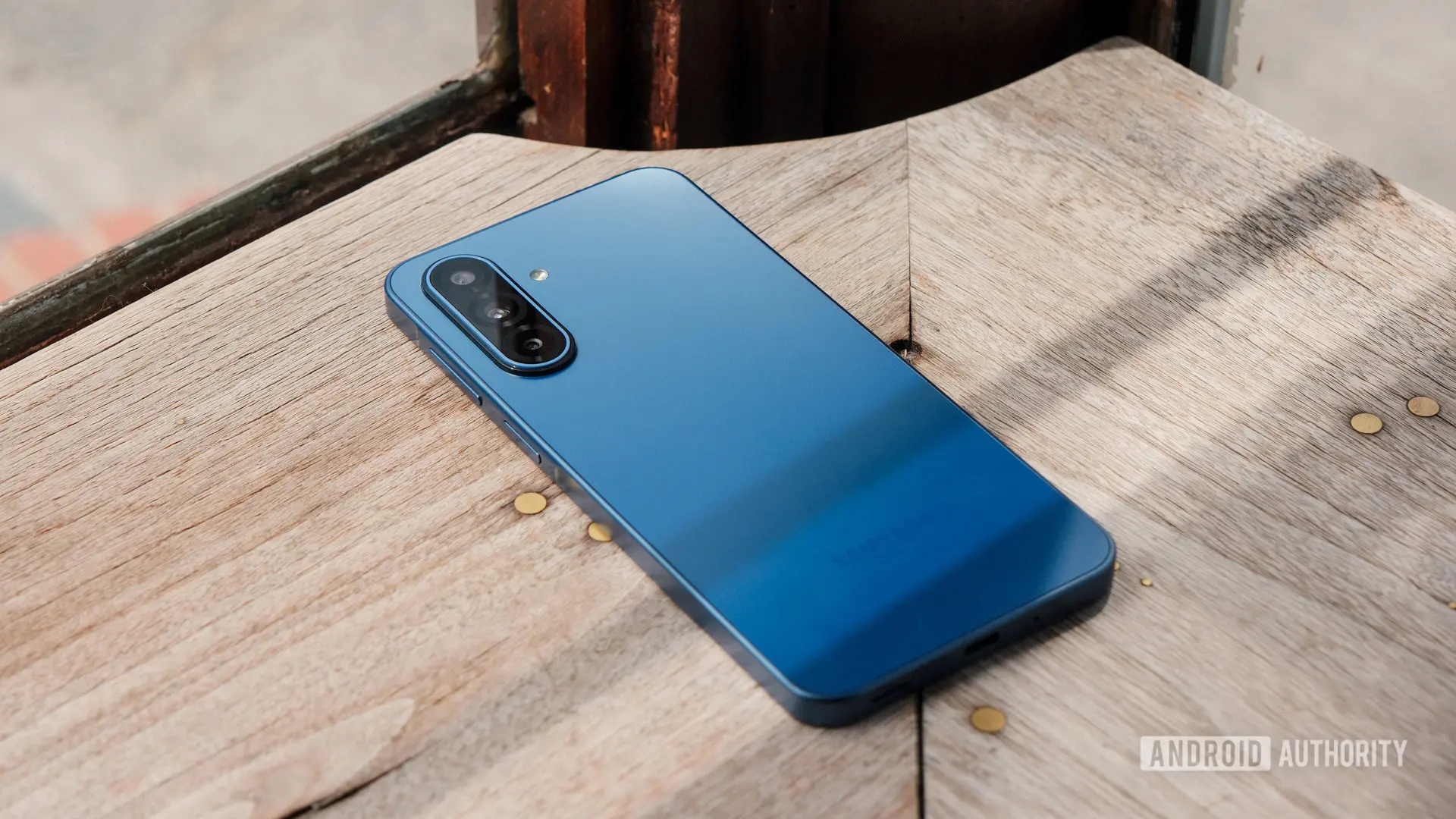
Samsung's next budget Galaxy phone is beginning to take shape, but if you were hoping for a dramatic redesign, you may want to lower your expectations. A fresh set of CAD renders of the Galaxy A18 has now surfaced, and the device looks almost identical to the predecessor with a few changes. The renders, shared by Smartphone Checker in collaboration with well-known leaker OnLeaks, are reportedly based on factory CAD files used by accessory makers before launch. These files don't necessarily show final colors or finishes but are generally considered reliable for dimensions, button placement, and the overall shape of a device.
Design: Evolution, Not Revolution
The Galaxy A18 is, at first glance, not all that different from the Galaxy A17. It's said to keep the same 6.7-inch display with Samsung's familiar Infinity-U notch, a design that has become a staple across the company's entry-level A-series lineup. The triple-camera setup is still on the back, but Samsung seems to have slightly tweaked the camera housing. The pill-shaped surround no longer jumps out as much, sitting a little flatter against the rear panel for a cleaner look. The bezels around the display are expected to remain relatively thick, a hallmark of budget devices, though Samsung has been gradually reducing them in recent generations. The placement of the volume rocker and power button on the right edge appears unchanged, and the USB-C port, speaker grille, and headphone jack at the bottom continue to be standard offerings.
These dimensions help show how subtle these changes are. The Galaxy A18 is said to measure 164.4 x 77.8 x 7.84mm, meaning it's pretty much the same size as the Galaxy A17. It is only 0.1mm narrower but gains about 0.34mm in thickness. It's unclear if that extra thickness means a bigger battery, but current rumors still point to a capacity of around 5,000mAh. For context, the Galaxy A17 measured 164.5 x 77.9 x 7.5mm, so the A18 is marginally more compact in width but slightly thicker. Such minor dimensional shifts are typical for mid-cycle refreshes, where manufacturers focus on internal upgrades rather than external appearances.
Under the Hood: A Potential Shift to Snapdragon
The processor is where things start to get more interesting. The leak also references past reports that Samsung may be planning a major change to the 5G version, swapping out its in-house Exynos chipset for a Qualcomm Snapdragon processor. We don't know exactly what chip it is, but speculation is that it's the Snapdragon 6s Gen 3. However, the 4G version is likely to keep using a MediaTek chipset, but it's unclear which one will be chosen.
This potential move is significant for several reasons. Samsung's Exynos chips have often been criticized for lagging behind Qualcomm's offerings in performance and efficiency, especially in the budget segment. The Galaxy A17 5G, for example, used the Exynos 1330, which offered decent performance for the price but struggled with gaming and multitasking compared to Snapdragon rivals. By adopting a Snapdragon chip, Samsung could improve user experience, extend battery life, and better compete with brands like Xiaomi and Realme that often use Qualcomm or MediaTek at similar price points.
The Snapdragon 6s Gen 3, if confirmed, is a mid-range chip built on a 6nm process. It features a 2.4GHz octa-core CPU and an Adreno GPU, supporting 5G connectivity, faster RAM, and better camera processing. This would be a notable upgrade over the Exynos 1330's 5nm process and slower GPU. However, Samsung might also consider the Snapdragon 695 or a custom-tier chipset. The choice will depend on cost, availability, and performance targets.
4G and 5G Variants: Dual Strategy Continues
The leak also suggests Samsung is moving forward with 4G and 5G variants. The 4G variant has already appeared in the GSMA database with the model number SM-A185F, lending it some credibility before launch. Pricing is also expected to remain familiar with estimates of around £199 for the Galaxy A18 5G and about £169 for the 4G version, mirroring the launch prices of their Galaxy A17 predecessors. This dual-variant approach allows Samsung to cater to markets where 5G infrastructure is still developing, while offering a lower-cost entry point for price-sensitive consumers. The 4G model will likely use a MediaTek Helio G-series chip, such as the G85 or G99, which are proven performers in sub-$200 devices.
The Galaxy A18 series will face stiff competition from the likes of the Moto G Power 5G, Xiaomi Redmi Note series, and Nokia offerings. To stand out, Samsung relies on its brand reputation, software update policy (at least two major OS upgrades and four years of security patches), and features like Samsung Wallet, One UI 6.1, and the expansive accessory ecosystem. The consistent design language also helps users recognize a Samsung device instantly.
Display and Multimedia
The 6.7-inch Infinity-U display is expected to retain a 1080p+ resolution and likely a 90Hz refresh rate, following the A17's lead. While some competitors offer 120Hz panels at similar prices, Samsung tends to prioritize color accuracy and outdoor visibility over raw refresh rates. The display will be an IPS LCD, not AMOLED, to keep costs down. However, the A-series has occasionally experimented with Super AMOLED in higher-end models, so a small upgrade is not impossible. The single front-facing camera within the U-shaped notch is believed to be a 13MP sensor, sufficient for video calls and selfies.
Audio is provided by a single bottom-firing speaker, but the inclusion of a 3.5mm headphone jack remains a strong selling point for budget buyers who prefer wired audio without dongles. Samsung's own Dolby Atmos tuning is standard, enhancing media consumption even through the built-in speaker.
Camera System: Minor Tweaks, Familiar Results
The triple-camera arrangement on the back is expected to consist of a 50MP main sensor, a 5MP ultrawide, and a 2MP macro lens. This setup has been a staple of Samsung's budget A-series for several generations, offering decent daylight shots but struggling in low light. The camera housing revision — a flatter pill-shaped module — is a minor aesthetic improvement that makes the phone look slightly more refined. It also reduces the chance of the camera bump snagging on pocket linings. The camera software will likely include Samsung's Scene Optimizer, night mode, and Portrait mode, consistent with previous models.
Software and Updates
The Galaxy A18 will ship with Android 15-based One UI 6.1 out of the box, though if it launches in late 2026, it might get Android 16. Samsung has committed to providing four years of security updates and two major OS upgrades for its A-series phones starting from the A14 onwards. This policy gives the A18 a significant advantage over many competing budget phones from Chinese brands, which often stop updating after one or two years. Samsung also integrates its own apps like Samsung Health, Samsung Internet, and the Galaxy Store, though bloatware remains a minor complaint among users.
Launch Timeline and Expectations
Samsung has not yet announced the Galaxy A18 in terms of timing. There are reports that mass production may start as soon as August, which would mean an autumn 2026 launch if the company's usual release schedule is followed. Historically, Samsung launches its Galaxy A series in March or April for the mid-range models, but the lower-end A1x series has often debuted later in the year. For example, the Galaxy A14 launched in early 2023, the A15 in late 2023, and the A16 in early 2025. The A17 was announced in March 2025. If the A18 follows a similar pattern, a fall 2026 release would mark a shift to a second-half launch, possibly to align with back-to-school sales or holiday shopping.
The Galaxy A18 is likely to be available in most global markets, including Europe, Asia, Latin America, and the Middle East. Samsung typically offers at least four color options: black, white, light blue, and a pop color like green or pink. Pricing in other regions will be adjusted for local currencies but is expected to remain aggressive, with the 5G model under $250 in many markets.
In summary, the Galaxy A18 appears to be a conservative refresh that prioritizes internal upgrades over external flair. The potential switch to Snapdragon could be a game-changer for performance and battery life, while the familiar design ensures consistency for brand loyalists. With competition intensifying in the budget segment, Samsung's decision to rely on a proven formula — with a key chipset upgrade — may be the right balance between innovation and cost control.
Source: Android Authority News