

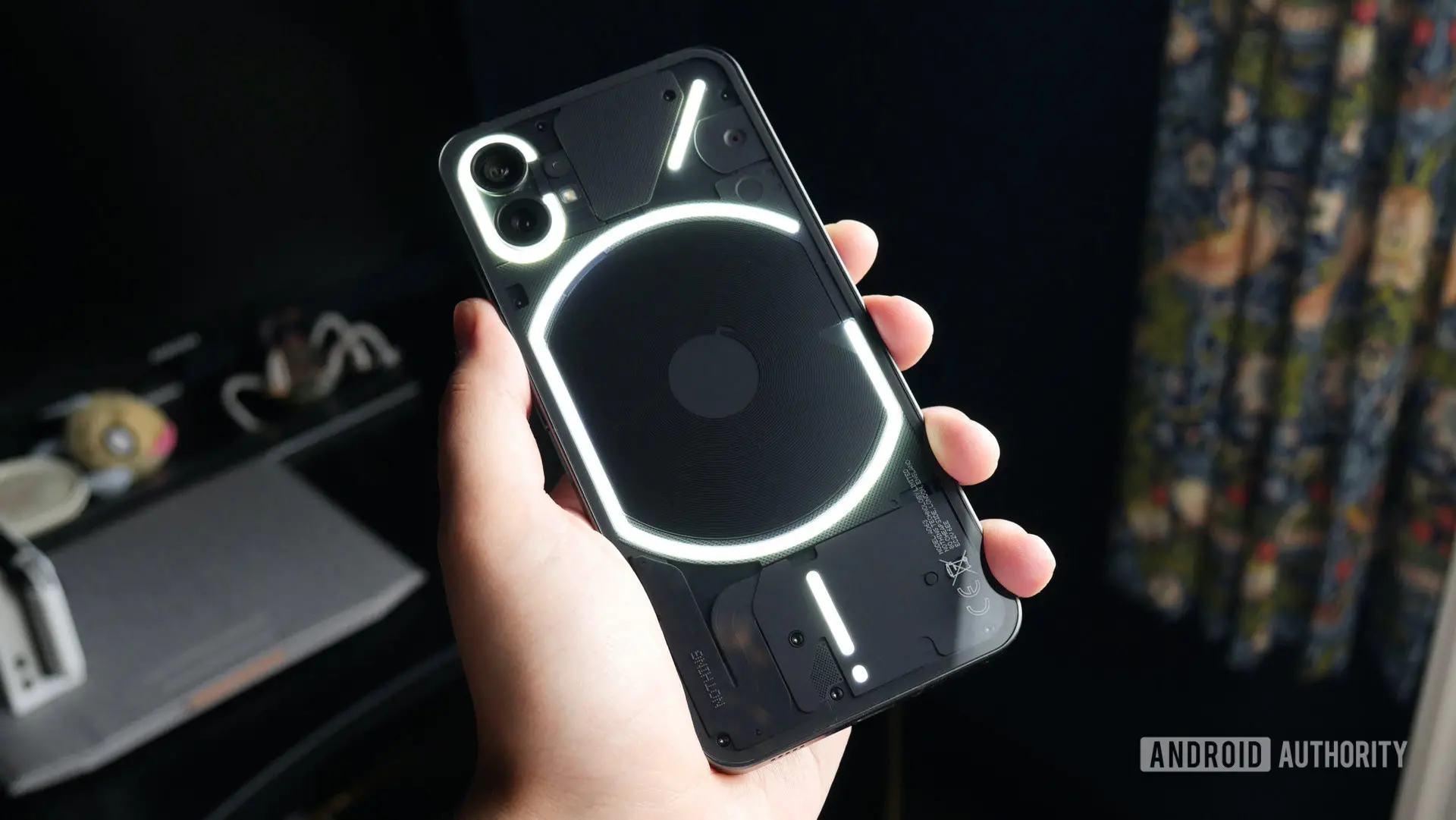
Nothing has officially ended software update support for the Phone 1, the smartphone that launched the company’s hardware ambitions nearly four years ago. The final update, which includes the July 2026 Android security patch, marks the completion of the device’s promised software lifecycle. This milestone closes an important chapter not only for the device itself but for the entire Nothing ecosystem, as the Phone 1 laid the foundation for the company’s design language, software philosophy, and community engagement.
A Journey That Began in 2022
The Nothing Phone 1 debuted in July 2022, a time when the smartphone market was dominated by established giants like Apple, Samsung, and Xiaomi. Nothing, a London-based consumer tech company founded by Carl Pei (the former co-founder of OnePlus), entered the arena with a fresh approach. The Phone 1 was not just another Android handset; it was a statement. Its transparent back, featuring the Glyph Interface—a series of LED strips that could light up for notifications, calls, and charging status—immediately set it apart. The design was minimalist yet functional, echoing the company’s tagline of “nothing is everything.”
The device shipped with Android 12, skinned with Nothing OS, a near-stock experience that emphasized speed, simplicity, and a unique dot-matrix visual style. Over the years, Nothing OS evolved through three major Android version upgrades: Android 13, Android 14, and finally Android 15, which was delivered as the last major OS update for the Phone 1. Alongside these, the company provided regular security patches, culminating in the July 2026 security patch that now arrives with this final update.
What the Final Update Includes
As confirmed in a post on the Nothing community forums, the July 2026 security patch is the core of this release. In addition to addressing the latest security vulnerabilities, the update brings general system improvements, bug fixes, and enhanced stability. Nothing also warned users that during installation, the device might warm up slightly and battery consumption might temporarily increase—behavior typical of system updates. After the installation completes, performance should return to normal.
It is worth noting that while the Phone 1 can technically run Android 16—some enthusiasts have already installed custom ROMs based on the newer version—the official support ends with Android 15. Nothing explicitly states that the phone will remain fully usable, but users should no longer expect new Android versions or future security patches. This is in line with the company’s original commitment of three years of Android upgrades and four years of security patches, a promise that was competitive for the mid-range segment at launch.
The Significance of the Nothing Phone 1
The Phone 1 was more than just a product; it was the embodiment of Nothing’s vision to demystify technology. The Glyph Interface, for instance, turned the back of the phone into a functional canvas, allowing users to see notifications at a glance without needing to turn the screen on. This design choice also encouraged third-party developers to create custom light patterns, fostering a sense of ownership and personalization. The transparent back, meanwhile, revealed carefully laid-out internal components, much like the company’s later Ear (stick) and Phone 2 models. It was a daring move in an era where most phones hid their internals behind sealed glass backs.
In terms of hardware, the Phone 1 featured a 6.55-inch OLED display with 120Hz refresh rate, a Snapdragon 778G+ chipset, 8GB or 12GB of RAM, and a 4,500mAh battery. The camera system—a 50MP main sensor and a 50MP ultrawide—was competent but not class-leading. However, the device’s overall value proposition—starting at £399—made it a favorite among tech enthusiasts who valued design and software over raw specs. It sold over half a million units within its first year, a significant achievement for a new brand.
From a software perspective, Nothing OS began on this device. Its clean, bloatware-free interface, combined with distinctive widgets and monochrome icon packs, set a template that would be refined in subsequent updates. The company also built a reputation for listening to community feedback, often implementing requested features in monthly or bi-monthly updates. This final update, therefore, marks the end of an active development cycle, though Nothing has hinted that the Phone 1 will continue to be supported through community forums and knowledge bases.
What Users Should Know
For current Phone 1 owners, the end of software support does not mean the phone is obsolete. The device will continue to run apps from the Google Play Store, access the internet, and perform all core functions. However, over time, some apps may require newer Android APIs that the Phone 1 cannot provide. Security risks may also increase as new vulnerabilities are discovered, since no further patches are planned. Users who prioritize security and app compatibility may consider upgrading to a newer device, such as the Nothing Phone 2 or Phone 3, or exploring custom ROMs like LineageOS, which can extend the software life further.
Nothing itself has acknowledged the Phone 1’s legacy, noting that it remains an important part of the company’s history. The device was the foundation on which Nothing OS was built, and the company continues to develop that software experience for newer models. In its farewell post, Nothing expressed gratitude to the community, emphasizing that the Phone 1 “remains highly usable” and that users can still enjoy the Glyph Interface and Nothing OS features without updates.
A Look Back at the Software Lifecycle
When the Phone 1 launched in 2022, Nothing promised three years of Android version upgrades and four years of security updates. This was on par with industry standards for mid-range devices at the time, though slightly behind flagship models from Samsung and Google, which offered four to five years of updates. Over the nearly four-year period, Nothing delivered:
- Android 12 (launch version, July 2022)
- Android 13 (October 2022)
- Android 14 (October 2023)
- Android 15 (October 2024 – final OS upgrade)
- Security patches: Monthly or bimonthly until July 2026
Interestingly, the phone launched with Android 12, skipped some minor feature drops, but kept up with major releases. The Android 15 upgrade brought improved privacy controls, a redesigned quick settings panel, and Nothing OS-specific features like enhanced Glyph composability and new widgets. These updates kept the device feeling fresh for many users, who appreciated the continued attention from a relatively small company.
The Broader Context: Mid-Range Longevity
The end of support for the Nothing Phone 1 highlights a broader trend in the smartphone industry: the push for longer software support as a competitive differentiator. In 2022, brands like Samsung and Google were already extending update commitments to five years. Today, even budget devices from companies like Xiaomi and OnePlus have improved their track records. Nothing’s three-year OS and four-year security policy was acceptable at launch, but it now lags behind the industry leaders. The company has not yet announced whether newer models like the Phone 2 or Phone 2a will receive longer support, but user expectations are likely to drive such changes in the future.
For the Phone 1, the end of support is also a testament to the device’s longevity. It was built to last, with decent hardware that can still handle everyday tasks in 2026. The processor, the Snapdragon 778G+, remains capable for social media, browsing, video streaming, and light gaming. The display is still competitive. The battery, while aged, can be replaced at authorized service centers. The device’s repairability was another plus—the transparent back allowed for easier internal access, and Nothing offered spare parts through iFixit at launch.
Nevertheless, the end of official support may accelerate the device’s departure from daily use. Enthusiasts who enjoy tinkering will likely keep it alive through custom ROMs, while the average user might decide that the lack of security patches warrants an upgrade. Nothing, in its messaging, has been careful to avoid pressure to upgrade, instead framing the update as a natural conclusion to a product’s lifecycle.
In the end, the Nothing Phone 1’s journey is a story of ambition, design, and community. It helped establish Nothing as a credible player in the smartphone space, proving that a small company could challenge the status quo with a distinctive product. The final update is both an end and a celebration—a reminder that even after four years, the phone remains a cherished device for its owners. Nothing’s promise was kept, and the phone can now retire gracefully, having fulfilled its role as the pioneer of a new design era.
Source: Android Authority News