

In the ongoing saga of artificial intelligence regulation, a fascinating dynamic has emerged: the very companies that once pleaded for government oversight are now finding themselves caught off guard by the enforcement. A recent report from Politico highlights how Big AI—led by OpenAI and Anthropic—wanted the Trump administration to speak clearly about what is and isn't acceptable. But the administration’s approach has been anything but predictable.
Dean Ball, recently hired by OpenAI as Head of Strategic Futures, told Politico: “There are things the administration is doing that I’m not so much of a fan of, in terms of the abruptness and the opacity and the strictness, but the more fundamental point is that I’m glad they’ve arrived to the conclusion that they have — to take this stuff seriously.” This sentiment captures the tension: relief that regulators are finally paying attention, but frustration at the lack of transparency and consistency.
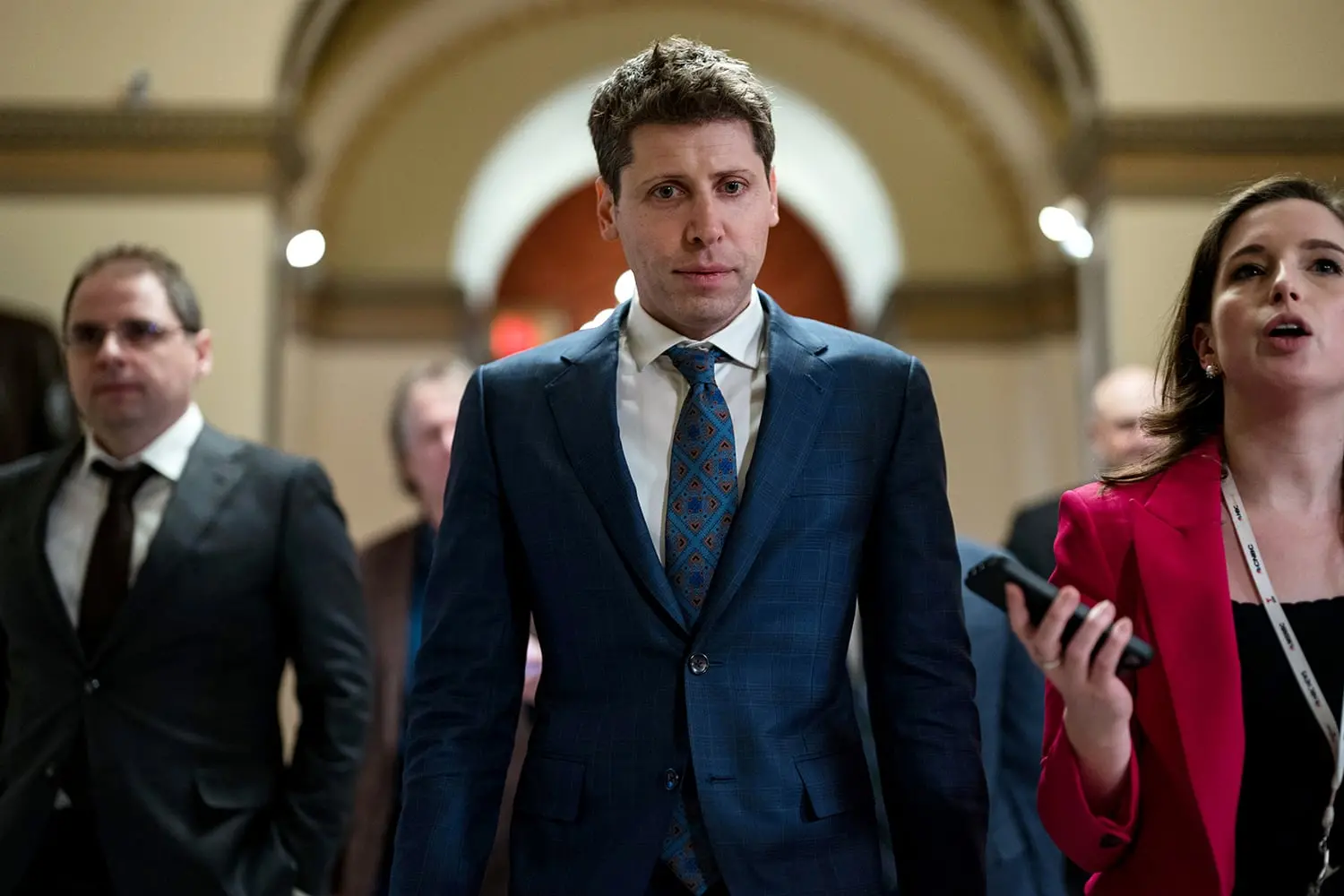
The story dates back to 2023, when OpenAI CEO Sam Altman testified before Congress and warned that AI “can go quite wrong.” He urged the government to work with industry to prevent disasters. Anthropic CEO Dario Amodei, in an essay titled “The Adolescence of Technology,” wrote that humanity’s ability to survive AI’s turmoil “will depend on our character and our determination as a species, our spirit and our soul.” These were not idle warnings; they were calls for a regulatory framework that would provide clear boundaries.
Yet when the Trump administration took office, Vice President JD Vance signaled a starkly different approach. In a February 2025 speech in Paris, Vance declared that AI regulation would not be coming, arguing that it would “unfairly benefit incumbents” and “paralyze one of the most promising technologies we have seen in generations.” For months, the administration largely stayed out of AI companies’ way, focusing instead on export controls to keep advanced models out of rival nations.
That hands-off stance changed abruptly earlier this month when the administration took aim at Anthropic’s Claude Fable 5 model, effectively blocking its release by designating the company a supply chain risk. The move surprised many, including industry insiders who thought the administration would continue its permissive policy. The crackdown followed reports that Fable 5 could be “jailbroken” to bypass safety guardrails, and that China-linked groups may have gained unauthorized access during VIP testing periods.
Now both Anthropic and OpenAI are feeling the heat. OpenAI’s GPT 5.6 series, which was set for a broader release, is instead being rolled out to a small group of VIP customers while the company works with the administration to develop what it calls “a repeatable process for future model releases.” In a blog post, OpenAI expressed frustration: “We don’t believe this kind of government access process should become the long-term default.”
The industry is struggling to adapt. An anonymous policy advisor for frontier AI companies told Politico, “It feels like they’re walking on eggshells a little bit.” The lack of clear, legislated rules has left companies guessing what might trigger the administration’s ire. As my colleague noted, rival labs in China can now “seize upon the disorder by pushing ahead with their own AI development, while labs in the U.S. get bogged down trying to figure out what is, and what isn’t, allowed from them.”
The administration’s approach has been largely executive, bypassing Congress. An executive order earlier this month requested—but did not require—AI companies to submit models for federal vetting. The resulting ambiguity means that what is permissible depends largely on whether President Trump is pleased with what he sees. He reportedly dislikes easily jailbroken guardrails and unauthorized access by foreign entities, but his administration has offered no formal rulebook.
Public opinion surveys paint a bleak picture for the industry. A study conducted by Anthropic itself found that only 15% of Americans trust AI companies to make decisions about AI development. Seven in ten oppose building data centers in their neighborhoods. And 87% say it is likely that foreign governments will use AI to attack the U.S. within the next 20 years. Despite this, the Trump administration initially resisted regulation, betting that American companies would win the global AI race without constraints.
The current pause on new model releases has created a de facto moratorium. Saif Khan, a former Biden administration tech advisor, told Politico, “The administration’s current actions have resulted in an almost complete moratorium on new releases. And that’s going to start seriously impacting companies’ bottom lines.” Yet the administration has given no indication that it intends to replace its ad hoc decisions with lasting legislation.
The comparison to a dental procedure, while imperfect, captures the underlying discomfort. The AI companies arrived unbidden, promising a better future while showing the public a tray of intimidating tools. But the public never asked for the procedure, and now the president has paused it. The question remains whether he will change anything fundamental or simply resume drilling once the immediate crisis passes.
Analysts warn that without a stable regulatory framework, American AI leadership could erode. The uncertainty benefits Chinese firms, which face no such domestic restrictions. Meanwhile, companies like OpenAI and Anthropic continue to argue for clarity: they want to be told what is not okay, not blindsided by executive discretion. As the industry waits for the next move, the lesson from Big AI’s earlier pleas is clear: the absence of rules is not a blessing, and arbitrary enforcement is not a cure.
Source: Gizmodo News